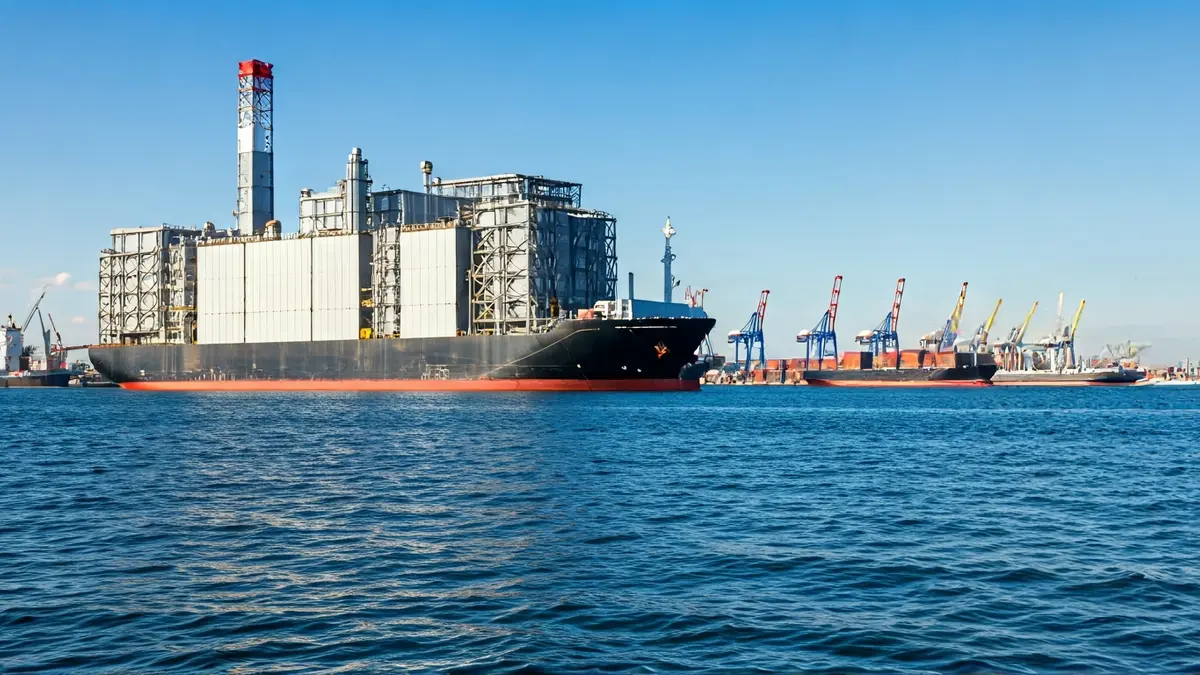
Zapata stated that this vessel represents the «only viable option» to ensure electricity supply on the island, providing 100 megawatts of emergency power. This measure aims to cover a 138-megawatt deficit currently faced by Gran Canaria.
“"When that tender for the renovation of thermal power plants comes out again and covers the real demand that Gran Canaria has, there will be no need for a ship, nor for emergency plants in El Goro like the ones we are installing."
The minister described these solutions as «temporary and specific», comparing them to a «ship's lifeboat» used in critical situations. This project already sparked debate in late 2025, dividing opinions among the port community, citizens, and experts, with the president of the Port Authority even calling it a «problem».
In addition to the floating power plant, the Government is exploring other temporary alternatives, such as a nearly 20-megawatt plant in El Goro, currently under public review, and another 15-megawatt plant. Simultaneously, work is underway on the decarbonization of Canarias through the development of renewable energies, although Zapata emphasizes the «critical situation» of several islands, according to a Red Eléctrica report, noting that Gran Canaria did not fare well in the last electricity tender.
Zapata is confident that the State will imminently call for a new tender for the renovation of thermal power plants. He praised the Port Authority's «sensitivity» in studying the suitability of the floating power plant, though he clarified that the final decision on occupying the port space rests with them, which would entail a «significant effort» and the sacrifice of part of their activity.
“"If we are going to bring a ship, and then we won't have gasoline to fill the ship, how do we generate the energy we will have to prevent those energy zeros that may occur on the island of Gran Canaria?"
For his part, Yoné Caraballo (NC-bc) acknowledged the «energy instability» of the islands due to their isolated systems and reliance on external fuels, especially in the context of the armed conflict affecting the Strait of Hormuz. Caraballo insisted on the need to invest in renewables to guarantee basic services like water and electricity, questioning the viability of the floating power plant if fuel supply is not secured.