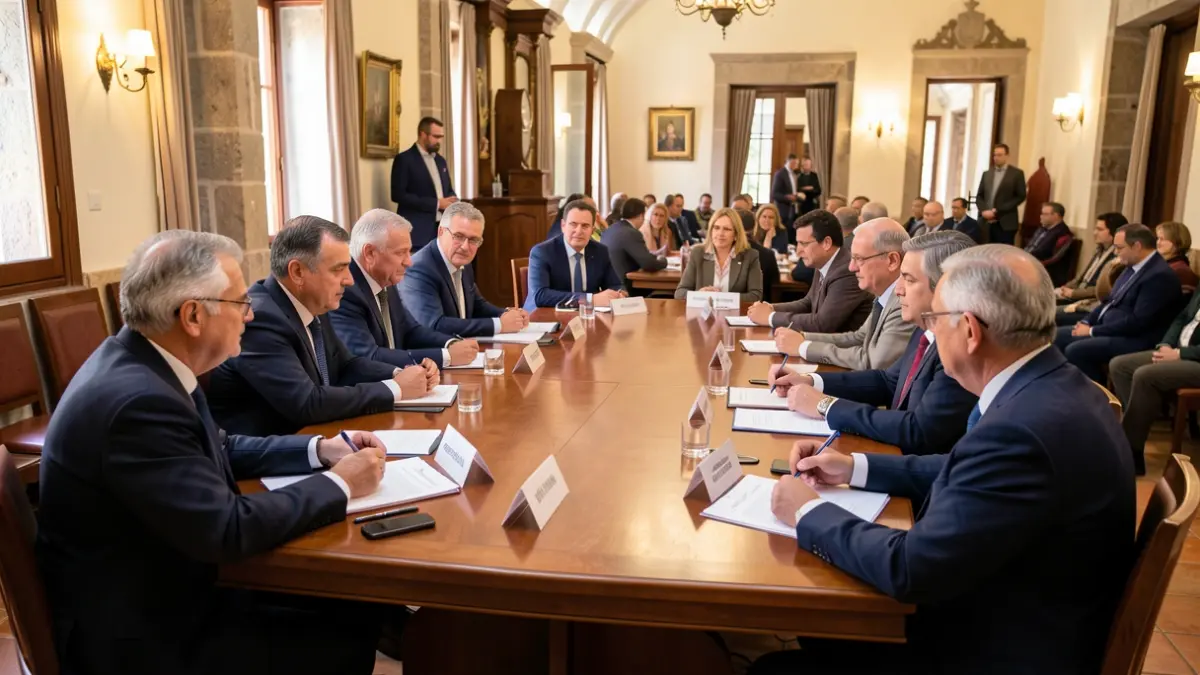
The Vice President of Canarias, Manuel Domínguez, announced on February 24 an agreement to define a list of 45 essential products with an IGIC reduction, including dairy, fruits, vegetables, fish, and meat. However, this week he admitted that 40 of these products already had such a reduction, which has generated intense debate.
“"Perhaps we should not have announced it."
A decree published in the Official Gazette of the Canary Islands on October 20, 2025, already established a zero tax rate for a wide range of basic products such as bread, water, flour, gofio, milk, cheese, eggs, fruits, vegetables, legumes, meats, and fish, among others. Olive oil, pasta, medicines, petroleum, sanitary pads, diapers, and electricity were also included.
Given this situation, the Government of the Canary Islands has confirmed that only three new products will be added to the zero-IGIC list: salt, coffee, and butter. Additionally, sugar and cookies are under review, pending reports from Public Health.
The opposition has sharply criticized the management. Nueva Canarias, through its Secretary General Luis Campos, has described the anti-crisis measures of the Government of the Canary Islands as an “exercise in propaganda with trickster figures and a social void that is shameful.” For its part, the PSOE of Canarias has denied that the measures of the Government of Spain have no effect on the islands, highlighting direct aid to shipping companies and farmers.
The promise to reduce the IGIC from 7% to 5%, a proposal by Coalición Canaria and the PP during the election campaign, has also not materialized. Both parties have cited fiscal “uncertainty” as a reason for not implementing the measure, while MP Cristina Valido has asked the State Government for an IGIC reduction to mitigate the increase in energy and logistics costs on the islands.