Candelaria Delgado, Councillor for Social Welfare of the Canarian Government, has reiterated the need for the relocation of unaccompanied migrant minors to be a stable procedure, especially when a region is in a migratory contingency situation. The councillor emphasized that the current royal decree-law allows for a one-year extension of these transfers, dismissing Madrid's argument that the deadline for receiving more migrant children and adolescents ended on March 18.
Delgado recalled that when the extraordinary migratory contingency was approved, Canarias was already hosting more than three times the number of minors it could accommodate. She stressed that the continued arrival of minors to the island coasts was foreseeable, as evidenced by the 333 minors who arrived in the first quarter of this year alone. Therefore, she considers it essential that the relocation system be defined by law as an automatic and not merely conjunctural process.
“"The mechanism for the transfer of migrant children and adolescents established by Royal Decree-Law 2/2025 remains fully in force as long as the migratory contingency situation persists in arrival territories such as Canarias, Ceuta, and Melilla."
In this context, the Minister of Territorial Policy, Ángel Víctor Torres, sent a letter to Madrid urging compliance with current legislation and the reception of minors. In his letter to the Ministry of Family, Youth and Social Affairs of the Community of Madrid, Torres argued that, although overcrowding has decreased, the contingency has not ended as long as migratory pressure triples the ordinary reception capacity of the affected territories. Therefore, the relocation system must continue to be applied.
The minister also referred to the temporary postponement of the transfer of seven minors from Ceuta on March 26, following an allegation by the Community of Madrid. The Provincial Prosecutor's Office of Madrid, in a decree issued on March 27, concluded that the transfer and relocation resolutions are valid and executive administrative acts, with no circumstances justifying their suspension. Torres affirmed that these relocations have legal backing and must be executed in accordance with the law.
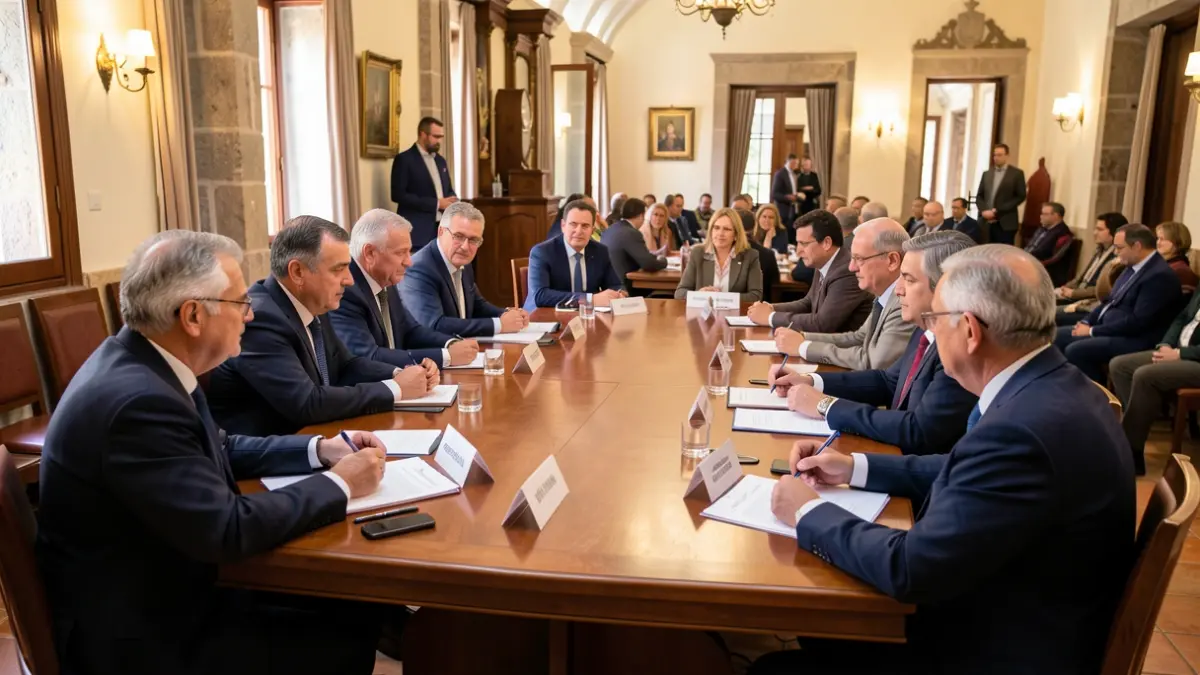
Councillor Delgado appeared on Tuesday alongside the new president of Unicef Spain, María Ángeles Espinosa, after a meeting with the regional president, Fernando Clavijo, in the capital of Gran Canaria. Espinosa highlighted that a priority for Unicef is to guarantee the best interests of the child in transfers, ensuring their opinion is heard and that host communities guarantee their rights. Unicef has implemented mobile units on the islands to offer psychological support to unaccompanied migrant minors, with plans to expand this service.
Delgado also denied accusations from the Community of Madrid regarding the separation of siblings during transfers, assuring that the Prosecutor's Office participates in the process to ensure the well-being of the minor. The councillor called for an “effort” from the communities at the Sectoral Conference on Childhood on Wednesday, and reiterated the need for the State to provide sufficient economic resources, as the initial 100 million euros were insufficient. Canarias hopes that the migratory contingency will become a stable norm in the coming years.