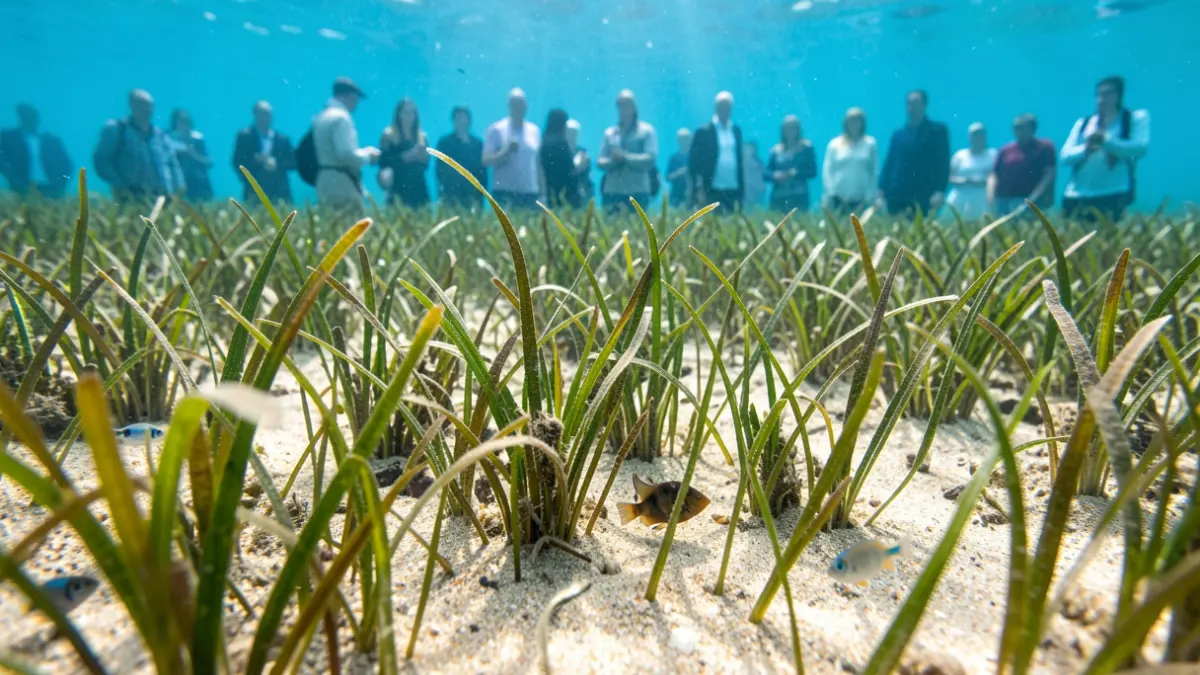
These marine meadows are a fundamental element for the health of coastal ecosystems, serving as a refuge and breeding ground for numerous marine species. They also improve water quality, protect the coastline from wave action, and contribute to carbon storage.
However, Ecoaqua researchers point out that their conservation faces significant threats due to human activity, such as damage from anchors and moorings, dredging, pollution, certain fishing and aquaculture activities, and coastal alterations caused by construction.
The project led by Ecoaqua is optimistic about the possibility of halting the loss of these ecosystems in the next decade, but emphasizes the need for immediate action on the remaining meadows and the elimination of damaging pressures. They warn that restoration projects will not be sufficient if the causes of their disappearance are not addressed.
The study proposes seven priorities for improving their conservation, including better mapping of their distribution, understanding their recovery capacity, assessing the cumulative effects of various threats, promoting restoration techniques, and strengthening legal protection and local community participation.
The research, published in the scientific journal Biological Conservation, is led by Ecoaqua researcher Rodrigo Riera, and involved Fernando Tuya, director of ECOAQUA's BIOCON group, along with researchers from institutions in Spain, Australia, Brazil, Canada, and South Africa.