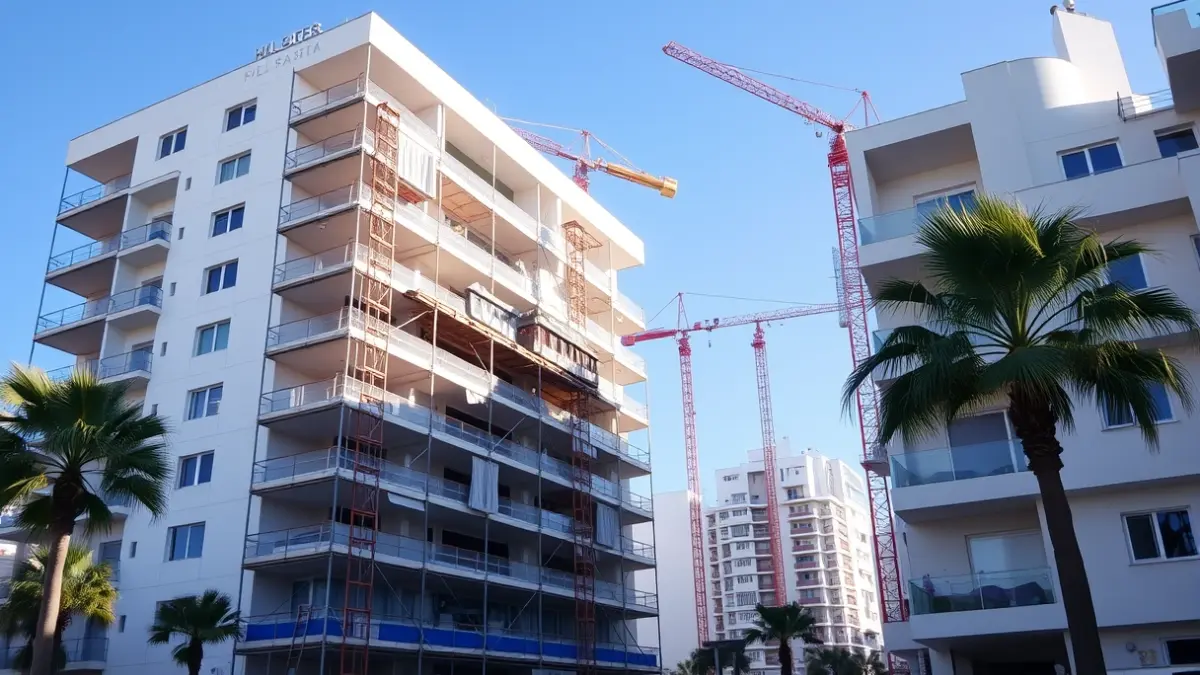
The island of Gran Canaria faces an estimated deficit of 6,000 protected homes, a situation that the current mandate of the Island Government aims to reverse. The last public housing developments were delivered in 2015, marking a gap in the construction of new properties that has lasted for years.
“"The problem of the housing emergency cannot be solved with a snap of the fingers, and there is a very long way to go."
Currently, the Cabildo positions itself as the only island institution in the Canary Islands that is building homes, through the Gran Canaria Housing Consortium. This body, created in 2008, has seen its powers strengthened in 2024 thanks to a decree from the Government of the Canary Islands that enables cabildos to promote protected housing, allowing for an increase in staff to meet demand.
Among the new works directly promoted by the Cabildo, the construction of 63 affordable rental homes in El Secadero, in Las Palmas de Gran Canaria, stands out, partially funded by Next Generation funds. This development is expected to be completed before May 2027. Additionally, the rehabilitation of an unfinished building in Valleseco is planned to provide 16 public homes.
Through agreements, the construction of 240 homes is projected in the capital's neighborhood of Las Torres, a joint initiative with the Las Palmas de Gran Canaria City Council valued at almost 40 million euros. Promotions agreed with the Government of the Canary Islands in Santa Lucía de Tirajana (25 homes), Gáldar (32), and Santa María de Guía (45) are also being added.
Beyond new construction, the Consortium's main work focuses on the rehabilitation of the existing residential stock, with over 2,000 interventions in neighborhoods and rural areas. Telde concentrates the largest volume of planned or ongoing interventions with 868 actions, followed by San Bartolomé de Tirajana with 792 benefited homes. Other municipalities such as Mogán, Moya, Ingenio, and Agaete also benefit from these improvements.
The root of the current problem lies in the structural deficit of public housing accumulated over decades, as in Gran Canaria, only 1.5% of all homes are protected, compared to the European average of 8%. Therefore, the need to increase residential supply through public construction and institutional collaboration is advocated, as well as reactivating private promotion of protected housing, although the latter faces challenges due to costs and price limitations.