This unanimous approval indicates that no «significant adverse effects on the environment are foreseen, provided that the preventive, protective, and corrective measures outlined» in the environmental study are implemented. The decision empowers the public company Ferrocarriles de Gran Canaria to commence the expropriation process for affected lands.
The favorable declaration includes dozens of conditions affecting all project components, from the eleven planned stations to the associated wind farm, depots, and viaducts. A monitoring commission must be established within six months and remain active for up to two years after the railway line becomes operational.
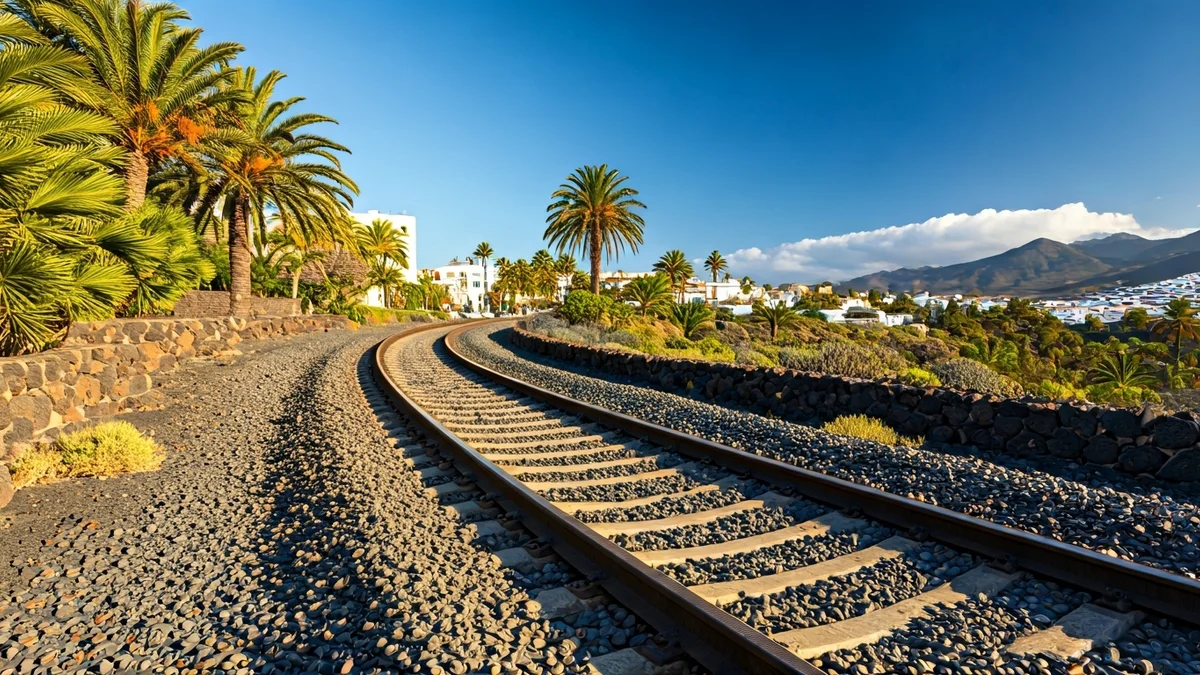
The approximately 58-kilometer route will feature a double track between the San Telmo and Playa del Inglés stations, and a single track in the urban sections of Santa Catalina-San Telmo and Playa del Inglés-Maspalomas. Trains will reach a maximum speed of 160 km/h, traversing municipalities such as Las Palmas de Gran Canaria, Telde, Ingenio, Agüimes, Santa Lucía de Tirajana, and San Bartolomé de Tirajana.
The eleven stations will be strategically located in high-demand areas, designed as intermodal hubs with park-and-ride facilities and connections to other transport modes. Auxiliary facilities, including workshops, maintenance areas, depots, a control center near Vecindario, and a 26.4 MW self-consumption wind farm to power the system, will also be distributed along the route.
For land expropriations, Ferrocarriles de Gran Canaria has a budget of nearly 16.67 million euros. The list of properties and rights to be expropriated was prepared in collaboration with Ineco, an entity of the Ministry of Transport. This project, declared of strategic insular interest, aims to alleviate congestion on the GC-1 highway and enhance public collective transport, aligning with national and European mobility and energy strategies.