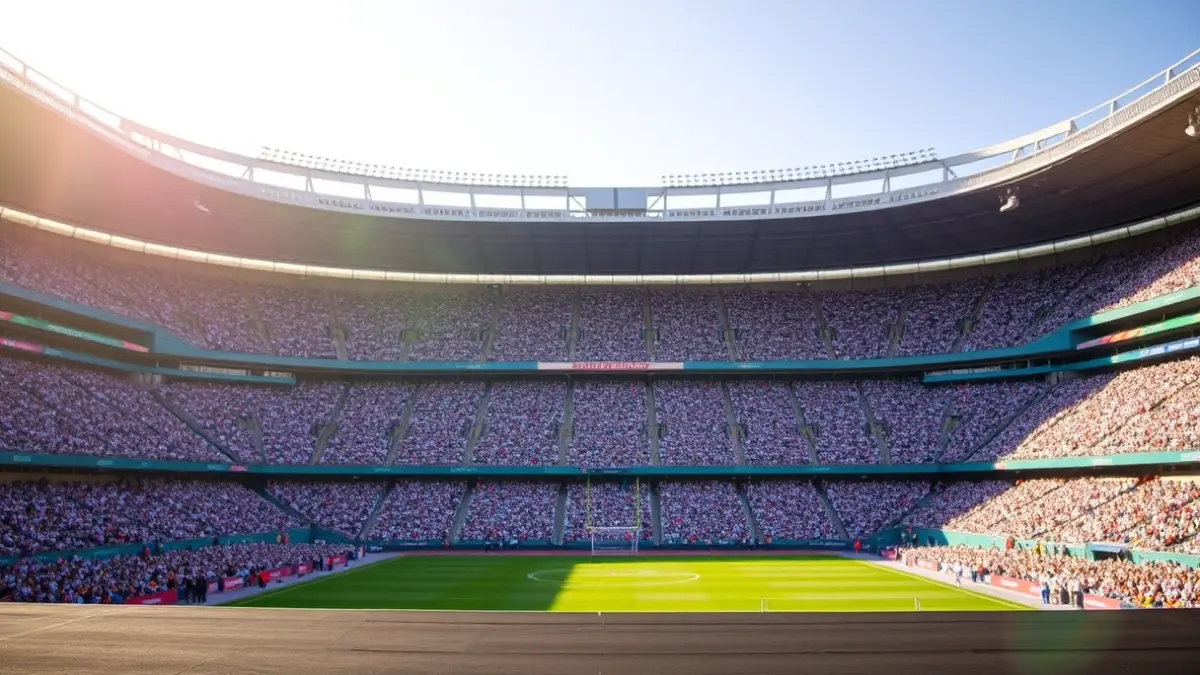
The bishop of the diocese confirmed in a press conference that the main Eucharist will take place at the Estadio de Gran Canaria. This event will be broadcast free of charge at the Gran Canaria Arena and an annex, although pre-registration will be required to attend. The pontiff will approach the faithful using the popemobile, which will arrive by plane from Madrid. The exact route in Las Palmas de Gran Canaria is yet to be finalized.
Although not confirmed, the Church is working to include a visit to the port of Arguineguín and the Cathedral of Canarias in the program. This will be the first visit of the highest representative of the Catholic faith to the archipelago. To address inquiries, the diocese has opened an information office at the Casa de la Iglesia, in Vegueta.
Registrations for the events are now open. The pastoral secretary of the diocese requested that, if possible, parishioners register in groups (parishes, schools, or communities) to facilitate organization and ensure they can sit together. The total capacity is expected to be 80,000 people, and seating will be assigned on a first-come, first-served basis for pre-registrations. In the first 24 hours, approximately 2,000 people have already registered.
“"We want the largest possible number of people to be able to enjoy the Eucharist."
The capacity could be expanded to 94,000 people if the stadium's turf can be used. The Church is awaiting the outcome of the play-off matches for promotion to Primera División, as the playing area cannot be compromised if UD Las Palmas needs to play. The altar for the mass will be presided over by the carvings of the Virgen del Pino and the Santo Cristo de Telde, which will be privately transported to the stadium.
“"We eagerly hope that this transfer of the images will motivate the encounter and following of Christ, and inspire us to embrace the joy of faith so deeply ingrained in the history of our people."
The organization estimates that the mass will take place in the afternoon, around 6:30 PM, pending confirmation from the Vatican. The visit to Arguineguín and the Cathedral of Canarias also await approval. The bishop noted that after the pope's visit to Africa, all remaining details can be finalized. Despite the lack of specifics, he is confident that these events can be included in the agenda due to the pontiff's particular interest in the migratory reality of Canarias.
The Diocese is in the final stages of preparations for Pope Leo XIV's visit, a historic event scheduled between June 6 and 12, with stops in Madrid, Gran Canaria, Tenerife, and Barcelona. This marks the first visit by a pontiff to Spain in fifteen years, following Benedict XVI's trip in 2011, generating significant institutional anticipation and logistical mobilization.
In Canarias, the program also includes a Eucharist at the Port of Santa Cruz de Tenerife. The scale of the events in the islands, with tens of thousands of attendees expected, has necessitated extensive coordination among public administrations, security forces, and the Church itself. A recent meeting at the Government Delegation in Las Palmas de Gran Canaria outlined key operational measures: private traffic restrictions, enhanced public transport, promotion of teleworking, and the potential suspension of school activities during the visit days.
The planned deployment will be particularly significant for security and mobility, involving thousands of agents, including reinforcements from the mainland, and specific measures to ensure telecommunications amidst high crowd concentrations.