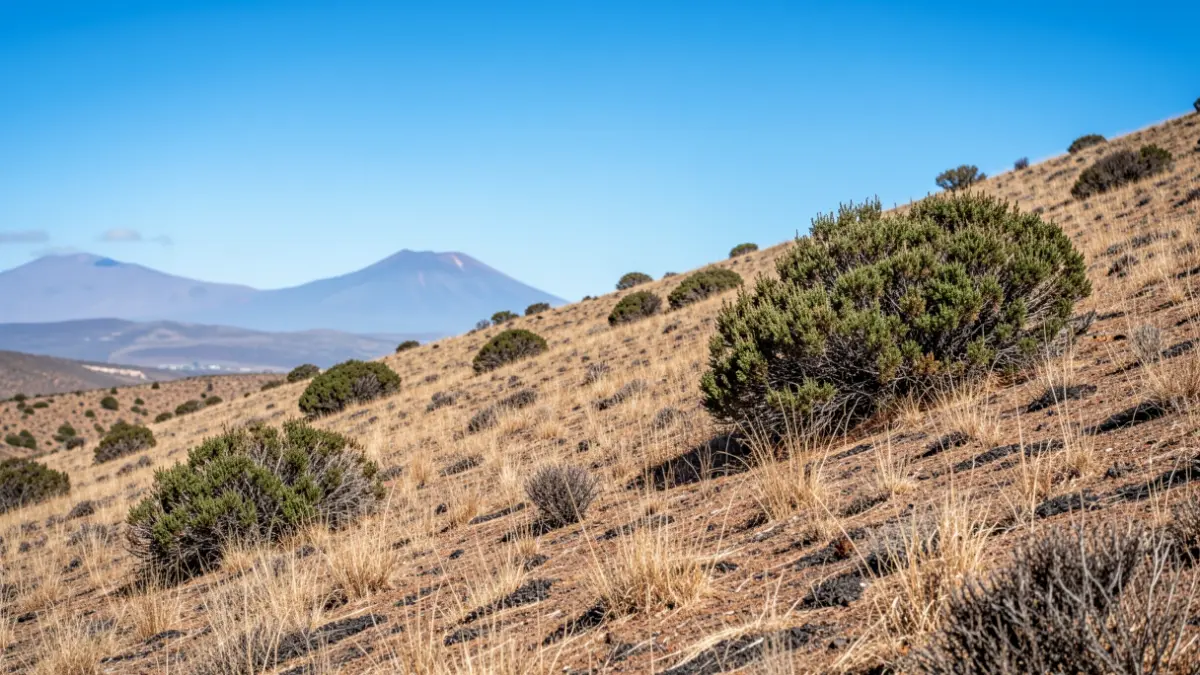
Recent late rains in Gran Canaria have left a green landscape and filled the reservoirs, but have also caused excessive pasture growth that is now drying out. This plant material, combined with a drastic decrease in the number of livestock on the island, creates a high-risk scenario for forest fires this summer, warns José Mendoza, known as Pepe 'El de Pavón', an experienced transhumant shepherd.
Pepe explains that while the March rainfall was beneficial for the land, it has created a paradox: "It's true there's a lot of pasture, a lot of grass, and of course, now we don't have enough livestock for the pasture we have," he laments. This situation turns the mountains into a tinderbox, as the vegetation previously consumed by animals now accumulates uncontrollably.
The problem, according to the shepherd, lies in the depopulation of the countryside and the decline of traditional livestock farming. In the past, animals kept the land clean by grazing. Today, the situation is reversed: "now the countryside has become depopulated of shepherds and livestock," Pepe states.
“"We have gone from being reported to being protected"
This abandonment of the primary sector has its roots in past decades when shepherds were "very mistreated and punished by the environmental sector." Fortunately, perceptions have changed, and they now receive support from institutions like the Cabildo. Despite current aid, the generational damage seems irreparable, as "a generation has been lost, now there are no shepherds, and you have to grow up with it from childhood," reflects Pepe, noting that generational succession is practically non-existent.
Pepe is also critical of the dependence on public subsidies, arguing that they should be used for improvement and advancement, not for mere survival. His experience with major fires, like the one in 2019, has taught him that prevention is key and that "if the weather is unfavorable and the wind accompanies the fire, I think the resources are very limited," he warns.
He acknowledges that "things are being done" in forest management, such as supporting livestock for land clearing, but believes progress is "very slow." He insists on the need for more clearing, especially along roadsides and paths, as there are "not enough animals" to do it naturally. Finally, he warns about areas with difficult terrain, where extinguishing fires is almost impossible and "if the fire starts, you have to let it burn".