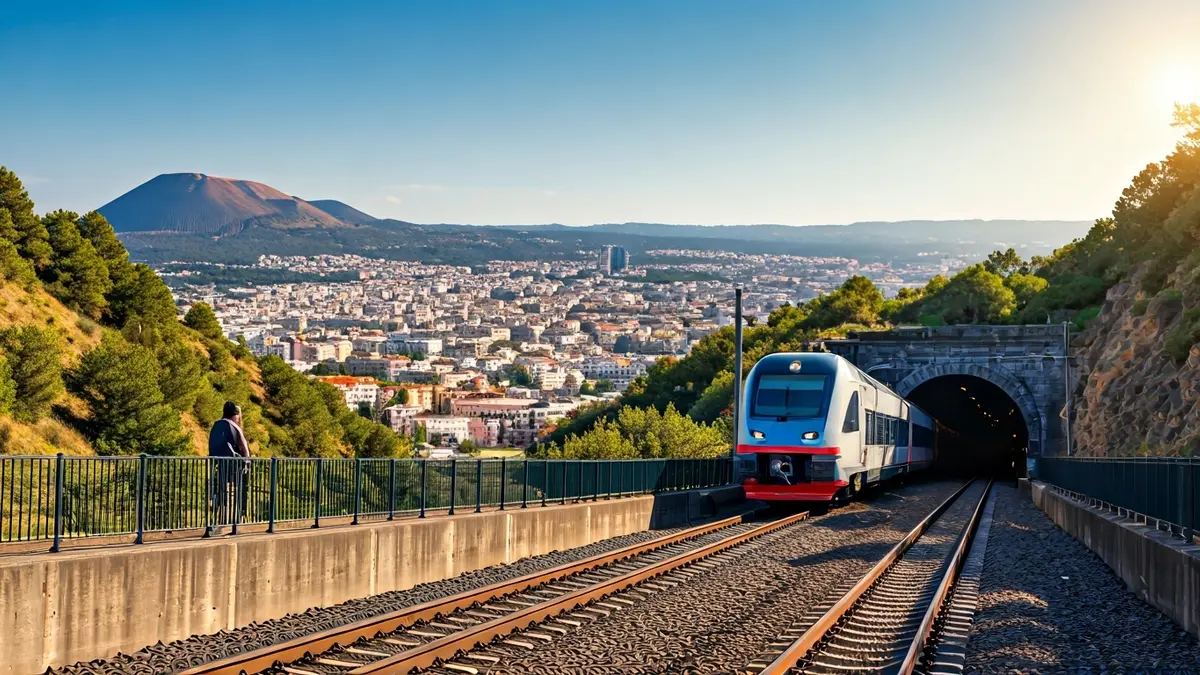
The Councillor for Presidency and Sustainable Mobility of the Cabildo de Gran Canaria, Teodoro Sosa, has confirmed that the island's train project has received a favorable environmental impact declaration, a step he considers "transcendental." According to Sosa, this advancement transforms the project from a future vision into a "present-day" reality, ready for execution once the necessary funding is secured.
Funding, estimated at 1.7 billion euros, represents the main challenge. Sosa noted that the work depends on the approval of the General State Budgets and warned that if these funds are not allocated to the Canary Islands, they could be redirected to other peninsular regions such as Cantabria or Valencia. The councillor emphasized his "obligation to fight for that money" and highlighted the importance of European co-financing through the "Connecting Europe" program.
Despite financial uncertainty, the Cabildo is not standing still. Nearly 17 million euros have already been advanced to initiate the expropriation process for the 512 affected plots. This action aims to demonstrate the project's maturity and readiness for when state funds become available.
“"I also want to make it clear, Javier, because there are people who speak without knowing what they are talking about. This is not the Metro Guagua."
Teodoro Sosa has sought to clearly differentiate the railway project from the Metro Guagua of Las Palmas de Gran Canaria, responding to criticism. He explained that, unlike the bus, 70% of the train's route will be underground, minimizing "direct impact on traffic," and on the surface sections, it will run parallel to the highway. The councillor defended the technical solvency of the project, which includes 25 engineering projects drafted and supervised by the public company INECO, specialized in railway engineering.
For Sosa, the environmental declaration, the financing protocol with the State, and the advance of expropriations are the three pillars demonstrating the project's maturity. He concluded by stating that, in his three years as councillor, they have "done their homework" for this project, which he considers "one of the most important public funding works in the history of the Canary Islands."