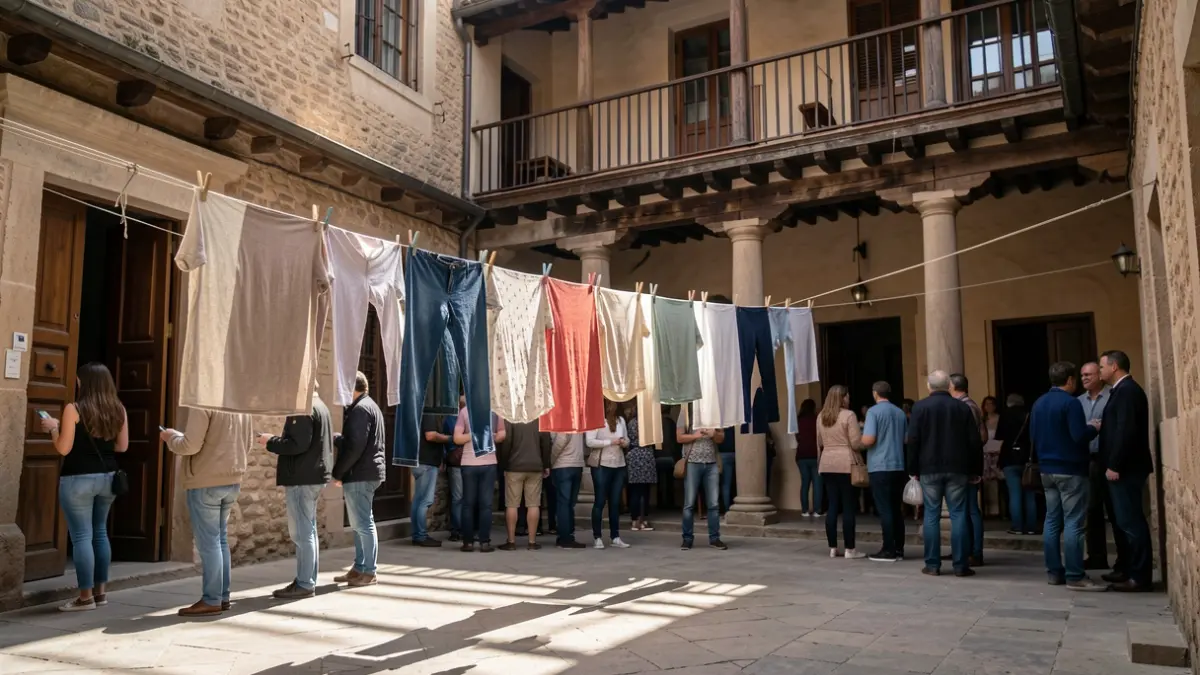
The custom of drying clothes in the interior courtyards of buildings in Spain faces a potential end. The Horizontal Property Law (HPL) is clear on this matter: if the homeowners' association decides so, it can prohibit this practice based on Article 7.1 of the aforementioned law.
This legal clause indicates that owners cannot make alterations to the configuration or exterior state of the building. Hanging laundry in an interior courtyard, even if it is a common area, can be considered a modification of the aesthetic of a common element, similar to the building's facade. Therefore, if the community's statutes do not expressly authorize it, any neighbor can demand the immediate removal of the clothes being dried.
The regulations aim not only to preserve the overall aesthetic of the building but also to prevent potential damage such as dripping moisture or deterioration from anchors in common walls. In some cases, authorization to dry clothes might require not only approval in the statutes but also unanimous consent from the owners' meeting and verification that no municipal ordinance prohibits it.
Ignoring these regulations can have consequences. The homeowners' association can initiate a "cessation" procedure that could end up in court, obliging the offender to remove the installation and, in some instances, to cover the legal costs. Faced with this tightening of rules and increasing neighborly conflicts, many are opting for alternatives like dryers or foldable indoor drying racks to avoid legal problems.