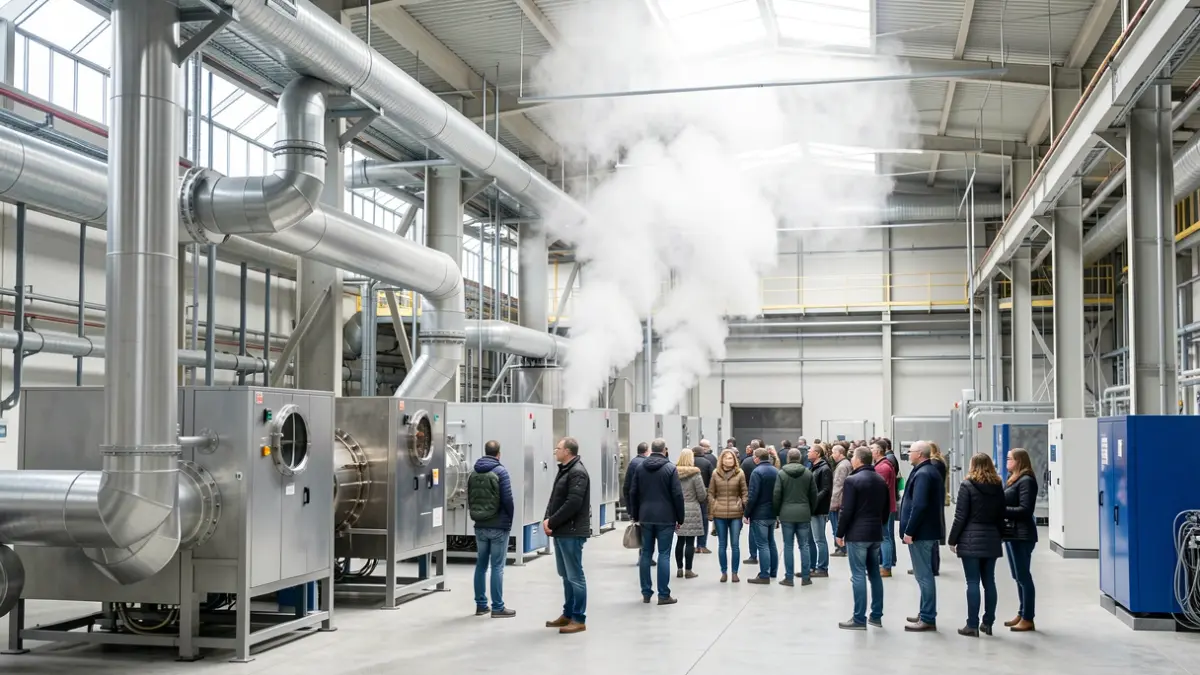
The North Gran Canaria Ecopark, managed by the Department of Environment, Climate, Energy, and Knowledge of the Cabildo de Gran Canaria, has incorporated thermal drying equipment for digestate, the paste-like organic material resulting from the biometanization process of waste. This technological upgrade aims to optimize the handling, storage, and transport of digestate.
The new installation replaces the current centrifuges with higher efficiency equipment and a compact thin-layer thermal drying system. The goal is to reduce the digestate's moisture content to approximately 65%, facilitating its subsequent use as fertilizer or organic amendment.
In addition to improving digestate management, the system will utilize the energy generated within the ecopark itself. By optimizing the drying process, the amount of biogas used for the thermal boiler will be reduced, freeing up this resource for other uses within the facilities or for export as unused surplus to the electrical grid.
The new compact drying system is being installed in the process hall of Biometanization Phase II and is part of the complementary works for the GC North Ecopark. These works have a total planned investment of over 10 million euros, of which 6,121,845 euros are allocated to the improvement of the digestate treatment and drying system, with three million euros financed by the FDCAN.