The Health Department of the Government of the Canary Islands has announced an investment of 6,134,561 euros for the project design of the new building that will advance the expansion of the Insular Hospital of Gran Canaria. The facility, named the Integral Center for Emergencies, Diagnosis, and Treatment, will be constructed on the plot formerly occupied by the University College of Las Palmas (CULP).
The General Directorate of Economic Resources of the Canary Health Service (SCS) has published the prior notice for the service contract, which will be awarded through an open procedure. The tender includes both the preparation of the basic project and the technical supervision of the future works.
The contract also includes the establishment of an on-site technical office composed of architecture and engineering professionals, aiming to expedite execution, improve coordination with SCS technicians, and resolve any issues that may arise during construction more quickly.
The objective is to expedite the execution of the works, improve coordination with the SCS technicians, and resolve any incidents that may arise during construction more quickly.
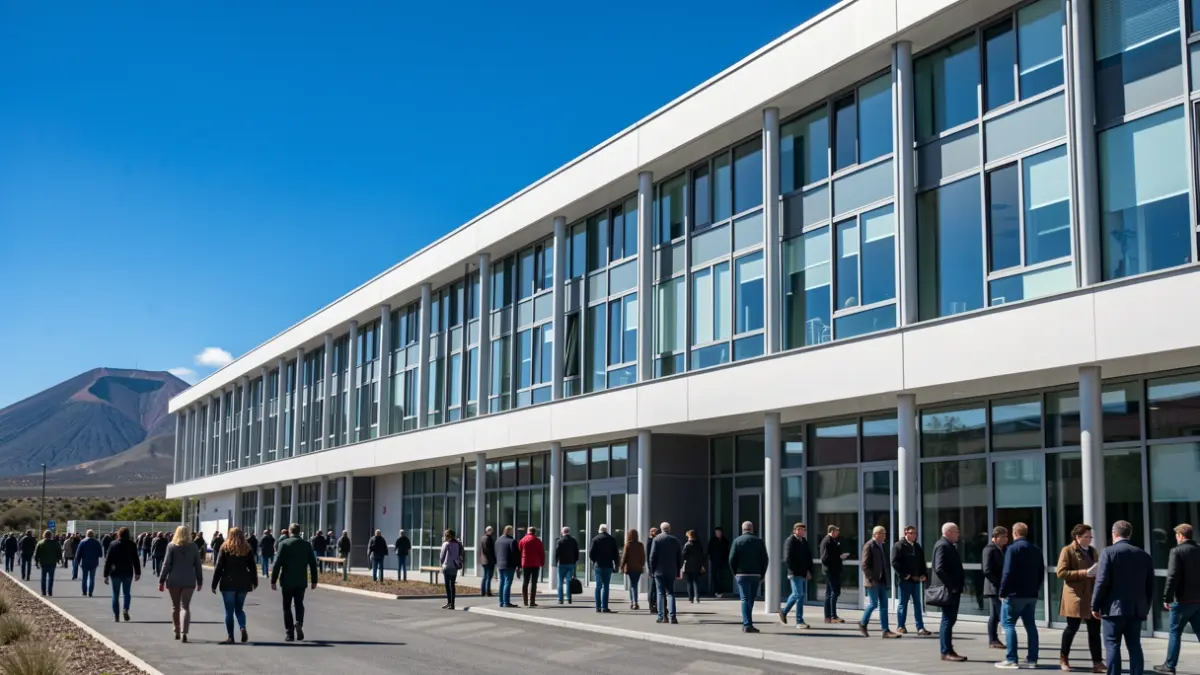
The new facility will be built on a plot ceded by the Cabildo of Gran Canaria, adjacent to the main hospital building. The project foresees five floors, each slightly over 5,000 square meters, designed to house various healthcare services. This reorganization will free up space in the main building for subsequent remodeling and expansion of other hospital areas.
Among the priorities is the relocation of the Emergency service, whose current facilities have limitations for renovation or expansion. The Department asserts that this change will also facilitate the reorganization of other healthcare departments within the complex. The future building will be connected to the Insular Hospital via multiple levels, ensuring functional continuity between the two infrastructures.
The design also includes a new network of access roads and pathways to improve vehicle and pedestrian circulation, as well as its integration with the underground gallery connecting the various buildings of the hospital complex.