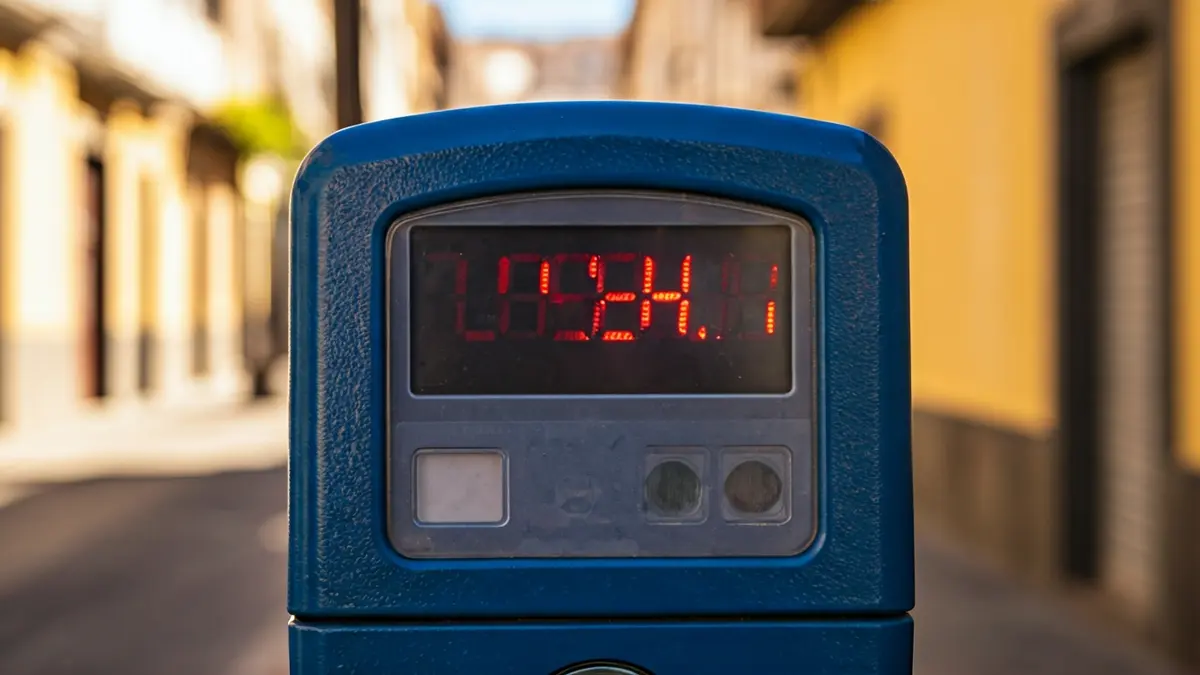
The capital of Gran Canaria has faced a challenge for years with invalidated regulated parking fee collections due to the absence of a proper verification procedure. This situation, described as “long-standing and entrenched,” is close to being resolved, as announced by the Councillor of Finance, Francisco Hernández Spínola, during the plenary commission for economic-financial management and special accounts.
The City Council acknowledged in the past year that it had “totally and absolutely omitted the established legal procedure” for claiming debts related to parking without a ticket or exceeding the time limit. Previously, fees were automatically settled without a prior proposal, which prevented users from submitting appeals and thus violated tax regulations.
“"We are optimizing the operational capacity of the service by allowing automated registration of the tax file with the issuance of the settlement proposal."
The new system, which began implementation in March, introduces an intermediate step: the resolution proposal. This allows users to appeal before the final settlement, ensuring a fairer process. This deficiency had been highlighted by the Municipal Economic-Administrative Tribunal (TEAM), the administrative contentious courts, and the Consultative Council.
Annually, approximately 100,000 settlements are recorded for parking in limited-time zones without a ticket or for exceeding the paid time. The City Council emphasizes that using public domain for parking constitutes a fee, not a fine, and that the procedure is tax-related, not punitive. They maintain that the previous system, while imperfect, did not violate fundamental rights, as it allowed for notifications and appeals.