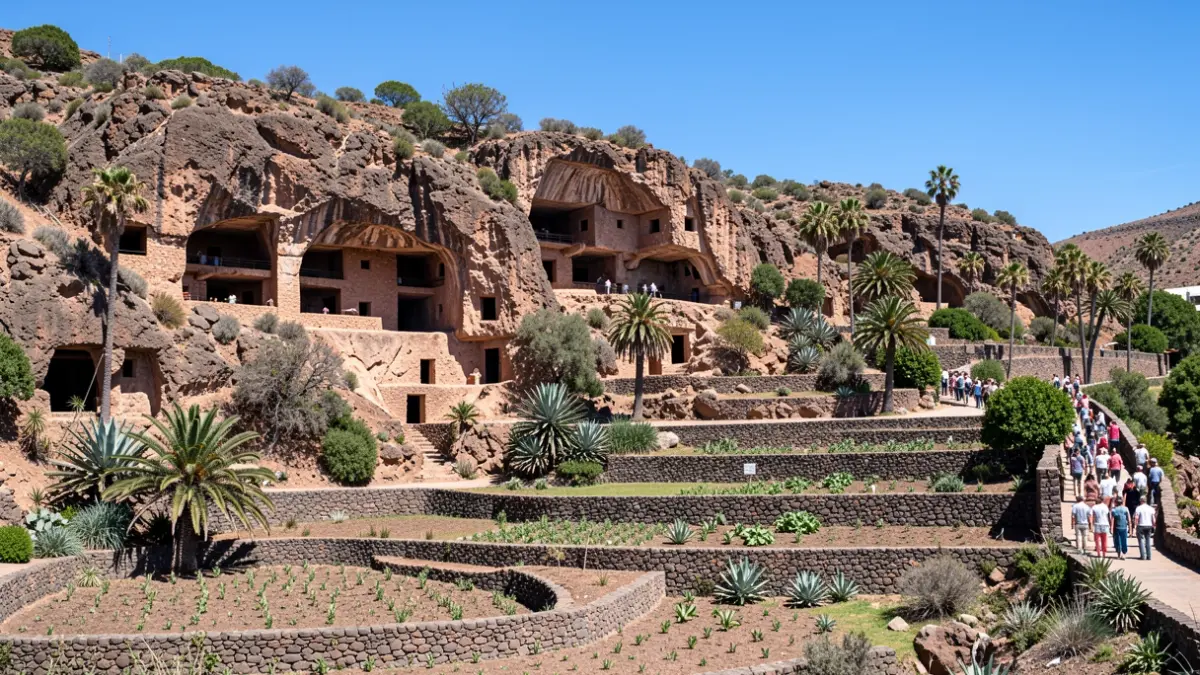
The project, funded by the Cabildo de Gran Canaria, focused on the Barranco Hondo area, spanning the municipalities of Artenara and Gáldar. The intervention was prompted by the accidental discovery of archaeological remains during enhancement works at the Site of Cultural Interest of Risco Caído, a UNESCO World Heritage site.
The survey, conducted by Arqueocanaria S.L., located fragments of historical pottery and charcoal samples, primarily found on the agricultural terraces and within the archaeological site itself. These materials are crucial for pinpointing the landscape's evolution and transformation over time.
The findings reinforce the hypothesis that the terraces may have been constructed using materials extracted from the artificial caves, demonstrating the progressive modification of the environment by human activity and resource reuse.
The research now moves to the laboratory phase. Recovered materials will be analyzed by researchers from the University of Las Palmas de Gran Canaria (ULPGC) to determine their chronology and origin, aiming to reconstruct the area's human settlement patterns and the relationship between the caves and cultivation areas with greater precision.
This initiative is part of the work by the Insular Institute for the Integrated Management of World Heritage and Biosphere Reserve of Gran Canaria, focused on the conservation and research of the site. New scientific tools will aid in guiding the management and protection of this cultural landscape.