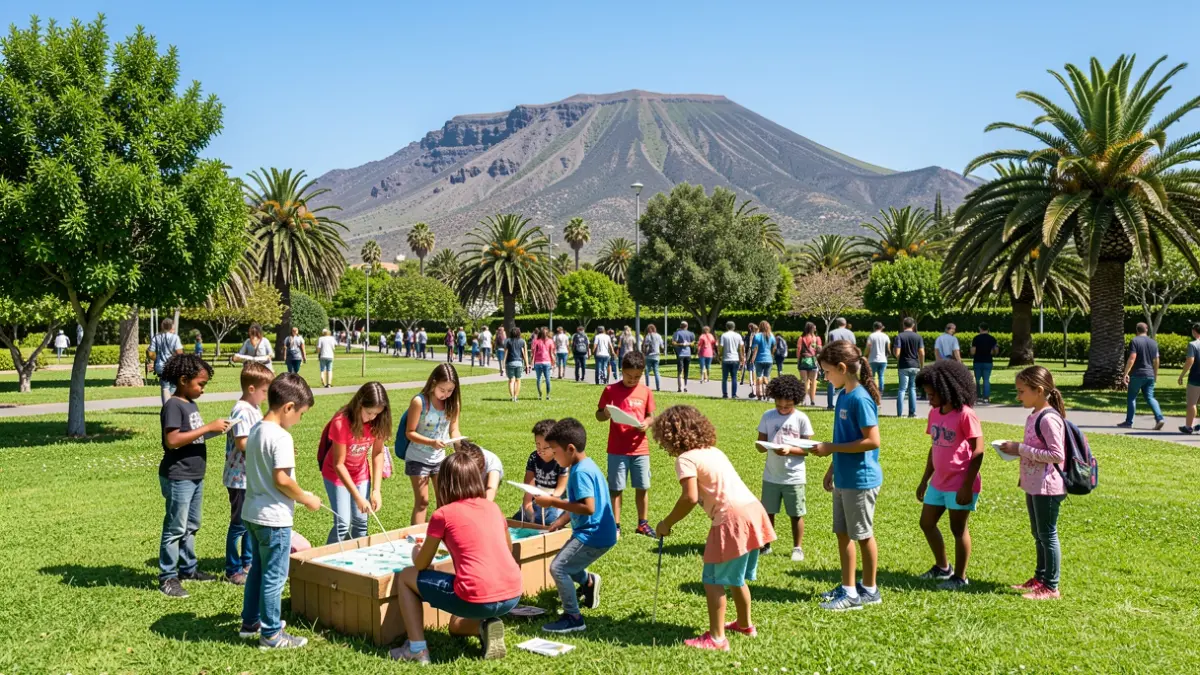
The initiative, running from 2022 to 2026, has involved 18 educational centers, eleven within the Biosphere Reserve's perimeter and seven outside, all aiming to disseminate and raise awareness about the territory's values.
Participating schools have addressed diverse topics such as forest fire prevention, school gardens, pottery, traditional use of Canarian plants, meteorology, oral tradition, climate change, local products, renewable energy, marine ecosystems, avifauna, flora, and protected natural areas.
During the closing ceremony of the second edition, held at the headquarters of the World Heritage Institute and Biosphere Reserve, the president of the Island Council, Antonio Morales, and the Minister of Presidency, Teodoro Sosa, expressed their pride in the work accomplished.
“"No one cares for what they do not know. And you have come to know your island better."
“"We are proud and grateful for the work you have done."
Students also shared their learning. Simón Rodríguez, from Veneguera, highlighted the importance of recycling for the environment, a sentiment echoed by Daida García, from Tasarte.
Since 2022, the project has organized over 80 meetings with community agents, promoting actions for conservation, environmental protection, territorial knowledge, participatory governance, and fostering a sense of belonging.
Furthermore, the initiative has focused on valuing culture, memory, community identity, sustainable development, the local economy, and the promotion of Unesco values.