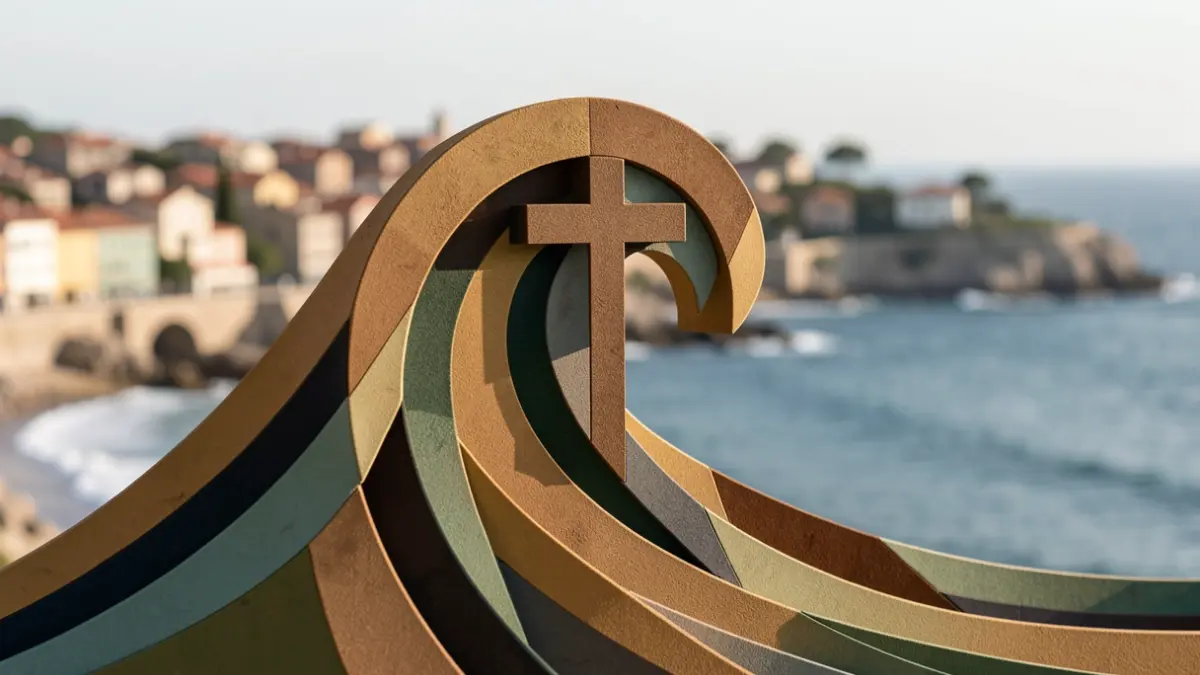
Architect Jorge Cerpa is one of those responsible for designing the two main stages that will host Pope Leo XIV during his historic visit to Gran Canaria. The structures, located at the Arguineguín pier and the Estadio de Gran Canaria, are imbued with deep symbolism. The central concept, according to Cerpa, aims to reflect the main reason for the visit: the phenomenon of migration across the sea.
The initial sketch originated from a hand drawing, conceiving an "architecture of undulating geometry" that would mimic the movement of the sea. This idea is particularly materialized symbolically at the Arguineguín pier, a key location due to the 2020 migratory crisis. The stage, smaller and more conceptual, will mimic a "wave" rising from the ground, supported by a single vertical element. This combined image evokes a cross supporting the sea, alluding to those who risk their lives on the journey.
“"It will look like a cross holding that sea"
The Arguineguín stage will not have a backdrop, allowing the pier and the town itself to serve as a "spectacular backdrop." This idea of a permeable stage was well-received by the Vatican. The structure has been positioned at a bend in the pier to ensure visibility for the approximately 2,000 attendees.
The design for the Estadio de Gran Canaria presents different meanings and challenges. The main challenge, according to the architect, was the uncertainty regarding the schedule of Unión Deportiva Las Palmas, which forced them to work "against the clock" and opt for "ephemeral structures" made of canvas and quick assembly, highlighting the work of engineer Rafa Suárez. The platform will measure 24 by 12 meters.
The stadium stage also holds symbolic meaning: twelve arches behind the main structure represent the twelve apostles, with a central arch symbolizing Christ. "They look like decorative arches, but there is a message behind them," Cerpa notes about this detail.
The large platform will house two revered images of the island: Nuestra Señora del Pino and the Cristo de Telde. Following the Vatican's instructions, the patron saint of the diocese will be on the right, while the Christ will preside over the mass above the Holy Father. Logistical details, including the weight and transfer of the images, have been meticulously calculated.
The altar, designed as a "solid rock" in similarity to Christ, will feature "a small golden fissure," a metaphor for "how God enters each person's life, through the heart." This project, initiated by an "almost fortuitous call" from the diocese, is considered a historic milestone for Gran Canaria.