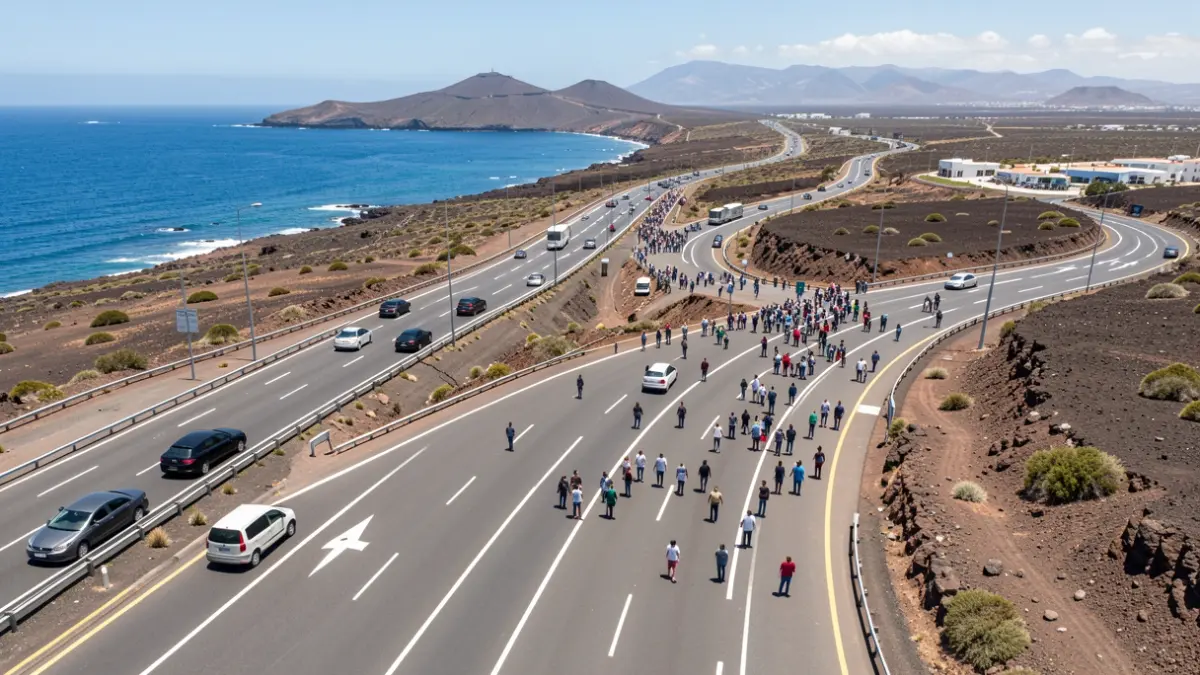
The Ministry of Public Works, Housing, and Mobility will allocate 202,603.20 euros to analyze the feasibility of implementing BUS-VAO lanes on the GC-1 and GC-3 roads in Gran Canaria, which are crucial for island access and connectivity. The study will assess the application of intelligent transport systems on the southern highway (GC-1) and the Las Palmas de Gran Canaria Ring Road (GC-3).
The primary objective is to determine if these lanes can alleviate traffic jams and improve traffic flow in Gran Canaria, particularly in congested areas. The initiative aims to optimize existing infrastructure, encourage the use of public transport and carpooling, aligning with the government's strategy for efficient and sustainable mobility.
The General Directorate of Road Infrastructure has commissioned the public company INECO to provide technical assistance for this study. It will examine the technical, functional, economic, territorial, and environmental feasibility, as well as define priorities for future construction projects.
According to the Ministry, the study will enable informed decisions to significantly enhance mobility on the island. Alternatives will be explored to optimize infrastructure capacity and provide effective solutions against congestion on the capital's access routes.
The study area covers specific sections of the GC-1 (from kilometer point 3 to the airport) and the GC-3 (from its junction with the GC-1 to the University of Las Palmas de Gran Canaria), corridors experiencing high travel volumes and recurrent congestion.
The project will be developed in two phases. The first will involve collecting and analyzing mobility and traffic data, traffic counts, public transport supply studies, and mapping. The second phase will focus on traffic modeling and scenario simulations to evaluate the impact of BUS-VAO lanes.
Additionally, a socioeconomic analysis will be conducted, considering time savings for users, reduction of pollutant emissions, improved road safety, and associated costs of different alternatives, to identify the most viable corridors.