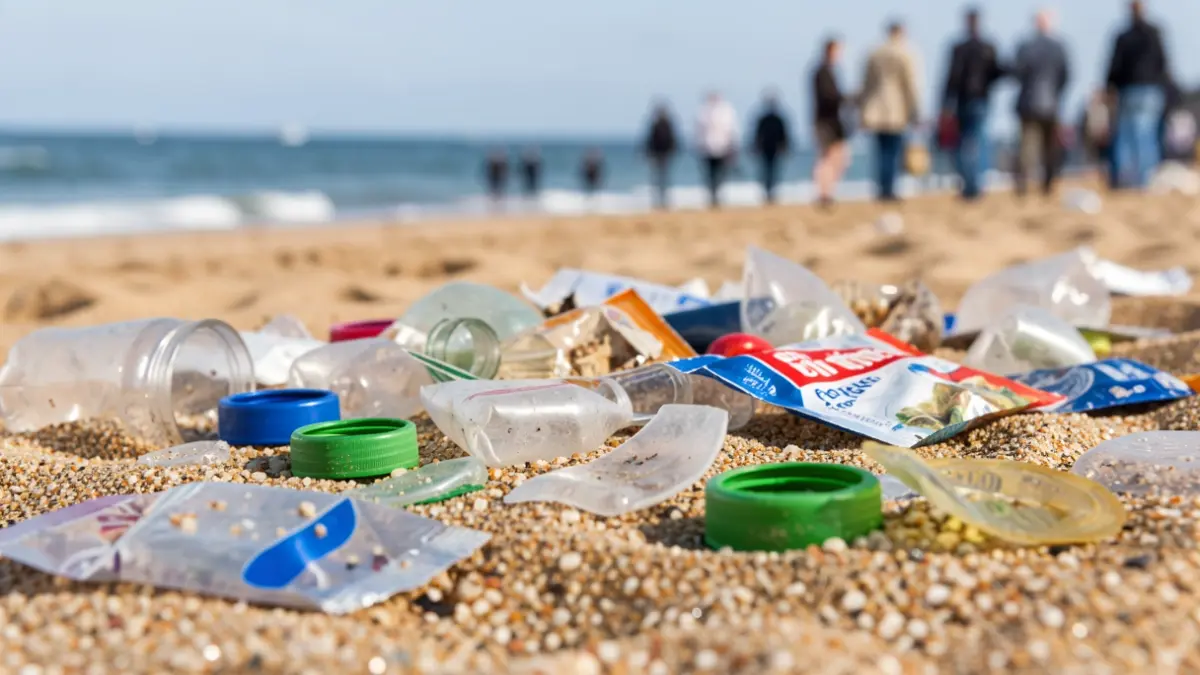
This international project, which also involves experts from Brazil, Morocco, Spain, Panama, the United Kingdom, South Africa, France, the United States, and Colombia, goes beyond classifying marine plastic waste to offer objective indices and meters. The tool allows for the analysis of beach plastic litter by incorporating variables not shown in usual waste counts, such as the diversity of products and brands, the presence of specific companies, the functional characteristics of the waste, its geographical origin, or its environmental hazard.
TIPLI generates a kind of 'barcode' for pollution, identifying and tracing waste back to its producers. This information can be used to improve waste management and adopt more specific prevention measures, also involving manufacturers. The tool has been tested in various locations, including the Bahía de Formas on the southeastern coast of Gran Canaria, where a notable diversity of products and brands was observed, with most identified debris originating from Spain, reflecting the island's consumption patterns.
The research, led by Professor Nelson Rangel Buitrago, included the participation of ULPGC researchers Leví García Romero and Carolina Peña Alonso, affiliated with the Geography, Environment, and Geographic Information Technologies (GEOTIGMA) Group at the Institute of Oceanography and Global Change (IOCAG). Leví García highlighted that "for decades we have counted how much trash is on the beaches, but now we can begin to read what story that trash tells: what products form it, what brands appear, and what companies are behind it."
The study has been published in the international journal Marine Pollution Bulletin, a leading publication specializing in marine pollution and widely recognized in the fields of environmental science, oceanography, and marine biology.