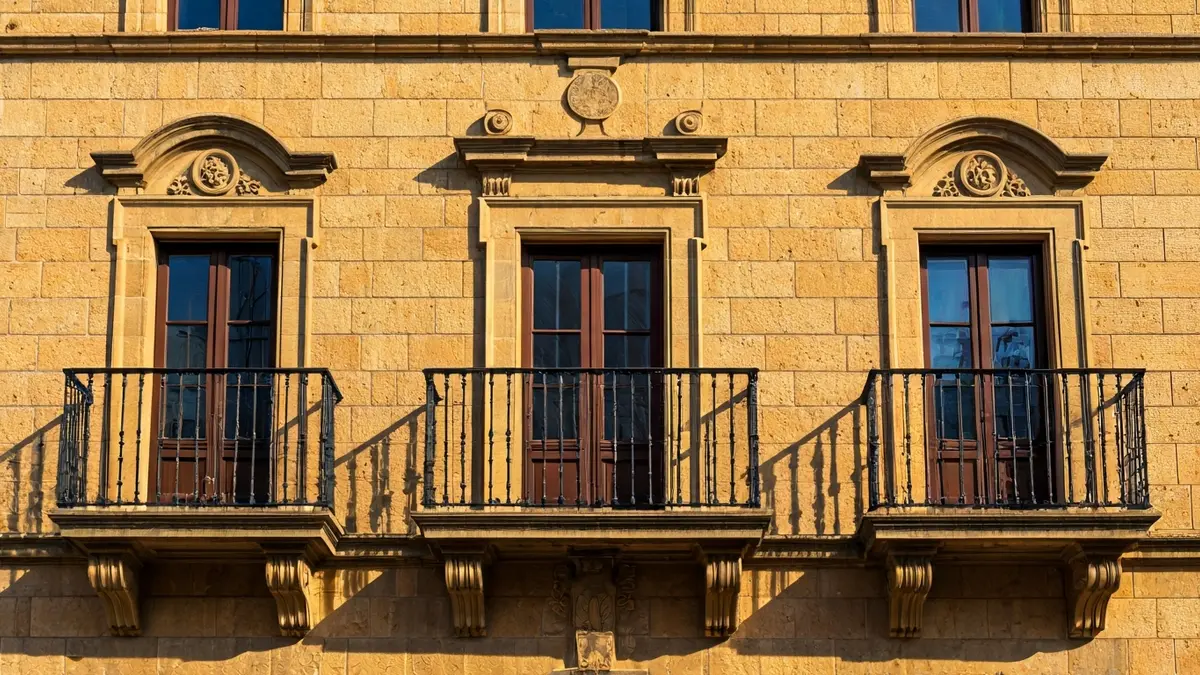
The municipal project aims to convert the historic property into a strategic point for promoting Valsequillo. The local administration acquired the barracks and an adjacent estate of over 6,000 square meters last December, thanks to a grant from the Ministry of Culture of the Government of Spain awarded in 2022.
Although the initial aid covered both the purchase and rehabilitation, the City Council could not allocate funds for the renovation due to the project's administrative status. The grant was at risk of being lost after a change in mandate caused by a no-confidence motion that removed Francisco Atta, who had served as mayor for 14 years. At that time, the necessary procedures had not been completed, and there was no closed agreement with the Macías family, the property owners, which led to prioritizing the purchase over rehabilitation.
Recently, the Minister of Territorial Policy and Democratic Memory of the Government of Spain, Ángel Víctor Torres, visited the Cuartel del Colmenar. He was accompanied by the mayor of Valsequillo, Juan Carlos Hernández Atta, the municipal government group, and the sub-delegate of the Government in the Canary Islands, Teresa Mayans. During the tour, the minister learned firsthand about the history of this emblematic building from the official chronicler of the municipality, María Teresa Cabrera.
The building, constructed in 1530 and originally intended as cavalry barracks, was declared a Site of Cultural Interest in 2003. It holds great historical value, especially due to its connection with the writer Benito Pérez Galdós. His grandfather, Lieutenant Antonio Pérez Gutiérrez, was stationed at these barracks, and his father, Sebastián de San Juan Evangelista Pérez Macías, a prominent military figure during the War of Independence, was born in the annexed house.