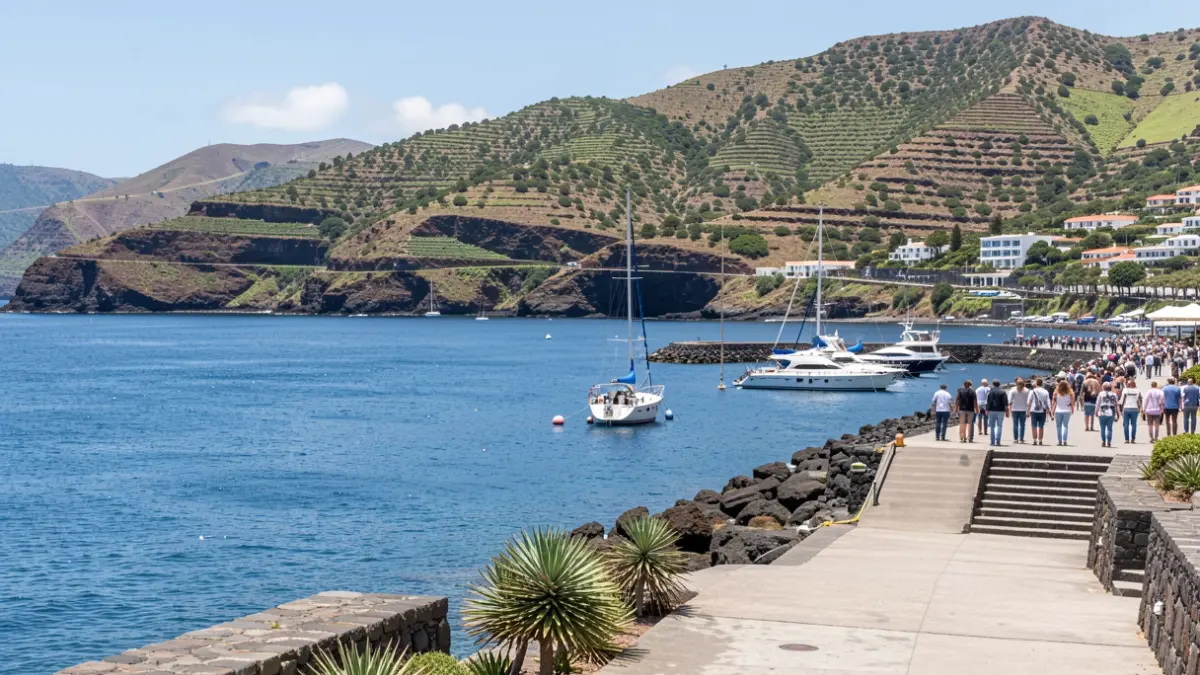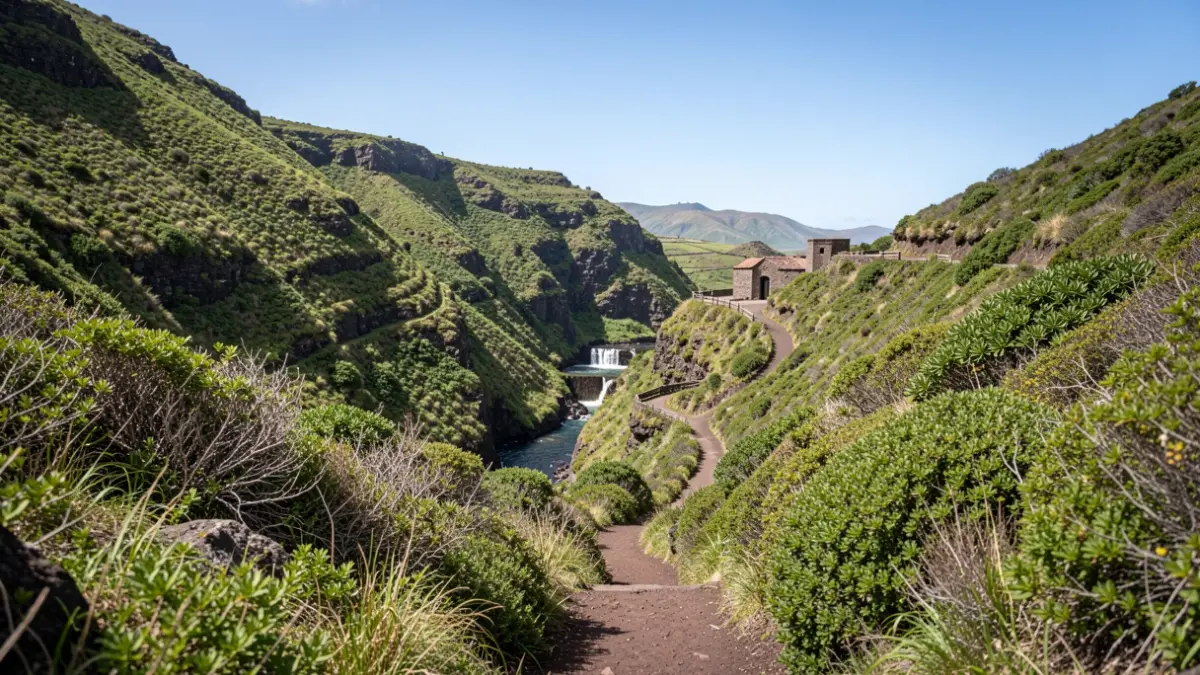
The Rutas 2030 initiative, promoted by the Government of the Canary Islands and Islas Responsables Lab (IRLab), held a new edition in San Sebastián de La Gomera. The project aims to connect science, innovation, and technological development with the specific challenges of different territories, focusing this time on the La Laja ravine and its surroundings.
During the event, proposals were discussed to address the expansion of fountain grass (Pennisetum setaceum), an invasive species affecting Canary Islands ecosystems. The company Adventia Pharma presented a biotechnological alternative to traditional control methods. Furthermore, avenues were explored to recover the use of the ravine's water resources and preserve the traditional knowledge associated with this area, highlighting the hydraulic heritage of the Molino del Agua de La Longuera.
The Vice-Minister of the Cabinet of the President of the Canary Islands, Octavio Caraballo, emphasized the importance of bringing innovation to municipalities and territorializing the objectives of the Canary Agenda 2030. He noted that Rutas 2030 allows listening to those who know the territory firsthand and observing how science can contribute to solving environmental problems and recovering identity-based knowledge.
The mayor of San Sebastián de La Gomera, Angélica Padilla, stressed that the initiative allows viewing the La Laja ravine not only from its heritage and environmental value but also as an opportunity for development. She highlighted that recovering the water culture and the knowledge of the elders is essential for the territory's identity and future.
The insular coordinator of the La Gomera Biosphere Reserve, Diego Chinea, valued the opportunity to address environmental and social challenges through knowledge, innovation, and citizen participation, combining local experience with scientific and technological solutions.
This initiative, which has already taken place on other islands such as Gran Canaria, El Hierro, Lanzarote, Fuerteventura, and La Palma, is part of the implementation of the Canary Agenda 2030 and aims for the archipelago's talent to contribute to equitably facing the challenges of each island.