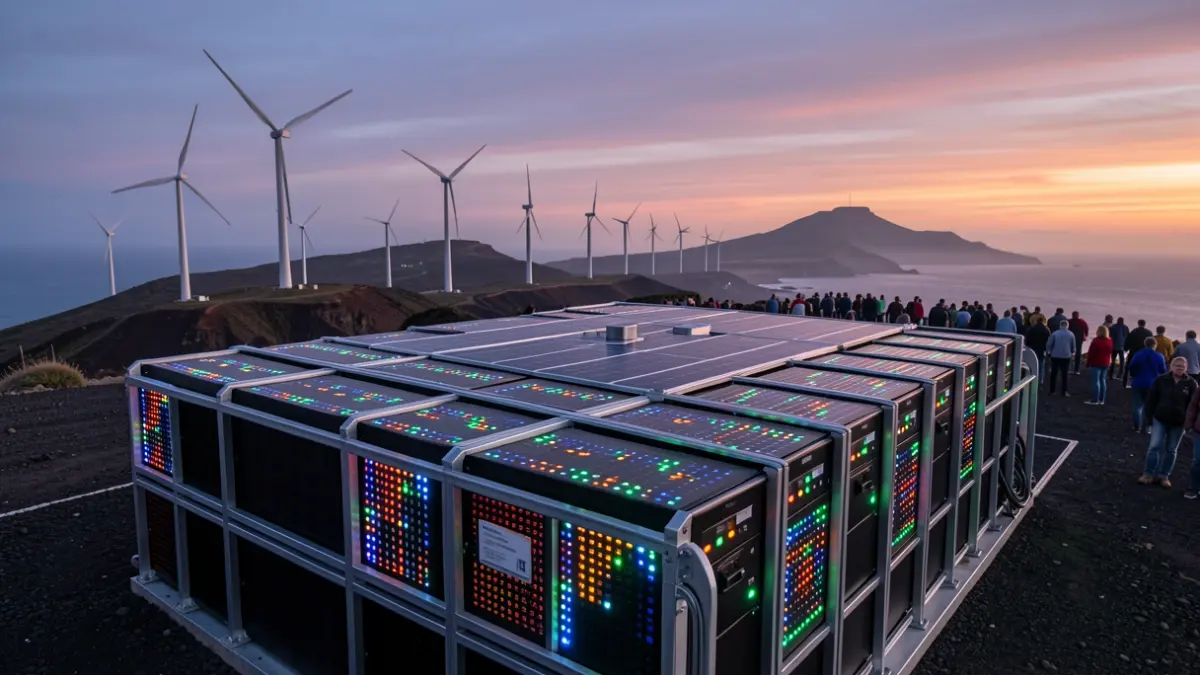
The electrical system operator, Red Eléctrica, is finalizing regulations for the integration of batteries into the electrical system of the Canary Islands. The modification of the royal decree governing the electrical systems of non-peninsular territories (738/2015) will enable the storage of renewable energy surpluses. Following the approval of the new text, Red Eléctrica will have three months to implement these elements in its operations.
Sources from the operator confirm that the necessary changes are already in the public consultation phase. Although the complete new decree, which also addresses promoter remuneration and other significant variations, will take time to develop and its validation in the Congress of Deputies is not guaranteed, the three-month period is considered sufficient by REE.
The announcement of the batteries' entry into play was made by the Secretary of State for Energy, Joan Groizard, during his recent visit to the Canary Islands. The incorporation of these systems responds to pressure from promoters and the Government of the Canary Islands to avoid unnecessary wind turbine shutdowns when demand is low and wind is abundant, which could cause instability or blackouts. Batteries will allow the generated energy to be stored for later use.
The technical director of Aeolican, Marta Hernández Llopis, highlighted the need to update operational procedures to integrate this new scenario that will facilitate the penetration of renewables, as the system operator has not previously had these elements to meet demand in the Archipelago.
The president of Aeolican, Raúl Macías, stated that until now batteries were seen as a renewable generation module, but now it is necessary to define how to operate them autonomously. He is confident that with a clear operational and remuneration framework, storage systems will allow renewables to displace thermal power generation to a greater extent, which currently accounts for approximately 80% of electricity generation in the Islands and is polluting.
The need to accelerate decarbonization drives the imperative not to waste a single megawatt-hour generated by the sun and wind. Since 2018, the exponential growth of wind farms and photovoltaic plants has led to an increase in mandatory wind turbine shutdowns, escalating the amount of wasted renewable energy. In April 2025, this percentage reached 19.38%, exceeding recommendations for a territory aiming for climate neutrality.
The integration of clean energy also brings significant economic savings. The Canary Islands' electrical system, along with those of Balearic Islands, Ceuta, and Melilla, incurs a millionaire surcharge due to reliance on oil, which is passed on to citizens. Currently, a megawatt-hour from a thermal power plant costs around 200 euros, while wind energy costs approximately 65 euros.
The regulatory modification also includes the creation of a remuneration framework for batteries, which will provide greater clarity to investors and encourage investment in this sector.