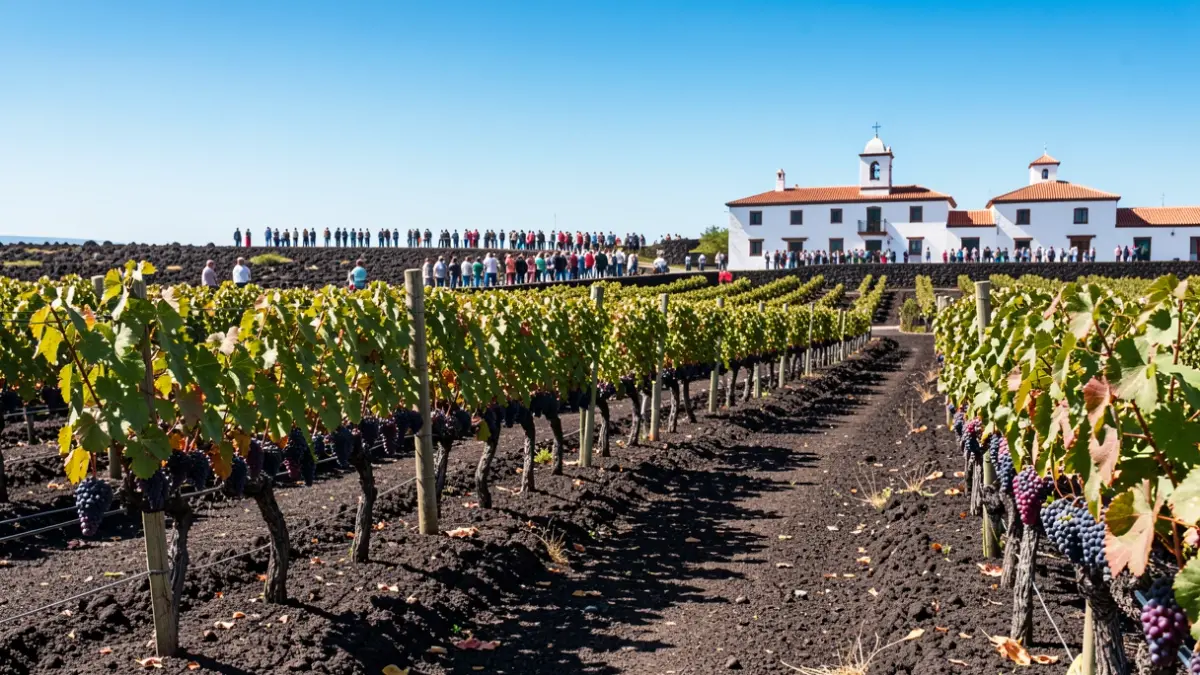
The grape harvest in Lanzarote, which began in early July, earlier than usual due to the heat, has already reached nearly 2.6 million kilos. The volcanic malvasía, listán blanca, and listán negra varieties are the main ones harvested so far. It is expected that with the diego and moscatel varieties, still on the vines, this year's harvest could reach 3 million kilos of fruit.
This campaign is shaping up to be the opposite of 2025, which barely exceeded 800,000 usable kilos. It will be more similar to 2023, when nearly 3.35 million kilos were reached, although it will not match the spectacular figure of 2018, which was close to 4 million kilos.
Some wineries have already begun producing their wines, with the expectation that the first bottles will be released to the market in the autumn, likely in November. It is estimated that half of the wine will be sold in Lanzarote and La Graciosa, 40% in the rest of the Canary Islands, and the remaining 10% between the mainland and abroad.
The island's unique cultivation system, which yields less fruit per hectare, increases the price per kilo. Up to 4 euros per kilo is expected for volcanic malvasía and other white varieties, and more than 3.5 euros per kilo for red varieties.
The deadline to apply for official aid for winegrowers, which coincides with the harvest, ends at the end of the month. More than 1,200 winegrowers are expected to submit their documentation at the headquarters of the Regulatory Council, located at the Monumento al Campesino.
Claimants with insured vineyards will receive 2,530 euros per hectare, while those without insurance will receive 2,310 euros per hectare, similar amounts to the previous three years. Payment will be made in phases, starting in the summer of 2027.
A portion of the funds, from the European Union for the protection of nearly two thousand hectares of vines, will be distributed in mid-next year. The remainder, with funds from the Canary Government and the State, will likely be paid between late 2027 and early 2028, given that funds from the previous campaign are still pending.