The project, executed by Transportes y Excavaciones Sccatmeca, S. L., recovers an infrastructure whose origins date back to the 1940s. According to historical references in the publication Historia de Tías, the Cabildo completed the construction of two Maretas on the southern slope of Montaña Blanca in 1945, designed to utilise rain runoff through catchment channels and storage tanks.
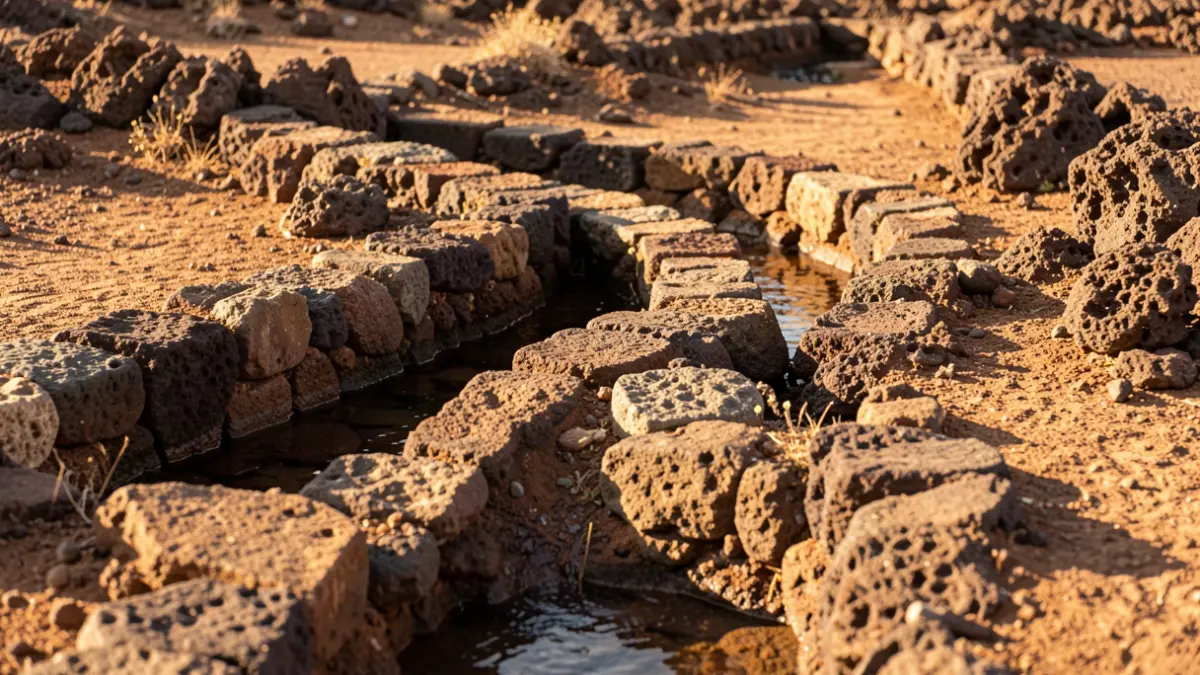
Before desalination, this system was key for supply. Channels carved into the slope collected water and led it to settling basins to clarify it before entering the cistern, from where it flowed to two tanks inside the mountain. Over time, mud, stones, and vegetation clogged the outer channels, causing erosion on slopes and flooding in lower areas.
“"The Maretas tell how Lanzarote learned to make use of rain on an island where every drop counted. Recovering its channels is preserving that memory and returning it to its function."
The works included the removal of sediments, repair of breaks in the outer wall, and waterproofing of the channels. Most of the work was done by hand to preserve the surrounding terrain. The access road was also prepared, and the manholes and inner channel were cleaned.
“"The important thing is to value the work of our ancestors who carried out authentic hydraulic engineering works to recover rainwater and give it domestic and agricultural use. We must not forget our history and, above all, be proud of it."
With the recovery of the outer channels, water can once again follow the original path from the slope to the tanks. This intervention improves rainwater conveyance, prevents damage from uncontrolled runoff, and contributes to preserving an essential part of Lanzarote's hydraulic heritage and historical memory.