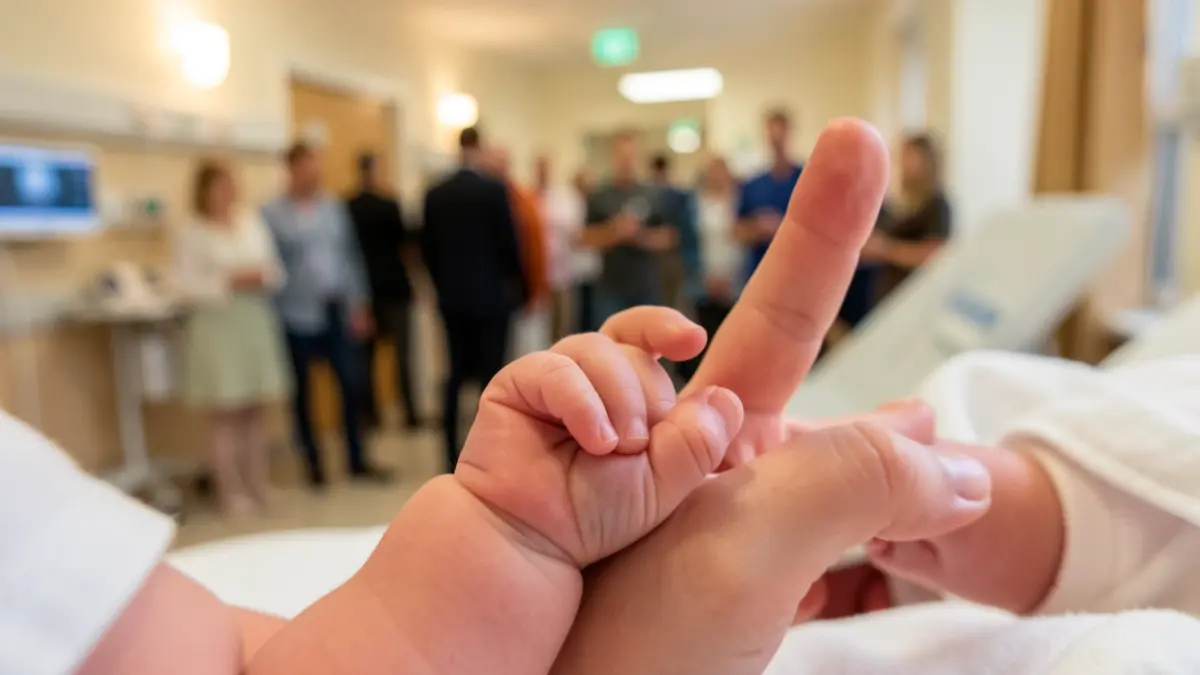
The birth rate situation in Lanzarote and La Graciosa continues its downward trend, reaching an average of 78 births per month between January and April 2026. This figure represents a decrease from the previously recorded average of at least 80 births per month.
During the first quarter of the year, the Doctor José Molina Orosa Hospital assisted a total of 305 births, including several twin deliveries, a higher number than usual in previous years. Consequently, 168 boys and 144 girls were born, reversing the trend from the same period in 2025, which had shown a female predominance.
It is anticipated that 2026 will conclude with fewer than a thousand births, marking the worst record in several decades, despite an overall increase in residents across the island's seven municipalities. This data starkly contrasts with estimates from the beginning of the century, when over 1,500 annual births were common, with monthly averages exceeding one hundred. The peak was reached in 2007 with 1,689 deliveries.
A notable aspect is the increase in the use of the Cesarean section technique, which was employed in 87 interventions (over 28.5%), compared to just over 20.7% in the early months of 2025. Vaginal births accounted for 218. Epidural usage remained similar to the previous year, being used in 215 interventions, slightly over 70% of cases.