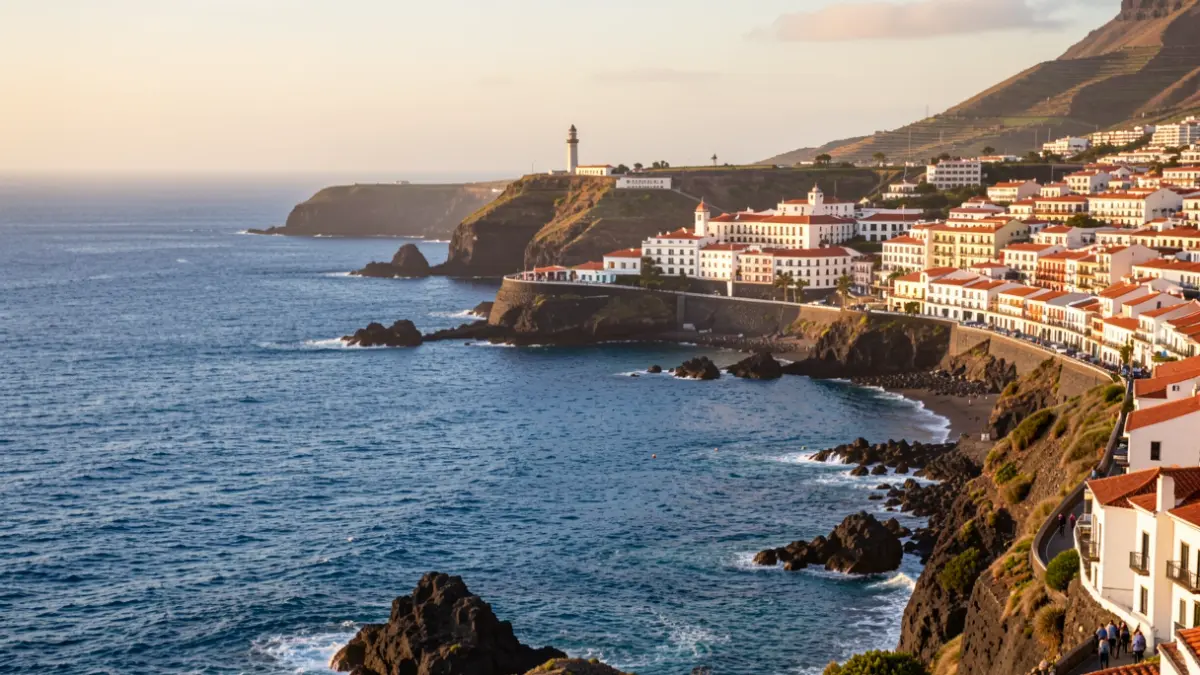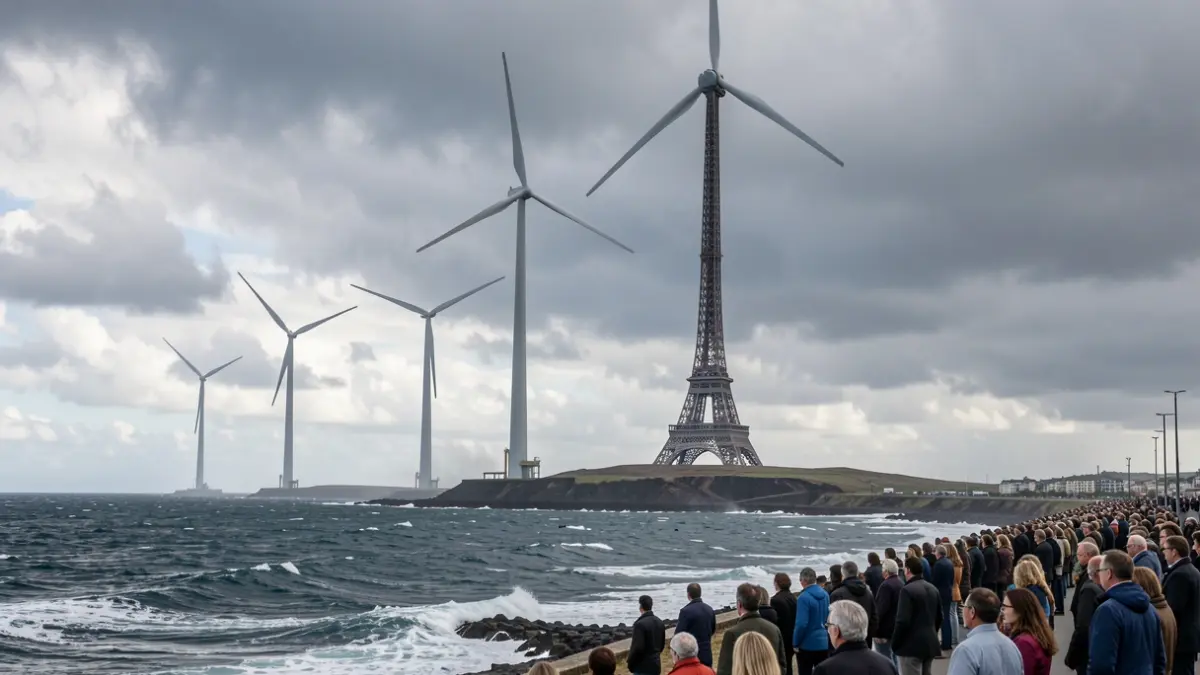
The Ministry for Ecological Transition's planning includes the installation of offshore wind turbines in Lanzarote that could reach heights similar to the Eiffel Tower, between 247 and 260 meters. These would be situated just 1.7 to 1.8 kilometers from the island's southern coast.
This information comes from a report commissioned by the César Manrique Foundation. The document emphasizes the necessary and urgent need for a comprehensive scientific study to assess the impacts on the environment, flora, and fauna, aiming to understand the overall impact of the wind energy business.
The report, titled 'Potential Diagnosis of Integral Wind Development in the Canary Islands and, particularly, on the island of Lanzarote,' was prepared by the Bioeconomy, Natural Resources, and Ecological Economy Group at the University of Santiago de Compostela, led by Rosa María Regueiro. It analyzes both onshore and offshore wind development, proposing the establishment of two implementation areas through POEM (Maritime Spatial Planning) zoning.
The study warns that no energy transition can be considered truly just if it degrades the landscape, compromises sustainable tourism, weakens artisanal fishing, or endangers the cultural and economic heritage that has historically defined the island's relationship with the sea.
The energy transition is non-negotiable. Its legitimacy will depend on how and where it is done and that no one pays a disproportionate price for others to reap the benefits.
It suggests following the Danish model, where public ownership ensures that benefits are reinvested in the island's society. Regarding onshore wind, it prioritizes repowering existing wind farms, promoting the 'sensible' installation of photovoltaics on urban and industrial roofs, and fostering local energy communities before sacrificing agricultural land and landscape.
Concerning offshore wind, the report indicates that the proposed zones overlap with areas of high fishing effort. It criticizes that the artisanal fleet is 'invisible on official maps' and that zoning could significantly affect this sector, as well as recreational fishing and high-level sports activities.
The authors argue that the current model results in Lanzarote bearing the full costs—environmental, territorial, and social—while the economic benefits travel elsewhere. They caution about the significant visual impact of the proposed turbines.
Fishing grounds, food security, the cohesion of coastal communities, and the marine landscape are assets of general interest, not negative externalities of progress. They must be weighed equally with decarbonization objectives.
The report calls for the correction of the proposed zones by incorporating real data from fishing guilds and producer organizations. It proposes the creation of Priority Fishing Use Zones (ZUPER) to provide essential fishing grounds with a real level of protection and requests that, until this aspect is addressed, the processing of projects in highly sensitive areas should be 'cautiously suspended'.
Finally, it recommends an active participation model with public ownership that prioritizes respect for the island's territory and identity. It states that 'exploitation benefits should remain in said territory' and advocates for installed capacity to belong to individuals, cooperatives, or public companies to prevent speculation.