The work, directed and produced by Ayoze O’Shanahan, is the result of five years of research and brings together testimonies, photographs, and historical documents reflecting the maritime and cultural links between both sides of the Atlantic. The project recovers and values the shared historical memory between Canarian fishermen and the Imraguen communities.
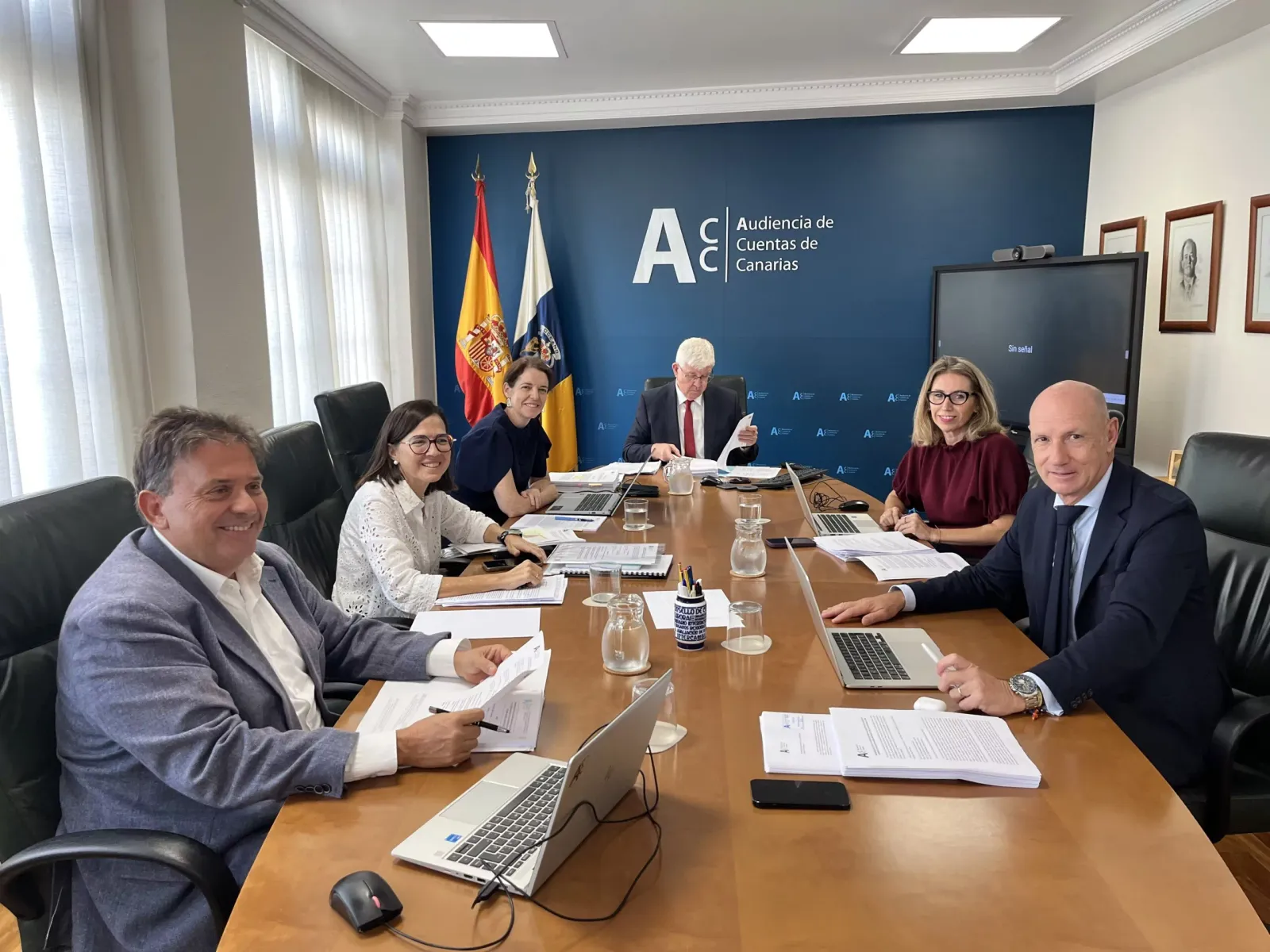
The event was attended by the Minister of Fisheries, Samuel Martín; the director and producer of the work, Ayoze O’Shanahan; the journalist and co-author of the book, Pepe Naranjo; the expert in traditional boats and co-author of the publication, Daniel Rodríguez Zaragoza; the photographer Juan Luis Rod, and Abderraman Ould Chevif, president of the Association for Social Safeguarding and Promotion of Imraguen Culture. During the presentation, various extracts from the publication were read, and an exhibition of nearly 40 photographs was inaugurated.
Minister of Fisheries, Samuel Martín, highlighted the importance of recovering a history closely linked to Lanzarote's maritime identity. “With this project, we contribute to preserving a part of our historical memory that shows how the sea has united the Canary Islands and Mauritania for centuries. The relationship between our fishermen and the Imraguen community goes far beyond fishing activity: it is a story of coexistence, exchange, and learning that we must know, disseminate, and pass on to new generations,” he stated.
Ayoze O’Shanahan explained that the objective of the research was to rescue a story protagonized by ordinary people which, despite its importance, has largely remained outside major historical narratives. “For centuries, Canarian fishermen, many of them from Lanzarote, shared the waters and life on the Mauritanian coast with the Imraguen community. From that encounter, boats, fishing techniques, and even numerous words from Canarian Spanish incorporated into their language remain. We wanted to document this trace before it disappears and record a bond that is part of the history of both peoples,” he affirmed.
The book is the result of five years of research, gathering testimonies, archives, letters, photographs, and historical documentation. Recovered materials include a logbook from 1822 and a coastal chart from 1890. The publication features chapters by Pepe Naranjo, Cheikh Ben Ahmadou Bouhbini, Álvaro Díaz de Paz, and José Daniel Rodríguez Zaragoza.
For centuries, fishermen from the islands, especially Lanzarote, frequented the waters of the Sahara and Mauritania. In places like Arguin Bank and Galgo Bay, they established relationships with the Imraguen, who not only exchanged products and knowledge but also adopted fishing techniques, boats, and linguistic expressions from the Canary Islands. Words like 'viento' (wind), 'vela' (sail), 'ancla' (anchor), 'cabo' (rope), 'orza' (tack), 'trinquete' (jib), 'gofio' (millet flour), or 'bizcocho' (biscuit) remain in their vocabulary.
The work also incorporates images from the documentary ‘Pescadores del Desierto’ and photographs by Juan Luis Rod, Mario Blanco, and Yagomar Fall, as well as materials from collections and archives such as Memoria Digital Lanzarote and the Musée National de la Marine de France.
The presentation of Tamunant and its photographic exhibition is part of the cultural events organized by the Cabildo de Lanzarote and La Graciosa, aiming to strengthen and disseminate the historical, social, and cultural ties between both sides of the Atlantic.