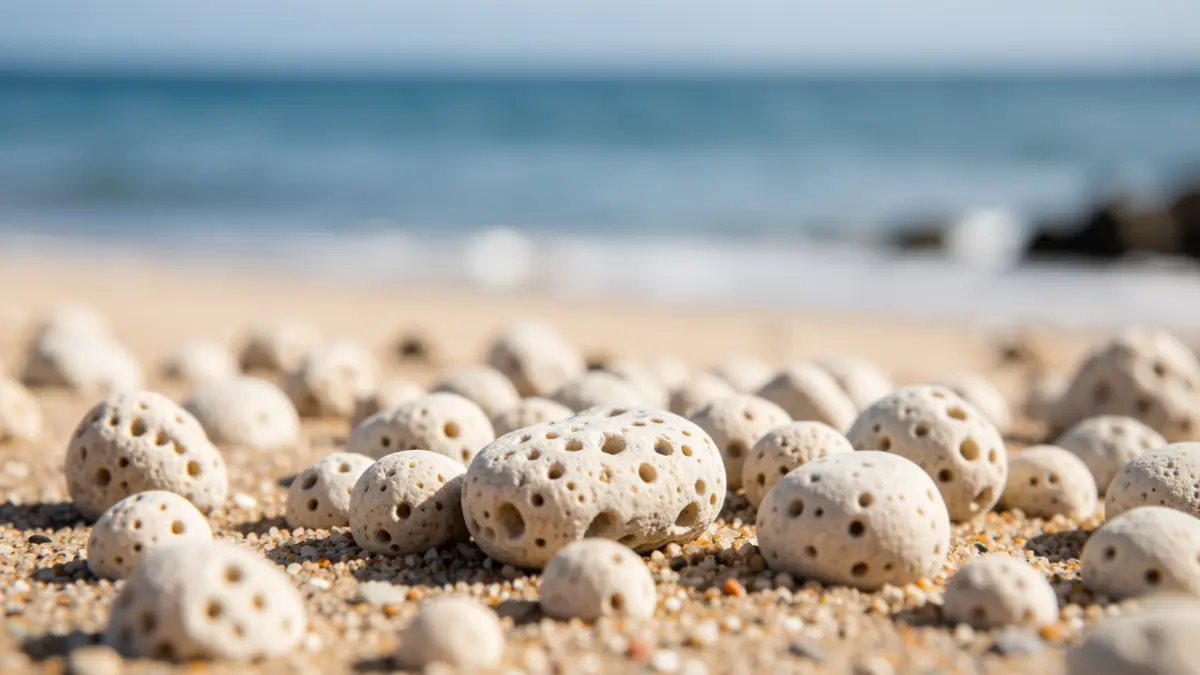
Residents of the municipality, who had kept these marine formations as decorative elements in their homes, have contacted the institution's environmental guides to return them to their natural habitat. In many cases, the stones were collected without knowledge of their vital importance to the marine ecosystem.
The environmental awareness campaign promoted by the department led by councilor David Fajardo has yielded results. The beach, known on social media as "popcorn beach," has suffered significant degradation in recent years due to the mass removal of these elements, transitioning from a bright seabed to areas with a scarcity of stones.
“"Many residents and tourists who have taken sea stones from our coasts do so out of pure ignorance."
The Mayor of La Oliva, Isaí Blanco, emphasized the importance of continuing these educational initiatives. "Through environmental awareness campaigns, we not only prevent these marine formations from being taken from the beaches but also encourage those who have already done so to contact the Department of Environment so they can be returned to their natural environment," he stated.
The Councilor for the Environment, David Fajardo, added that the campaign is bearing fruit, observing how these natural elements, once found in homes for decorative purposes, are now being returned to the coast. Citizen collaboration, through environmental guides or the Local Police, facilitates the relocation of the sea stones to their original ecosystem.
This action, which goes beyond the recovery of sea stones, promotes respect for all elements of the natural environment, in line with the Natural Heritage Law. The City Council urges residents and visitors to enjoy the sea stones in their natural habitat and to contact the authorities if they find them outside the beaches.