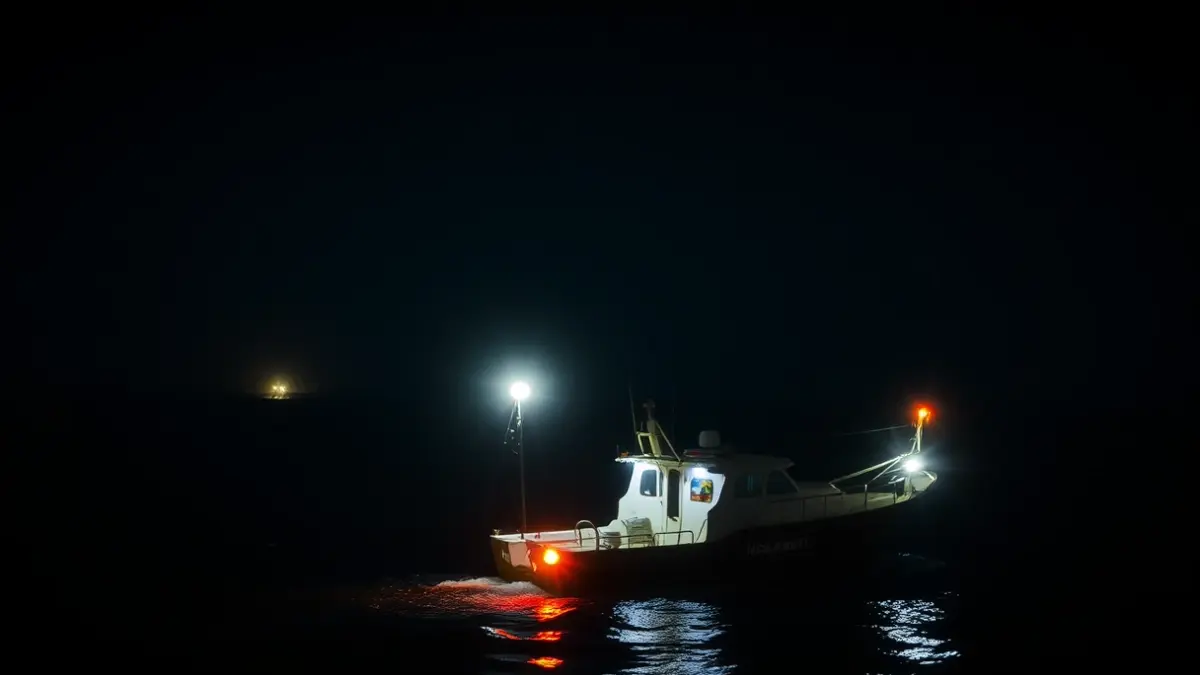
The intervention occurred after detecting illicit fishing activity within this protected area. A vessel not listed in the authorized fishing fleet for the reserve was intercepted, transporting fish irregularly caught using 'nasas' (trap pots), a type of gear whose use is completely prohibited in the zone.
This conduct violates current regulations established in the Canary Islands Fishing Law, which governs fishing activity at the autonomous community level. The law stipulates that express authorization is mandatory to fish in the La Graciosa Marine Reserve, whose management is shared between the General Secretariat of Fisheries and the Ministry of Agriculture, Livestock, Fisheries and Food Sovereignty of the Government of the Canary Islands.
“"The use of trap pots within the reserve is prohibited, as fishing activity in this area is strictly limited to certain modalities."
For professional fishing, only very specific traditional gear is allowed, mainly hooks targeting specific species. Recreational fishing is restricted to the use of rod, line, or trolling, always with the corresponding prior authorization.
The professional fisherman was reported for various administrative infractions after it was confirmed that he was setting trap pots – a completely prohibited practice – in areas such as Playa Lambra and Punta La Sonsa, both within the reserve. Investigations revealed that the man left the gear submerged for several days, returning later to collect the catches, and that this activity was carried out at night, with navigation lights off to avoid detection.
Law 17/2003 of the Canary Islands Fishing Law provides for penalties for infractions in protected areas, with fines ranging from 301 to over 300,000 euros, in addition to the possible withdrawal of the license. The administrative complaint has been forwarded to the Vice-Ministry of Fisheries and Agriculture of the Government of the Canary Islands for processing.