The Canary Islands archipelago has initiated an ambitious program of actions with a total investment of 21 million euros, co-financed by European Next Generation funds, aiming to ensure the supply of potable water to all its islands. The initiative, driven by the Department of Territorial Policy, Territorial Cohesion, and Water, seeks to modernize existing infrastructure, optimize distribution networks, reduce water losses, and enhance overall water security.
This strategy represents a significant shift in the hydraulic planning of the Canary Islands. According to statements from the Vice-Minister of Emergencies and Water, Marcos Lorenzo, the region has successfully caught up in hydrological planning, overcoming years of delays that had led to proceedings by the European Union. Currently, all Canary Islands' hydrographic demarcations have valid planning for the 2022-2027 period, and work is already underway for the next cycle (2028-2033).
Lorenzo emphasized the importance of precise investment due to limited resources, noting that the Canary Islands now ranks among the most advanced autonomous communities in preparing for the fourth hydrological planning cycle.
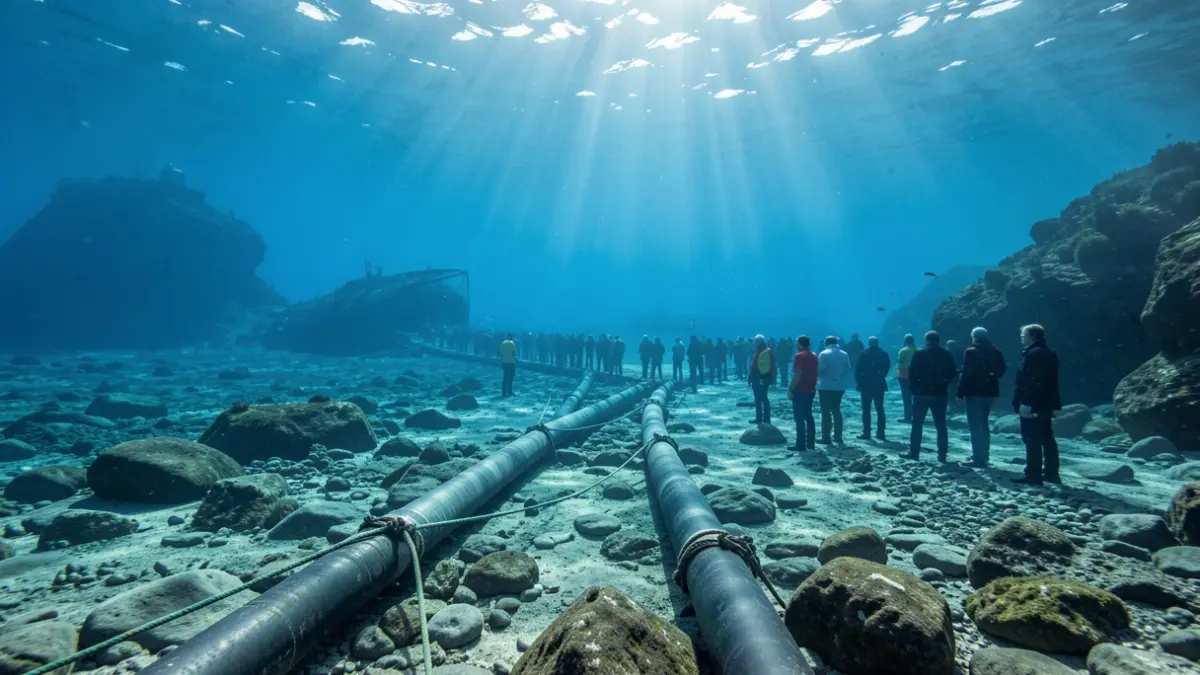
One of the most notable projects is the renewal of the maritime connection supplying potable water to La Graciosa. This strategically important and complex work has an investment of 3.8 million euros. The works for the new underwater section, which will link Lanzarote with La Graciosa, will be put out to tender soon. The project includes the installation of approximately 1,220 meters of underwater pipeline and nearly 1,100 meters of land pipelines in the Famara cliff area, using high-resistance polyethylene pipes.
The execution of this project within the Chinijo Archipelago, a protected natural area, required over two years of administrative and environmental processing, including detailed studies of marine habitats and protected fauna. To ensure compliance with environmental measures, specialized technical assistance will be contracted. The project is being fast-tracked to take advantage of favorable marine conditions during September and October.
The objective is to minimize technical and environmental risks by concentrating the installation of the underwater section during this period. The new pipeline will complement the existing one, providing a dual supply guarantee for La Graciosa, an island entirely dependent on water produced in Lanzarote. The Minister of Territorial Policy, Manuel Miranda, highlighted the significance of this infrastructure for daily life and tourism on the island.
Investments extend to all islands: on La Palma, work will be done on the Las Angustias siphon; on El Hierro, losses will be reduced and telemetry implemented; on La Gomera, pipelines and strategic reservoirs will be improved; on Tenerife, municipal networks will be modernized; in Gran Canaria, desalination-related actions will take place; in Lanzarote, the North Zonzamas-Arrieta line will be reinforced; and in Fuerteventura, hydraulic infrastructure will be enhanced.