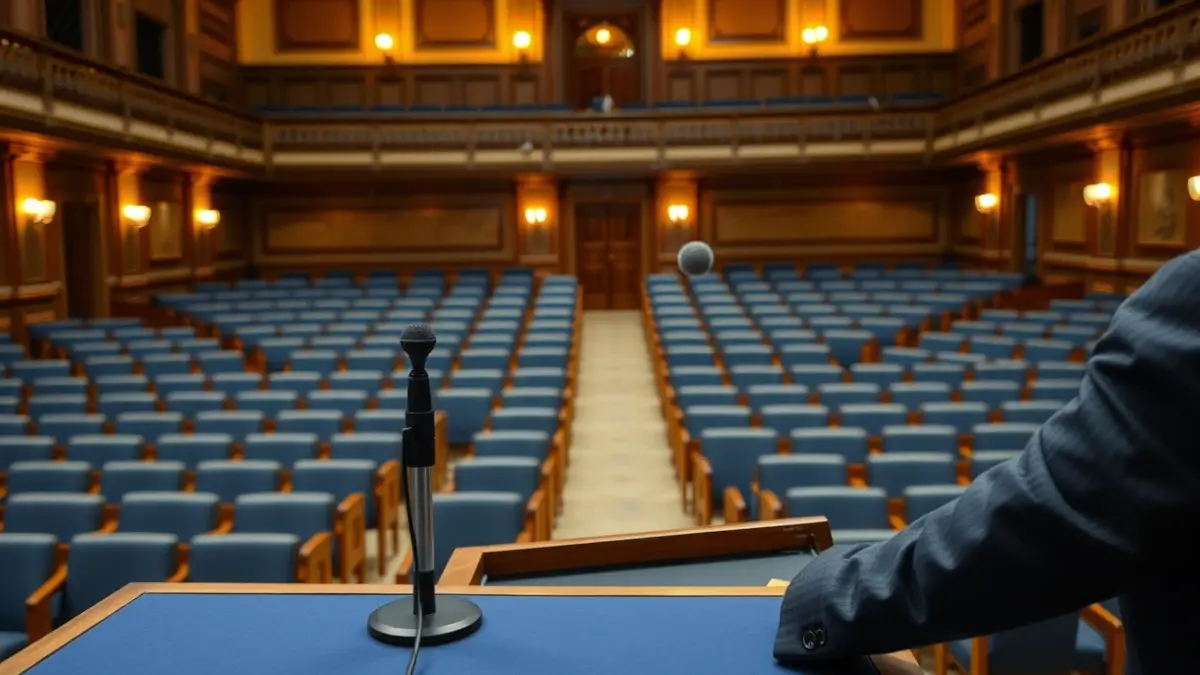
The legal document submitted by Nueva Canarias, which is heavily legal in nature, requests that the plenary session to resolve the recusal be convened by the first deputy mayor. This request is based on the belief that the mayor should not convene or preside over a session that directly addresses his own situation.
This action follows a tense municipal plenary session last week, where the mayor relied on a report from the Government of Canarias that, according to his interpretation, supports his move to the new political formation. This report contrasts with the stance of the secretary of the Santa Lucía de Tirajana City Council, who, after receiving the expulsion act of six councilors from Nueva Canarias, ruled that they should be considered defectors and move to the non-attached group.
“"The recusal is based on the fact that the mayor has continued to act in this file that affects him in his economic-patrimonial sphere, as it entails by law the cessation of his exclusive dedication and the corresponding remunerations and business contributions of the General Social Security Regime."
Being considered a defector would imply the loss of executive responsibility positions and associated salaries. Furthermore, this situation could have significant repercussions for the new political formation, not only in Santa Lucía de Tirajana but also in other municipalities in Gran Canaria where similar circumstances arise.
According to Nueva Canarias, this political juncture also affects the mayor in his political-representative sphere, by determining the loss of his status as a member of the NC-FAC Municipal Political Group, and in the organic-institutional dimension, by modifying the composition of the governing majority of the corporation.