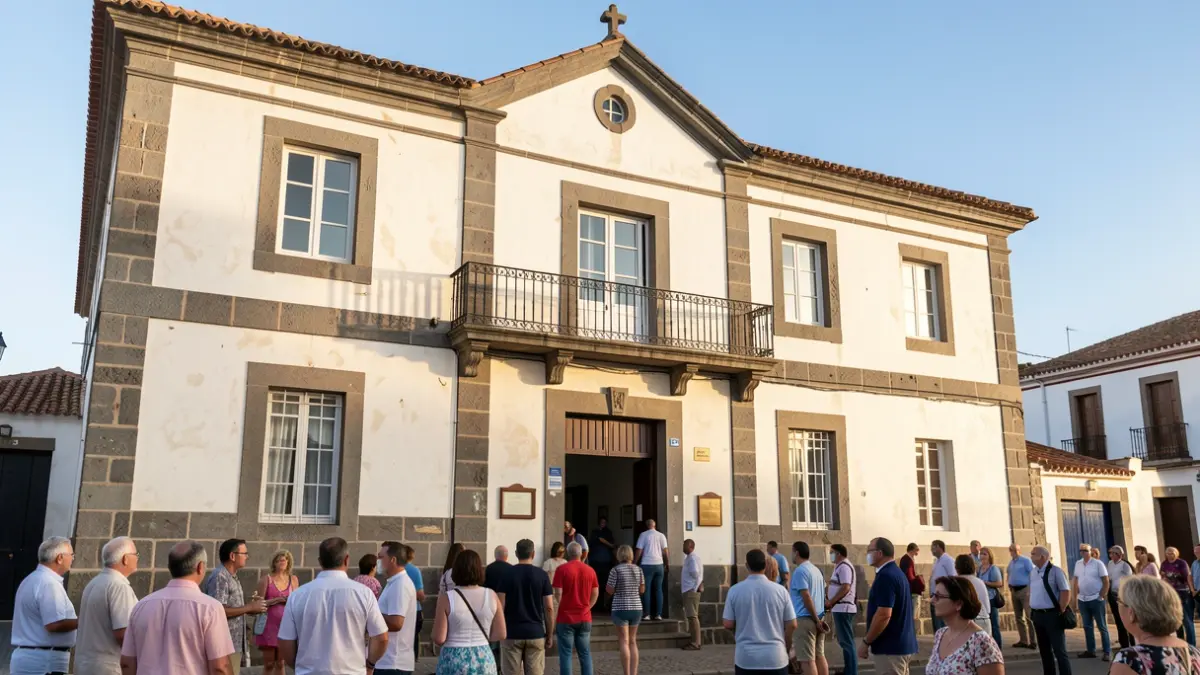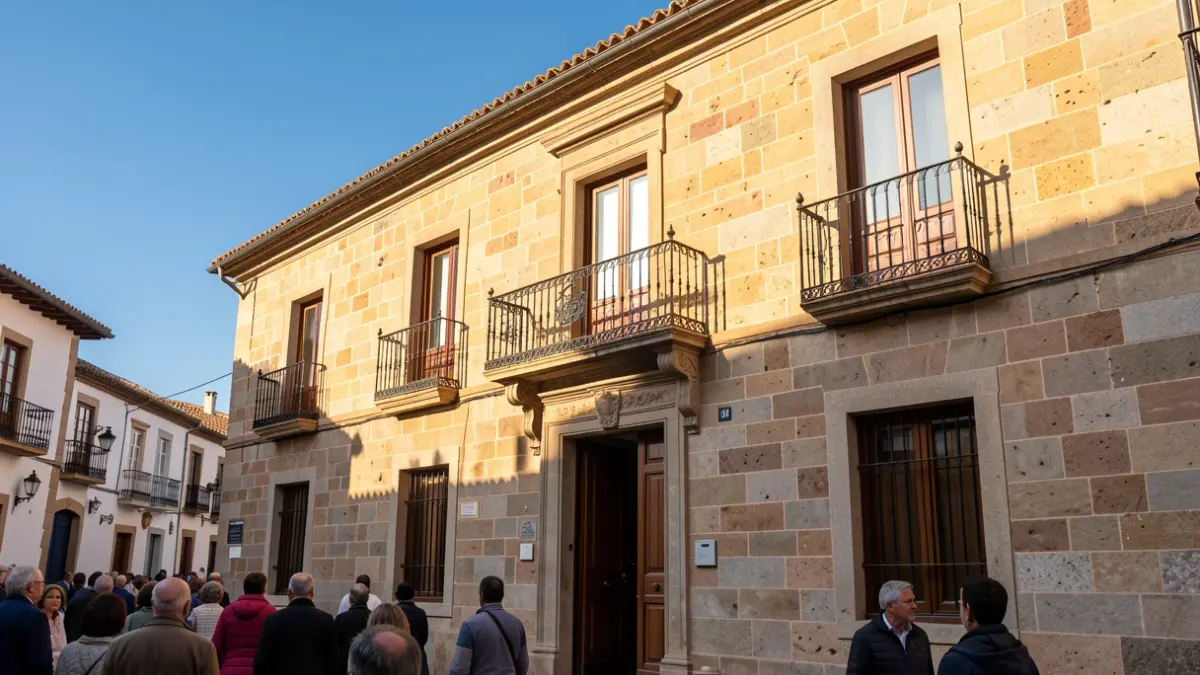
The insular director of Culture of the Cabildo of Gran Canaria, Serafín Sánchez, closed the thirteenth edition of the Ethnography and Folklore Campus on July 17th in the plenary hall of the Ingenio Town Hall. The conference focused on the results of the initiative ‘Gran Canaria Singular: Calando Cultura’, promoted by the island Corporation's Culture Department.
Serafín Sánchez, also a professor of Administrative Fundamentals at the IES de Ingenio, explained that the Cabildo's objective was to "make artisanal lacemaking visible as part of our intangible heritage, with the intention of transmitting it to new generations, but with an interdisciplinary perspective and a future projection." The project involved students from two educational centers on the island: the IES de Ingenio and the IES Pérez Galdós in Las Palmas de Gran Canaria. Sánchez warned that this traditional manifestation, "a symbol of heritage, creativity, and cultural resistance," needs to be reactivated to prevent its possible extinction.
The insular director emphasized that "preserving our culture means keeping it alive, making it evolve, and turning it into a tool for identity, knowledge, and social cohesion." Sánchez, who previously served as head of educational and cultural projects at the Canary Islands Government's Department of Education, highlighted the project's ability to connect with educational centers, cultural groups, and creators from various disciplines, as well as with the general public. "Any knowledge of any tradition is worth sharing. We are what we do to change who we are," he stated.
Sánchez concluded his speech by noting that the women who kept lacemaking alive for generations changed the future without knowing it, and that it is now up to the current society to do the same. "If in 30 years a boy or girl recognizes what a piece of lacemaking is as something of their own, we will have fulfilled our mission then," he declared.
Following the conference, seven communications prepared by young researchers on ethnography, folklore, and new perspectives on intangible tradition were presented. Among them, Ángel Vega spoke about the evolution of the 'folía' in Gran Canaria; Cristina Rodríguez, eleven years old, defended folklore as a fundamental pillar in her life; and Adrián Jiménez addressed the role of grandparents in transmitting values. Leire Hernández discussed the legacy of the harimaguadas, and Mencey Estévez highlighted theater as a voice for folklore and identity.
Lucía Pérez, a medical student, presented a study on gender bias in medical research, pointing out that only 33 percent of researchers are women, which makes diseases affecting a large part of the female population invisible. Finally, Yurima Pérez reviewed the history of the Tefía Concentration Camp in Fuerteventura, a Place of Democratic Memory designated by the Spanish Government.
The Ethnography and Folklore Campus, promoted by the ULPGC, is part of the 31st edition of the Ingenio International Folklore Festival ‘Solidarity Showcase of Peoples’, which will run until July 28th. The festival will conclude with a musical performance on July 25th, featuring groups from Taiwan, Ivory Coast, Greece, Armenia, Bulgaria, Puerto Rico, and Spain, along with local ensembles.