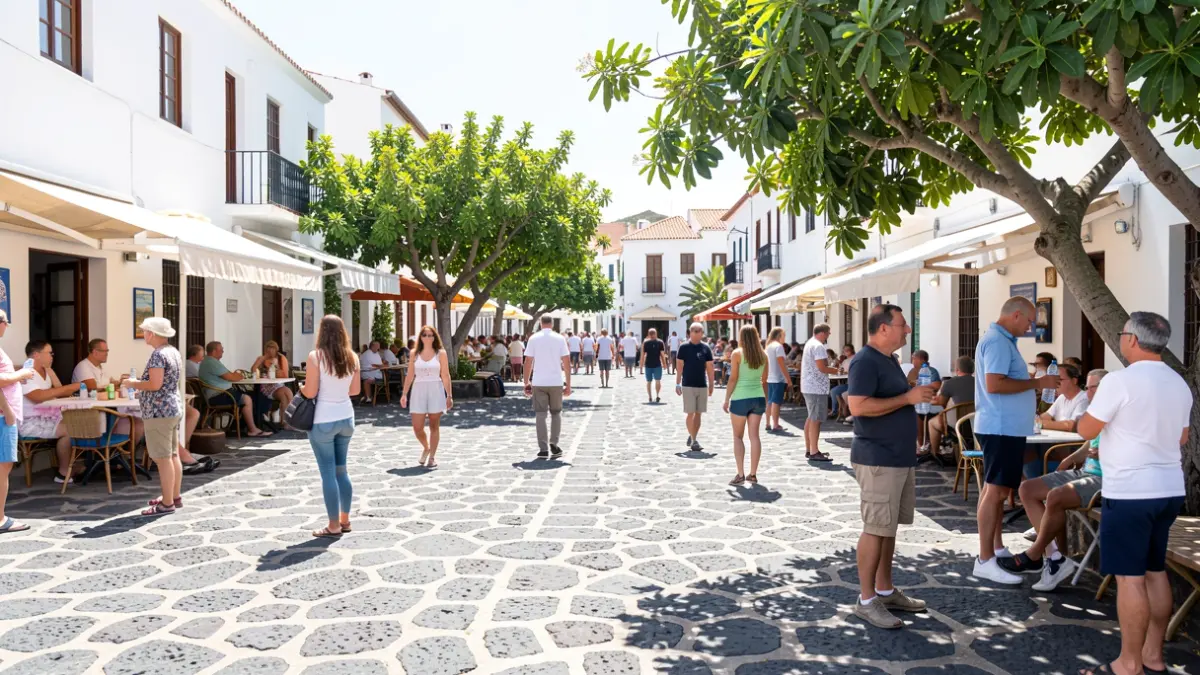
Residents of Tunte were surprised by the heat this Thursday. At 8:30 AM, the thermometer in the Plaza de Santiago already exceeded 30 degrees, reaching a high of 39.7 degrees throughout the day. Faced with the high temperatures, inhabitants avoided direct sun exposure, seeking shade and resorting to cold drinks such as water, juices, and soft drinks. Some opted to cover their faces with their t-shirts to protect themselves from the intense sun rays.
Despite the heatwave, cyclists continue to visit the town. Athletes like Alfonso Rodríguez and José Rodríguez, who were cycling from Agüimes, stopped to cool down. Alfonso mentioned that the heat is even more oppressive in his municipality due to the lack of breeze. Both cyclists, being experienced, carried energy gels to stay hydrated during their ride.
Food and beverage establishments have become a key refuge. Christopher Santana, a restaurateur at Bar Cuatro Esquinas, pointed out that air conditioning is essential to make the heat bearable, describing the place as a "boiler" without it. Many customers come to the bar seeking coolness, and in summer, although tourist numbers are lower, they usually order cold drinks.
“"If you don't have air conditioning, this place feels like a boiler and you get roasted because it's too hot"
Benches located in the shade of trees or buildings are highly sought after. A resident, who preferred not to reveal his name, considered the temperature "pleasant", comparing it to his experience working in Africa, where temperatures reached 50 degrees.
Visitors like Eduardo Radogna, originally from Italy, highlighted that the heat on the road is more unpleasant, with hot air entering through the windows. Residing in Arinaga, he noted that there, opening the windows is enough to cool the house, unlike in Tunte, where tap water comes out hot.
The agricultural sector is particularly vulnerable. Maximiliano Betancor, a farmer, starts his day very early to avoid the hottest hours, working until shortly after 10:00 AM. He wears a hat and stays hydrated to prevent "unpleasant surprises" and seeks to cool down in Tunte after his workday.
“"We farmers have a risky profession in summer, that's why we get up early to avoid the sun"
Mónika Kuriskva, from the Czech Republic, believes the heat in Ayagaures, where she lives, is worse than in Tunte, due to old pipes in her house that heat the water. She waits until night to take a shower and prefers going to the beach to cool off.
Some residents, like the retiree José Perdomo, see the heat as a natural part of summer. He feels "comfortable" and recalls working as a bricklayer with temperatures above 40 degrees. He spends time in his caravan and cave house, where opening the windows or using a fan is sufficient.
Celeste Martín limits her outings to the morning and returns home by midday, seeking shade and cold drinks. She suggests that, when the beach is not an option, the municipal pool of Las Lagunas is a good choice to combat the heat.