Thousands of drivers use their vehicles daily for commuting, and with over 100 million road trips predicted this summer, the DGT aims to raise awareness about driving behaviors that can lead to financial penalties. Some maneuvers cause doubt, and many drivers, unsure, make the wrong decision, compromising road safety.
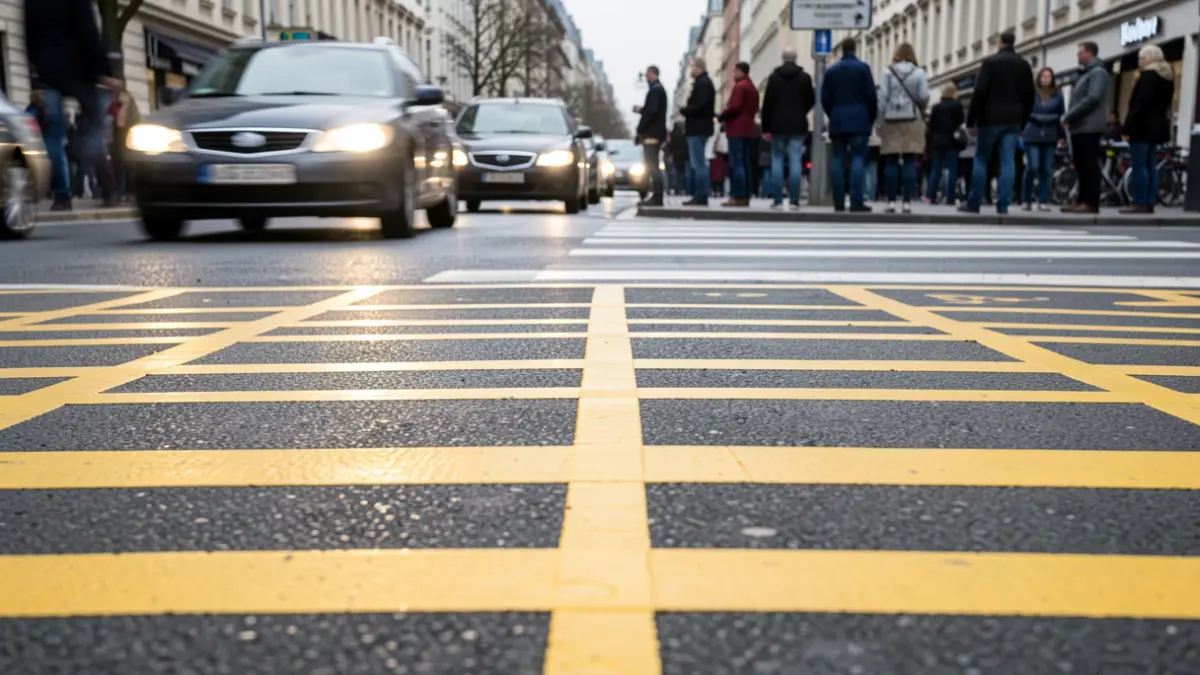
One of the most common situations occurs at intersections, especially when traffic congestion forces vehicles to stop on a yellow grid painted on the asphalt. The General Traffic Regulations, in article 59, states that no driver, even with priority, should enter an intersection if traffic conditions are such that they may foreseeably become stuck, impeding or obstructing cross-traffic.
This signage, known as the M-7.10 grid, prohibits entering the intersection if there is a risk of getting blocked, even if the traffic light is green or the driver has priority over other vehicles.
Entering an intersection without being able to cross it completely and subsequently obstructing other vehicles' passage is considered a serious infraction, punishable by a 200 Euro fine. The main objective is to raise awareness to prevent immobilized vehicles from blocking traffic, thereby increasing the risk of accidents.
If a vehicle becomes stopped at a signal-controlled intersection and constitutes an obstruction, the driver must leave it as soon as possible, without waiting for traffic to clear in their intended direction, provided it does not impede other users proceeding in the permitted direction. If one ends up stopped on the grid, they must leave it when possible, avoiding reversing, which is only permitted in very specific situations.
The DGT emphasizes that the best strategy is to avoid entering the intersection if there isn't enough space to cross it completely, even with a green light. Waiting for traffic to improve reduces the risk of blocking other users and avoids significant fines.