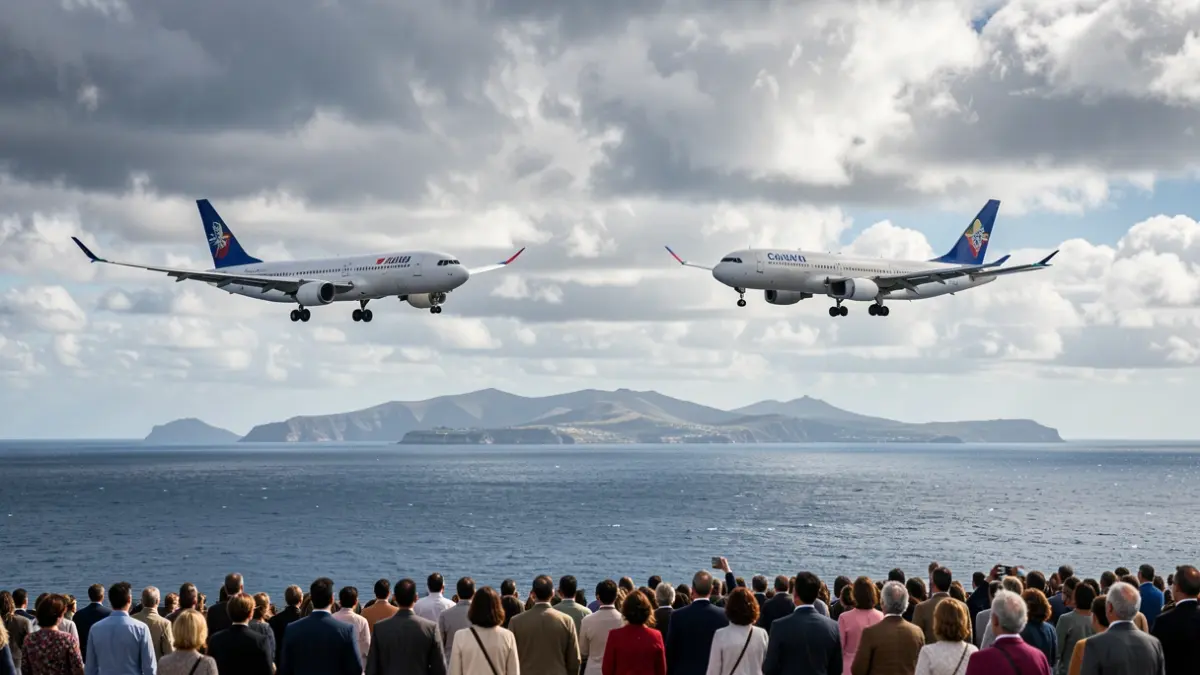
The Independent Professional Union of Air Traffic Controllers (Spica) has reported that the incident occurred on July 10, 2026, at 01:23 UTC. An Iberia Airbus A321 (registration EC-OLE, flight IBE0140) and an Air Europa Boeing 787-9 (registration EC-NBM, callsign AEA05) were flying on the same airway N857 at flight level FL360 (approximately 10,970 meters) in opposite directions.
The TCAS anti-collision system was activated on both aircraft. The Iberia plane registered a TCAS TA (Traffic Advisory) alert followed by a «TCAS RA DESCEND» resolution, while the Air Europa aircraft received a coordinated «TCAS RA CLIMB» alert. The crews followed the system's instructions, causing the Iberia plane to gain altitude and the Air Europa plane to descend, resolving the conflict without consequences.
Spica has described the incident as significant and has requested an official investigation, pointing out that the fact that two commercial aircraft crossed paths at the same level on the same airway in opposite directions indicates that the previous separation barriers did not function as intended. The union describes TCAS as "the last line of defense when previous ones fail."