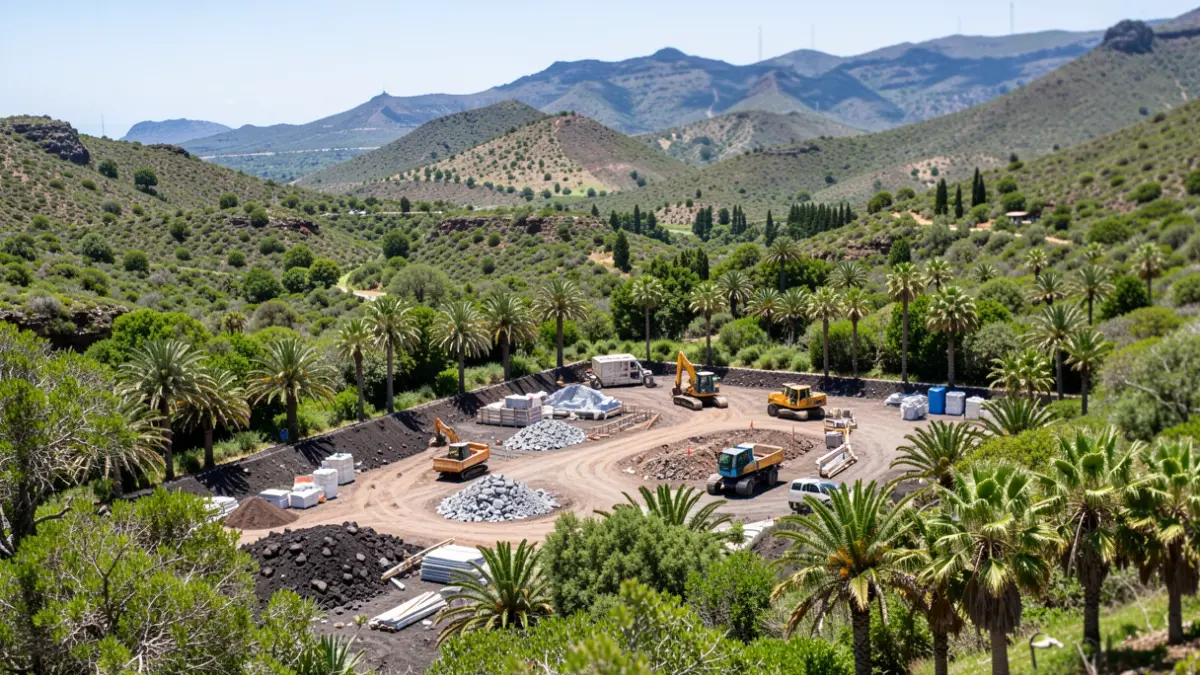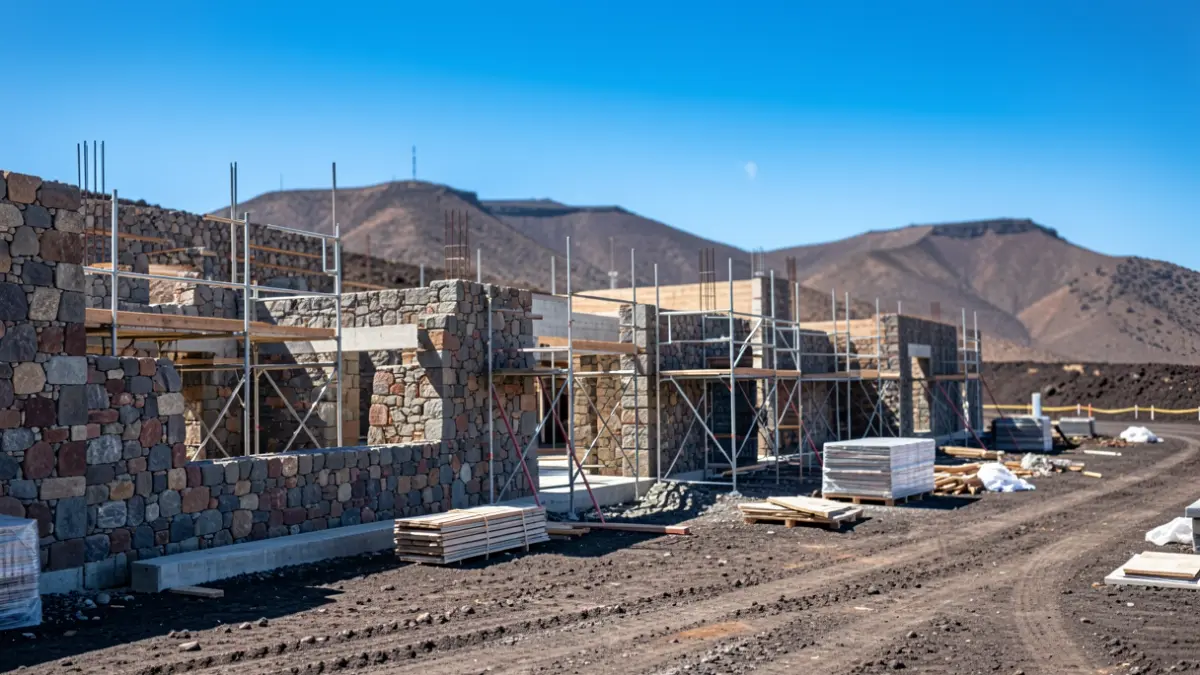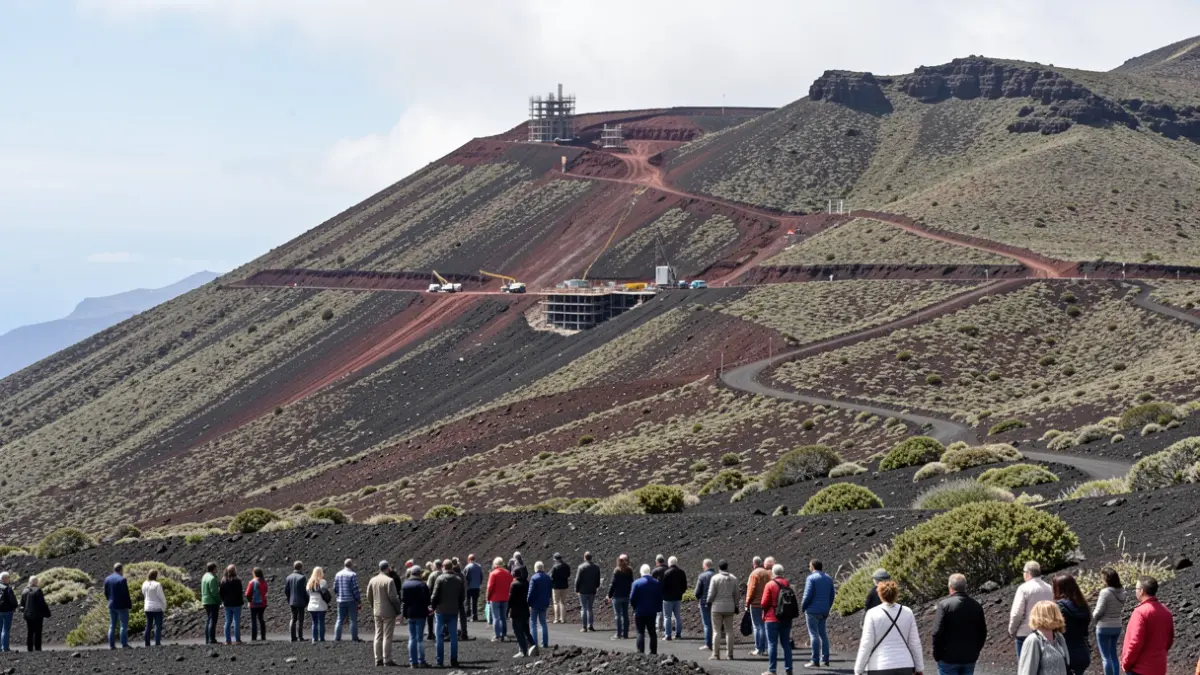
The European Commission has received a formal complaint from environmental groups highlighting the urban threat to Guaza Mountain, a protected area in Tenerife. The groups warn that two development projects in this Arona enclave could affect endangered species and habitats of community interest within a Natura 2000 site. Environmentalists argue that "the precautionary principle admits no other response than the denial of licenses" and are requesting the suspension of any permit process and the integral conservation of the area.
Two companies, Madrid-based Metrovacesa and developer Lemwey (linked to the Belgian group Los Menceyes), have applied for permits from the Arona City Council to build housing and commercial premises on the mountain's slope. Metrovacesa's project, named 'Gara', would cover 3,200 square meters near the coast. This company's permit was frozen due to its impact on Natura 2000, as was the luxury project by Los Menceyes, known as The Cliff.
Environmental collectives have extended the complaint to the Government of the Canary Islands, the Tenerife Island Council (Cabildo), and the Arona City Council, informing all competent administrations of the alleged infractions. They insist that none of the projects have undergone adequate impact assessments on the Natura 2000 network.
The formal complaint invokes the precautionary principle of the European Union's environmental policy, demanding that authorities "anticipate and prevent significant environmental damage when there is a risk." The technical reports provided highlight "significant and irreversible impacts" on one of the best-preserved coastal natural enclaves in southern Tenerife, home to endemic, protected, and endangered species, such as the beetle Pimelia canariensis and the giant lizard of Tenerife (Gallotia intermedia).
Guaza Mountain is also a Special Protection Area for Birds (ZEPA), with nests of Cory's shearwater (Calonectris borealis) and other protected species. Environmentalists warn that construction work and subsequent human presence would cause significant disturbances, also affecting tabaibal cardonal communities, a habitat of community interest.
Regarding the intervention proposed by Los Menceyes to stabilize the slope, environmentalists argue it is a "stabilized system" without risk, and that cementation and concreting works would "irreversibly" alter the water regime and geomorphological dynamics of the area.
The Arona City Council considers a prior environmental assessment necessary, but developer Metrovacesa resorted to the contentious-administrative jurisdiction. The High Court of Justice of the Canary Islands (TSJC) ruled in favor of the developer, stating that such an assessment was not required. However, Arona has appealed the ruling to the Supreme Court to clarify the applicable criteria and "avoid interpretations that could, in practice, lead to a reduction in environmental guarantees."
The complaint to the European Commission emphasizes that authorizing urban developments without adequate environmental controls represents "a clear setback" in the protection of Guaza Mountain and opens the door to future construction in this protected space.