Researchers criticize that ecological restoration is being used as a “narrative for accessing public funds, protected areas, and territories” that would otherwise be beyond the reach of commercial and speculative activity. This practice, which they call scientific greenwashing, grants technical legitimacy to initiatives that would not withstand independent scrutiny, thereby damaging the reputation of science.
“"We are writing this statement because we observe, with growing concern, a trend that we consider ethically unacceptable: the appropriation of the scientific language of ecological restoration to legitimize projects whose nature and purpose are predominantly commercial."
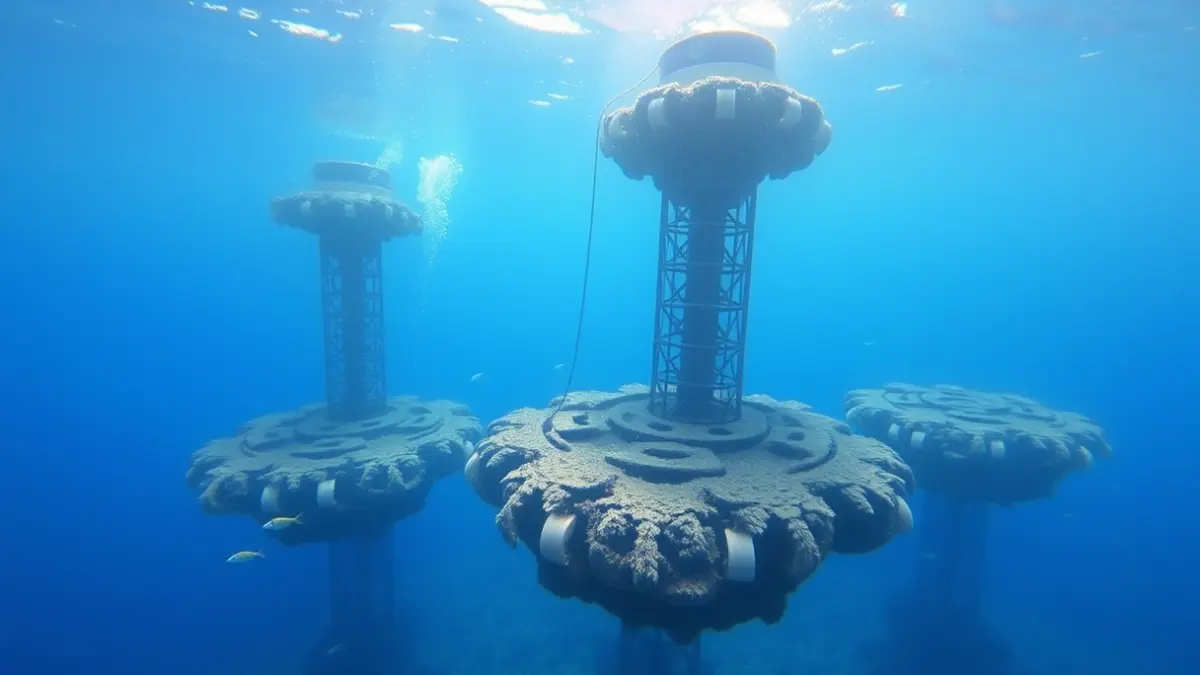
The specific case causing the most concern is the Underwater Gardens Park theme park, located on the southwest coast of Tenerife. Its marine component, Sea Garden, received 11 million euros for research and development, funds that, according to the scientists, will serve the theme park in an area that, despite being a Special Conservation Zone, can no longer withstand further pressures.
Among the signatories of the letter are members of scientific groups from the University of La Laguna and the University of Las Palmas de Gran Canaria, as well as researchers from the National Museum of Natural Sciences of the CSIC and the CONICET. All of them support the allegations presented by the Salvar Punta Blanca platform against the Underwater Gardens project, which seeks to occupy a protected coastal area in the municipality of Guía de Isora to install artificial reefs and oceanographic monitoring stations.
In the same area, the Cabildo de Tenerife declared another Underwater Gardens project of island interest in 2022, described as a “regenerative park” aiming to offer “unique experiences of connection with the sea and nature” to tourists and residents, with an estimated attraction of around 3,000 daily visitors.
On March 26, the Government of Canarias opened the artificial reef project for public exhibition. The Salvar Punta Blanca platform, comprising 34 different groups, has demanded the annulment of this process, arguing that the submitted document deliberately omits the identity of the technicians who signed it. Ecologists also warn that the installation of artificial reefs would alter a sandy seabed of high ecological value, a habitat for protected species such as the angelshark and the green sea turtle.
The groups extend their concern to the 17,000-hectare regenerative park promoted by Underwater Gardens, warning that these are not independent projects, but rather “two legs of the same business project” processed before different public administrations to avoid a joint evaluation. A spokesperson for the European Ocean Citizen project, under which the initiative falls, defended that the requested authorization should not be interpreted as a constructive phase of the regenerative park, but rather as a scientific and methodological relationship.
The signatories of the declaration, who conduct research in environmental sciences, marine ecology, conservation biology, geography, and social sciences, call on the scientific community. They emphasize the responsibility to know who funds projects, what interests they represent, how the results will be used, and what consequences the interventions will have on the ecosystems and communities involved. They conclude that ecological restoration science must be protected from those who use it as a cover for commercial interests.