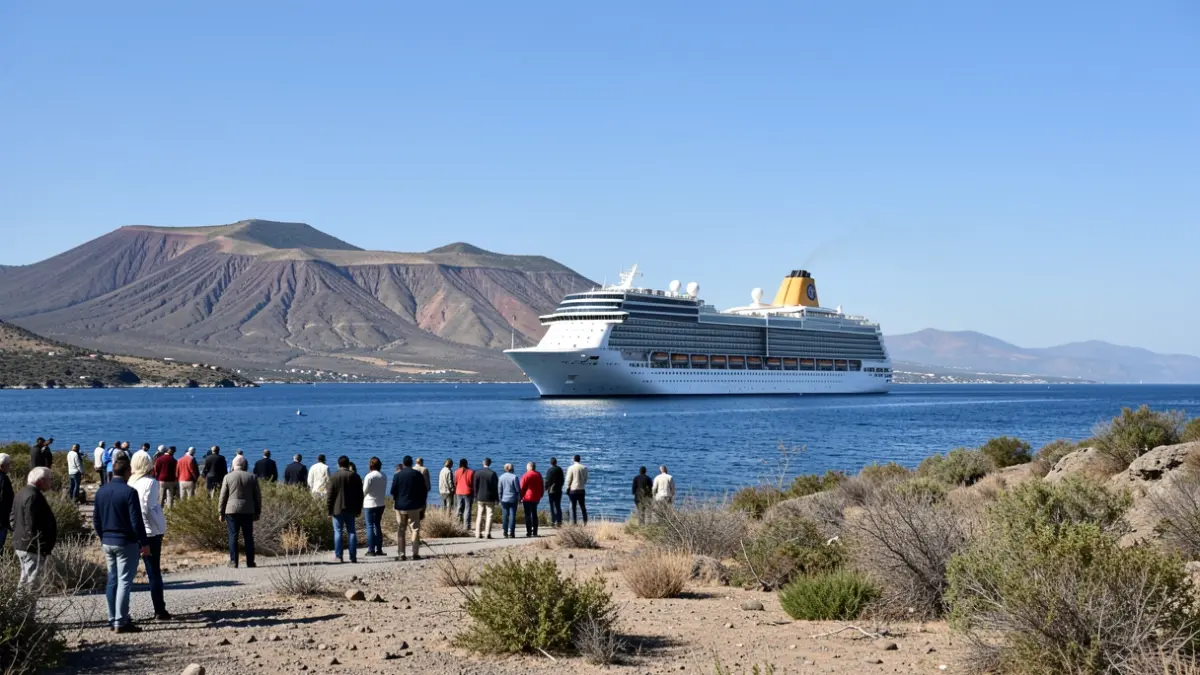
The recent tension caused by Hantavirus has highlighted the need for robust institutional coordination and collaboration, as well as the value of science in combating misinformation. The Covid-19 pandemic served as a global example of the magnitude of these crises, both in health and economic terms.
In Spain, and specifically in the Canary Islands, the response to Covid-19 included a significant health deployment, lockdowns, and mass vaccination. Economic consequences were mitigated by public intervention measures such as ERTEs (temporary employment regulation files) and other fiscal aid for companies and citizens.
The first Covid-19 case in Spain was detected in La Gomera in late January 2020, followed by an outbreak in a hotel in Tenerife that led to the first mass lockdown. The capacity for self-governance proved crucial in managing this complexity. The Canary Islands, thanks to administrative coordination, the efforts of health professionals, and citizen responsibility, recorded one of the best pandemic profiles at the autonomous community level.
In the case of Hantavirus, the Spanish government collaborated with the WHO, the European Union, and other states to facilitate the disembarkation and repatriation of approximately 150 people (crew and passengers) from an affected cruise ship, demonstrating the efficiency and professionalism of public emergency and health systems.
“"Tenerife has been chosen because it has the medical capacity, the infrastructure, and I know the humanity necessary to help them reach a safe place."
The WHO Director-General, Tedros Adhanom, highlighted Tenerife's capacity to manage the Hantavirus crisis on the MV Hondius cruise ship, selecting the port of Granadilla for its medical infrastructure and humanity, despite local political criticism. Adhanom emphasized that viruses do not understand politics and that solidarity is the best immunity.
The article criticizes the politicization of the health crisis by the Canary Islands Government, led by Fernando Clavijo, accusing it of attempting to confuse citizens and create confrontation with the central government. It points out that competencies in general interest ports and external health fall under the State, although the importance of co-governance is acknowledged, as demonstrated during the Covid-19 pandemic.
The irresponsibility of concealing or minimizing joint working meetings between administrations is criticized, undermining trust in institutions and fueling populism. The exemplary response of Canary Islanders and health professionals was internationally recognized by the UN, the European Commission, and the Pope, contrasting with the view of the Canary Islands' president, who called the day 'sad for democracy and for the Canary Islands'.
Finally, the piece advocates for addressing future public health crises without political maneuvering, relying on scientific knowledge and avoiding partisan selfishness. This approach, according to the author, is contrary to the modus operandi that far-right movements are imposing globally.