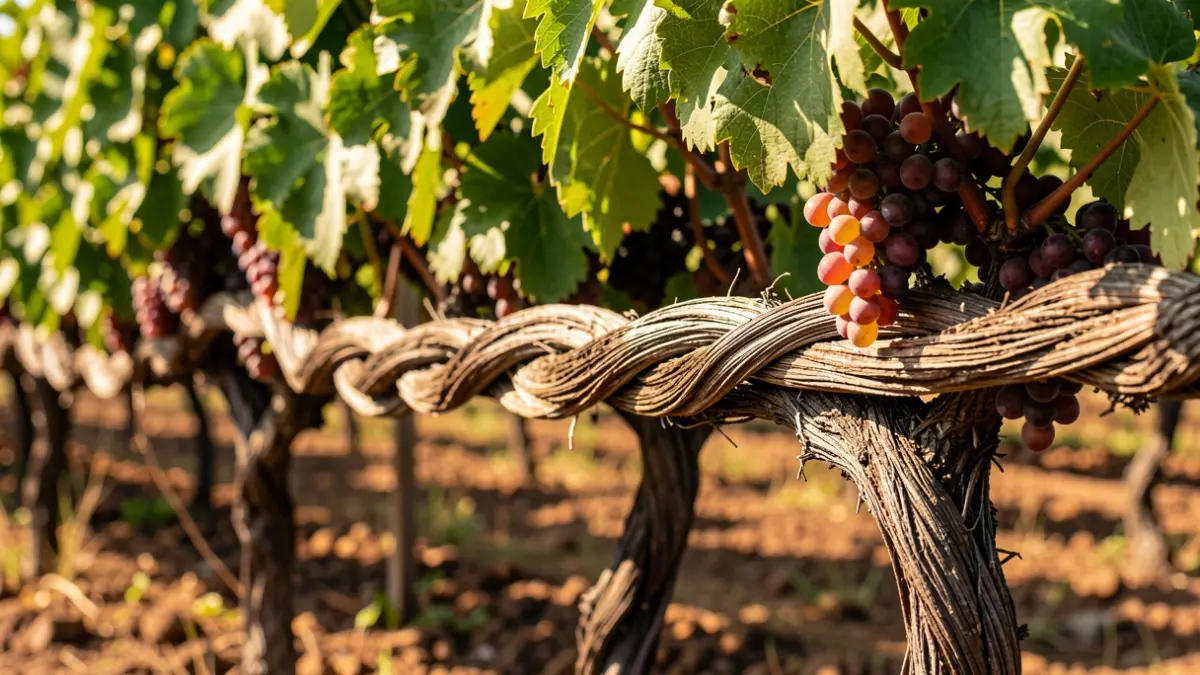
The Orotava Valley is preparing to protect one of its most landscape-rooted heritages: the 'cordón trenzado' (braided vine). This ancestral technique for training grapevines, passed down through generations, is close to achieving the status of Bien de Interés Cultural (BIC) in its intangible form. The Cultural Heritage Council has issued a favorable opinion, a crucial step after more than two decades of efforts by the municipalities of La Orotava, Puerto de la Cruz, and Los Realejos.
Cecilia Farráis Lorenzo, popularly known as Doña Chila and a key figure at the Tajinaste winery, describes the technique as a natural part of her life. Her son, Agustín García Farráis, continues this viticultural passion, highlighting two fundamental pillars of the 'cordón trenzado'. The first key lies in polyculture, as it allowed vines to be grown on the sides, freeing up the central space for potato or vegetable plots. The second relates to the land's conditions and its ancient system, cultivated directly on the soil without grafts.
The technique involves twisting the grapevine's wood in a specific way, using heather stakes and twine for support. Historically, the 'remanga' method was used, which involved gathering the leaves to facilitate passage and improve the grapes' sun exposure. Subsequent research, consulting experts from the Rovira i Virgili University of Tarragona, has allowed for modernizing the system towards a more vertical configuration. This adaptation optimizes solar incidence, improves fruit aeration, and reduces the risk of diseases, while also increasing comfort in farm work and the final grape quality.
García Farráis emphasizes that this evolution was adopted and assimilated by the local community, who made the system their own. For him, the 'cordón trenzado' is more than an agricultural technique; it is an inherited tradition naturally passed down, an integral part of daily life and family identity, intrinsically linked to the landscape of the Orotava Valley.
The upcoming recognition as BIC will provide significant value in reinforcing the protection of the area's wine heritage, bringing respect, continuity, and visibility to this cultivation pattern. It is expected to encourage new generations to value and preserve this practice. However, generational succession remains a challenge, dependent on the viability and profitability of hard and constant work.
The Tajinaste winery maintains 90% of its production linked to the 'cordón trenzado', although it also employs other techniques like trellising for specific varieties. This combination allows for the production of wines that blend tradition with plot-specific and experimental approaches, but the 'cordón trenzado' continues to provide irreplaceable identity and originality.