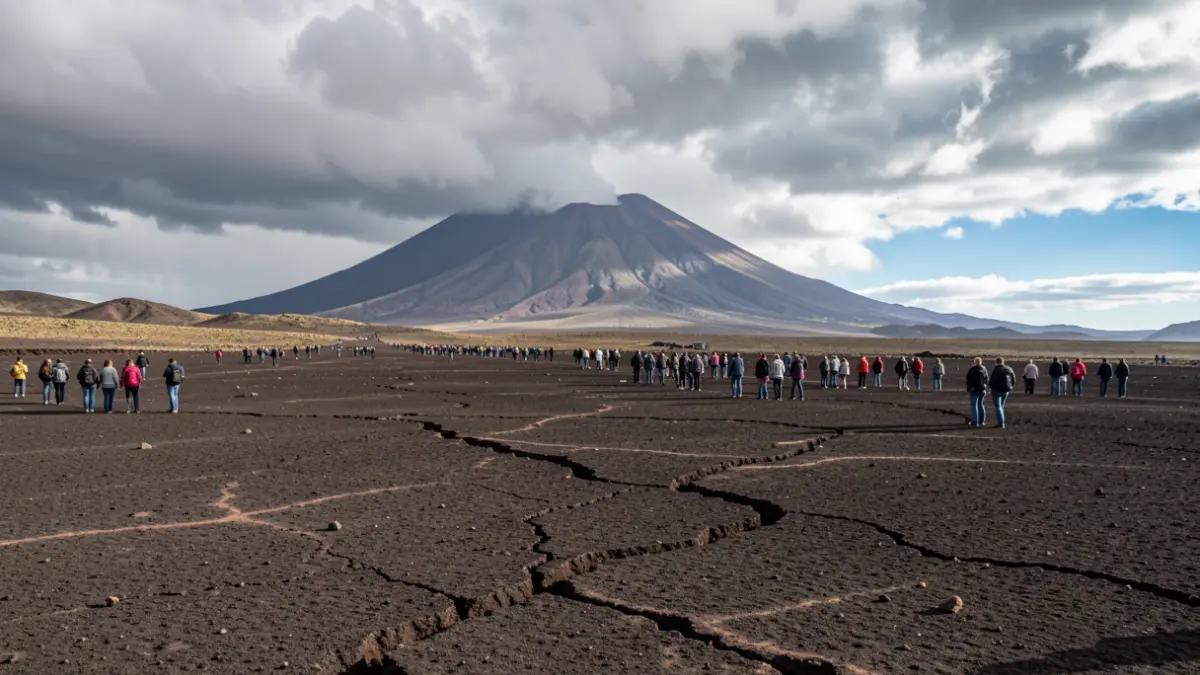
Itahiza Domínguez, director of the IGN, stated that an eruption requires a magmatic intrusion into the crust, a phenomenon not yet detected. Scientists and the Canary Islands government have agreed to meet quarterly for closer monitoring of the volcanic phenomenon.
Seismic activity has been higher than in previous years, with 10 swarms detected west of Las Cañadas so far this year, nearly double the number recorded between 2016 and 2025. Activity has concentrated in two main periods: one between February and March, with seven swarms and low-frequency seismic pulses, and another between June and July, with three more swarms. All these movements are related to fluid movement at great depth.
Current swarms are more prolonged than in previous years; some have lasted for days, such as the one on July 22nd. The lack of detailed historical data on eruptions in Tenerife, which experiences an eruption every over 100 years, makes it difficult to determine the exact stage of the volcanic system.
Scientists agree that current activity does not increase the risk of a short or medium-term eruption. However, they do not rule out the possibility of more conclusive signals emerging. Events at shallower depths, of greater magnitude, and rapid ground deformations would be concerning.
Earthquakes recorded since 2016 have had magnitudes less than 2 and have not been felt by the population. Deformation detected in 2023 has been slow, barely two centimeters. Swarms are expected to continue, and some earthquakes may be felt slightly.
The location of earthquakes does not precisely indicate the magma's position, as pressure can generate movements in other areas. Therefore, constant monitoring of seismic activity, gas emissions, and ground deformation is crucial.