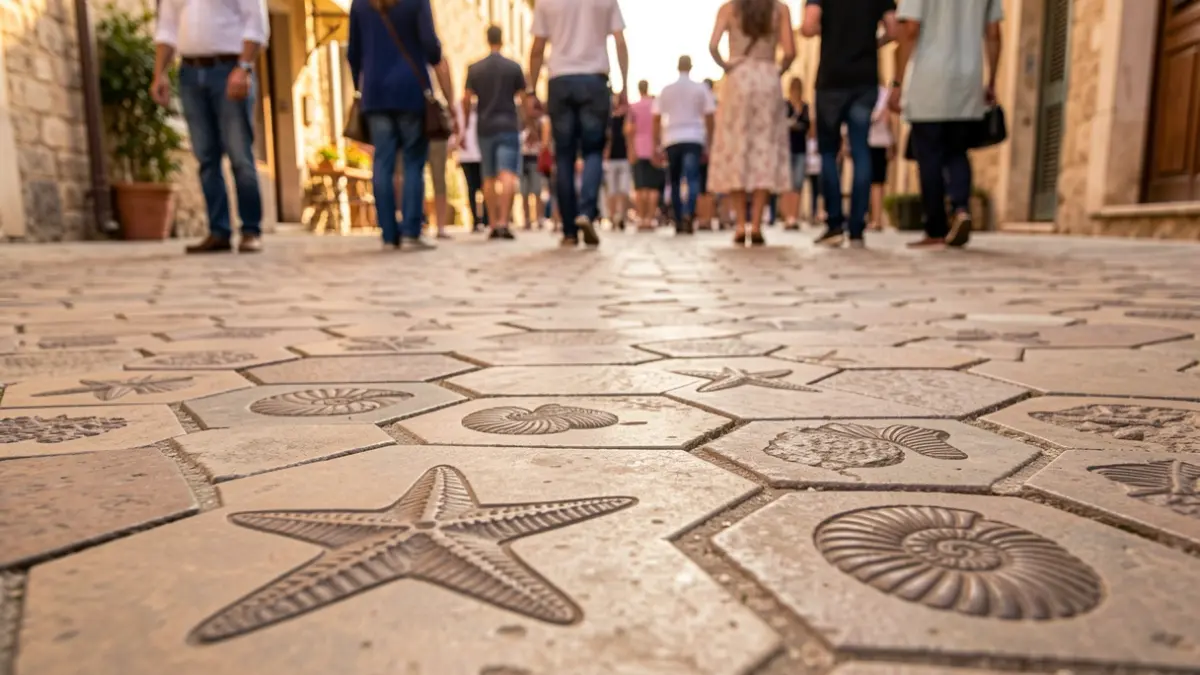
Although the Catalan genius did not leave major cathedrals on the islands, his mark can be found on the pavement in municipalities such as Ingenio, in Gran Canaria, and the Los Tarajales promenade in Arona (Tenerife). These pieces, known as the Gaudí panot, were originally conceived in 1904 and are noted for their geometric design that mimics elements of the seabed, such as starfish and seaweed.
The significance of this design is such that the Museum of Modern Art (MoMA) in New York exhibits it as a milestone of industrial design. In Ingenio, the tiles were installed in 2001 as part of an urban improvement project around the Church of La Candelaria, where they are still kept in the local council's official reserves.
In Tenerife, the history of these pieces was marked by a citizen rescue. In 2019, after renovation works in Los Cristianos threatened the pavement, a formal request from a local resident prompted the Tenerife Island Council's Historical Heritage Service to intervene, successfully protecting and recovering a large portion of the tiles to prevent their permanent loss.
The genius of the mosaic lies in its conception as a puzzle: the human eye needs to see seven tiles joined together to discover the work in its full completeness.