This finding, published in the journal Marine Biodiversity, expands the knowledge of the species' geographical distribution. Although traditionally considered circumtropical, the results suggest its presence might be limited to the Atlantic.
The research was based on the analysis of three specimens. Two were captured in 2012 off the island of El Hierro during the oceanographic campaign CETOBAPH, and a third washed ashore on a beach in southern Tenerife in 2024, marking the first documented stranding of the species.
To confirm the identification, the team combined the study of morphological characteristics with genetic analysis of a COI gene sequence. The molecular analysis reliably assigned the Canarian specimen to a specific genetic group (BIN AAV0298), associated with Bregmaceros atlanticus.
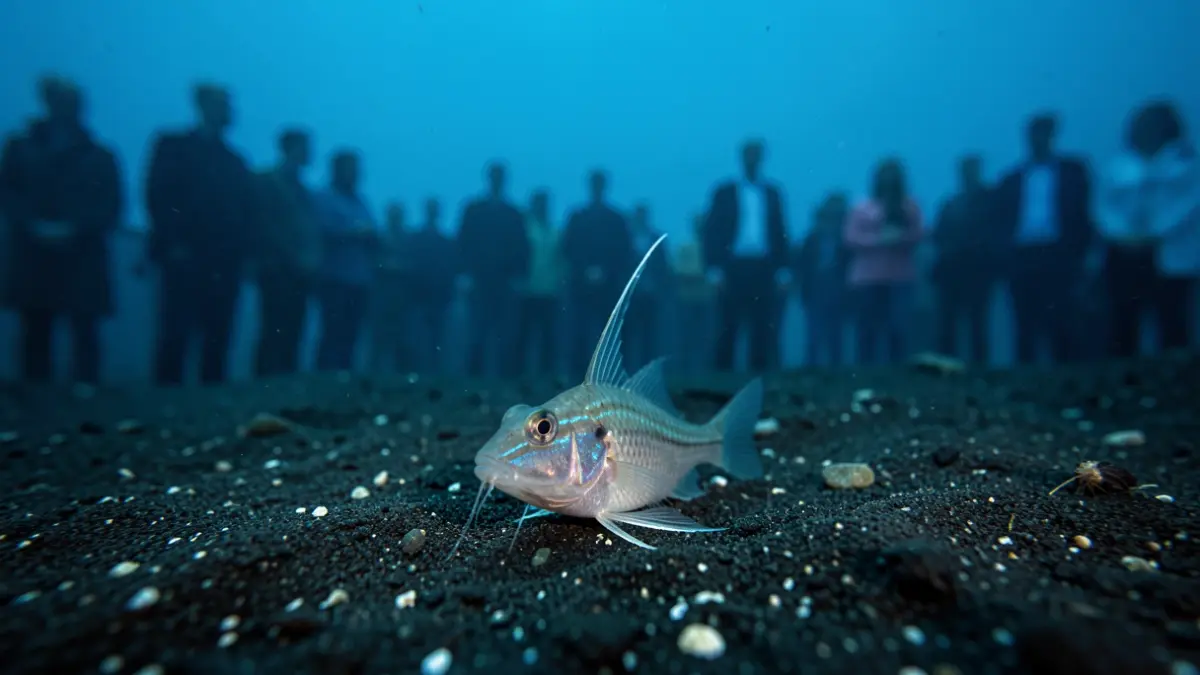
Bregmaceros atlanticus, known as the antenna cod due to an elongated dorsal ray, is a small pelagic species inhabiting mesopelagic waters. Its identification has historically been challenging due to its size, habits, and similarity to other species in the genus.
The study also reveals the existence of several distinct genetic groups in international databases, suggesting a need to revise the taxonomy of the genus Bregmaceros, given its high diversity and complex taxonomic history.
The authors note that Canarian waters are a strategic area for studying deep marine biodiversity. The stranding in Tenerife could be related to local oceanographic processes, such as the interaction of eddies, upwelling, and currents that occasionally displace mesopelagic organisms towards coastal areas.