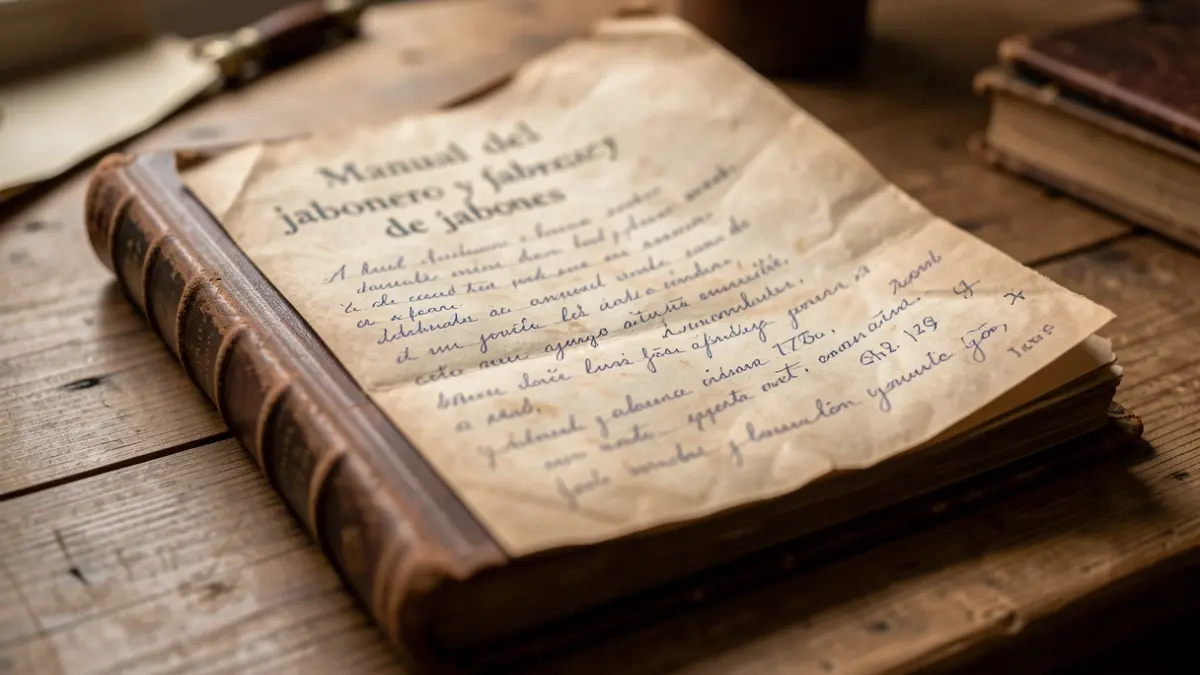
Among the works in the historical archives of the Center for Documentation of Canary Islands and America (CEDOCAM) is the Manual del jabonero y fabricación de jabones (Soap Maker's Manual and Soap Manufacturing), by Blas Sales y Seguí, published in Barcelona. This document is a testament of great value for understanding the trades, daily life, and technical knowledge of past eras.
Before industrialization, soap making was an essential trade that required experience, patience, and precise knowledge of raw materials and chemical processes. The soap maker not only produced an everyday item but also directly contributed to domestic hygiene, laundry, and the care of numerous objects and spaces.
The manual by Blas Sales y Seguí captures this specialized knowledge, including formulas, procedures, and recommendations. It serves as a window into the transmission of professional expertise, where learning a trade relied heavily on shared experience and consulting texts like this one.
Artisanal soap making has regained prominence in recent years, linked to responsible consumption, oil reuse, and interest in local products. Examining this manual from a present-day perspective reveals that many of these concerns have deep historical roots.
These historical documents are not merely recipes to be reproduced; their primary value lies in what they tell us about their time: how trades were organized, what resources were available, the technical language used, and how practical knowledge circulated.
The preservation of CEDOCAM's historical archives, including works like this manual, is crucial for safeguarding collective memory. Each cover, annotation, formula, or trace of use helps reconstruct stories often absent from grand historical narratives.
Protecting this documentary heritage through specialized care, cataloging, and proper storage ensures its accessibility for research, students, and the general public.