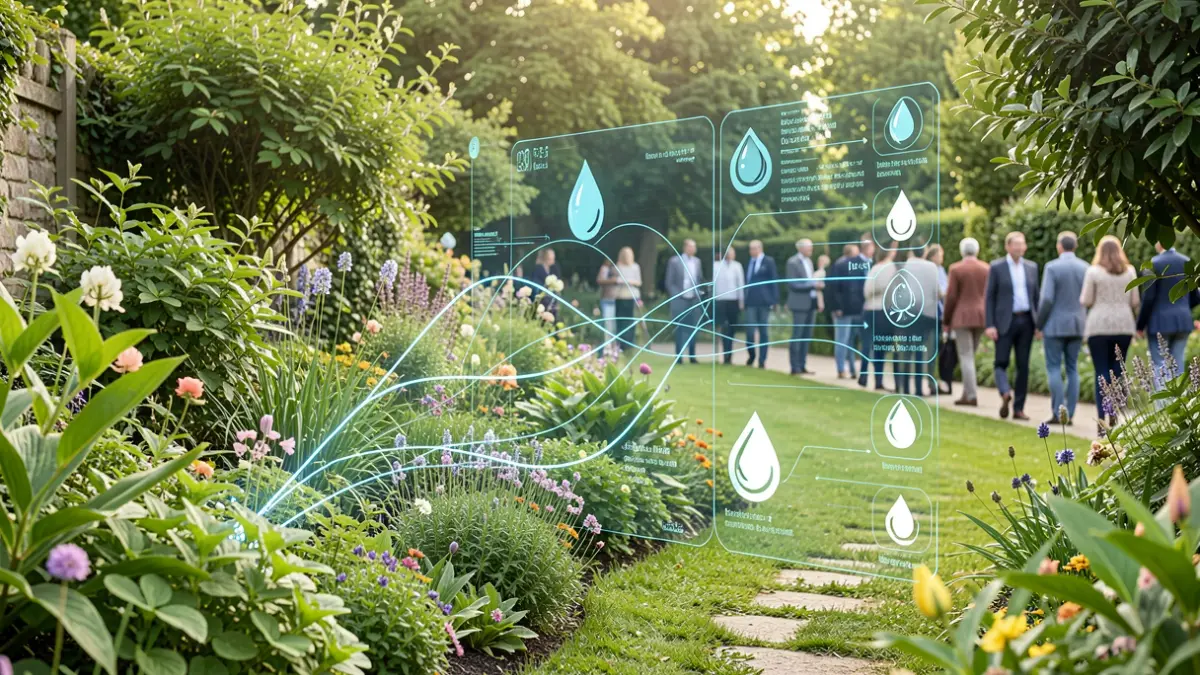
With a budget of 954,664.95 euros, the GARTWIN project aims to transform water management in public and private gardens. The system relies on a digital twin that precisely and automatically models and anticipates vegetation's water behavior, enabling an optimal irrigation plan without requiring ground sensors.
The system uses a local optimization algorithm that continuously monitors the water status of plant species and integrates with geographic information systems (GIS). This will facilitate coordinated and efficient irrigation management for large green areas.
GARTWIN seeks to digitize natural heritage in public gardens and promote more sustainable irrigation practices to reduce water consumption, a key challenge in regions with limited water resources like the Canary Islands.
The project will conclude with a functional prototype that can be validated in real environments, paving the way for its future transfer to both public and private sectors. The consortium combines the research capabilities of ITER and the Polytechnic University of Valencia with the practical experience of Vainsa Infraestructuras S.L. in gardening.
The GARTWIN project (CPP2022-009884) is funded by the Ministry of Science, Innovation and Universities, the State Research Agency, and the European Union through NextGenerationEU and the Recovery, Transformation and Resilience Plan.