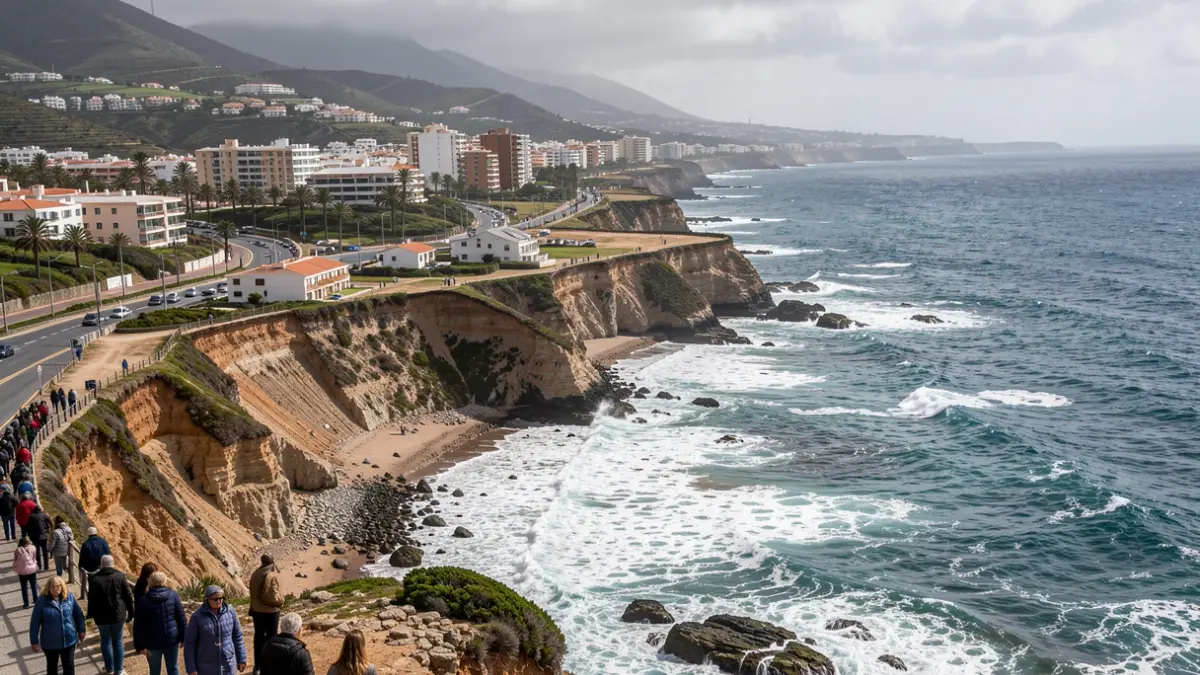
The "Destrucción a toda costa" report by Greenpeace paints a critical picture for the coastal strip of the Canary Islands. The analysis warns of a "systemic impact" where coastal erosion is aggravated by strong water pressure, cliff landslides, and opposition to various urban development projects.
The archipelago's territorial and tourism model is at a "critical crossroads." Massive construction, land over-occupation, and the effects of climate change are accelerating the degradation of the coastal space, reducing resilience against the sea. Storm damage, such as from storm Therese, has already resulted in millions in losses, in addition to the loss of marine biodiversity.
The document identifies areas of "high threat" such as northern Tenerife (cliffs of Acentejo and Teno), where wave energy causes recurrent landslides. In the south of the island, large-scale projects like Cuna del Alma in Adeje and the Hotel de La Tejita in Granadilla have generated widespread social rejection due to their impact on ecologically valuable areas and coastal protection regulations.
Other critical areas include Maspalomas (Gran Canaria), where frontline buildings block natural sand flow, and Corralejo (Fuerteventura), where the debate over the expiry of hotel concessions maintains the demand for dismantling to restore the dune system.
The transformation of the coast also affects the marine ecosystem. There is a proliferation of pathogens, the disappearance of species like the sea urchin Diadema, and alterations in food chains with increased sightings of sharks and manta rays. Seagrass meadows are receding due to land-based discharges and port works, while high dependence on desalination leads to significant energy consumption and brine discharges.
In light of this scenario, Greenpeace's report proposes halting construction within the first 500 meters of the coastline and implementing setbacks. It also advocates for "Nature-based Solutions" (NbS), such as restoring dunes in Maspalomas and Corralejo to act as natural shields against Atlantic storms.