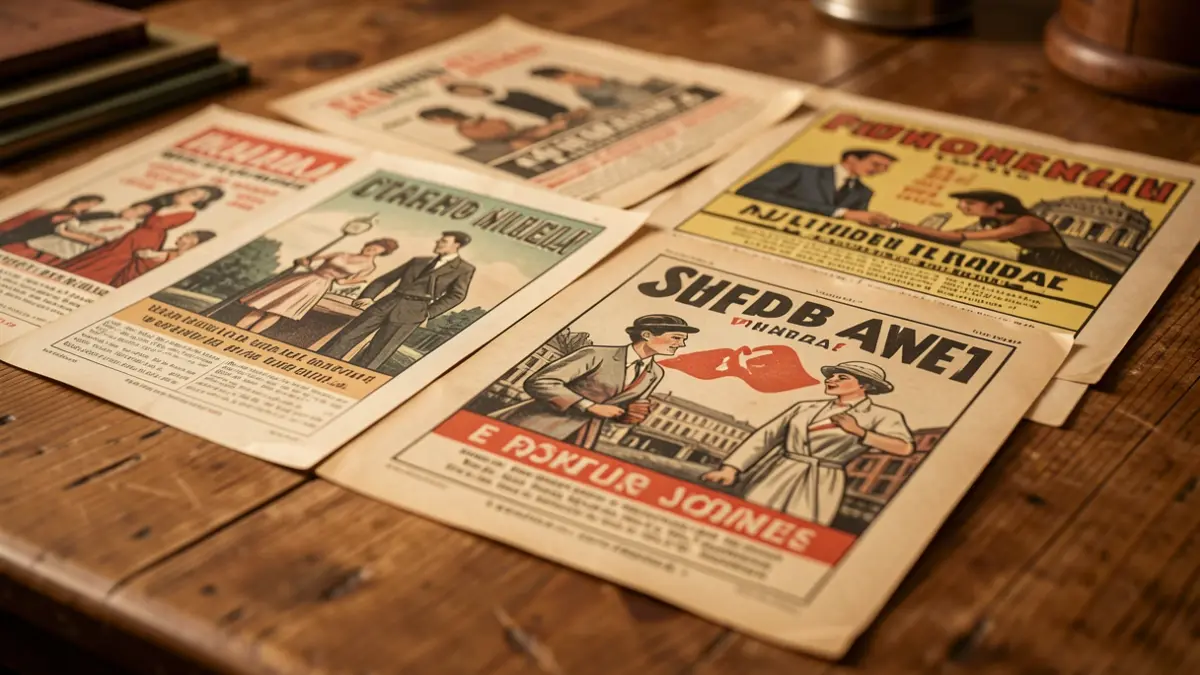
Handbills, used to advertise films in cinemas across Spain, became popular between the 1930s and 1940s, coinciding with the golden age of cinematography. The CEDOCAM, part of the Carlos Valentín Santana Collection, is currently showcasing one of these historical documents.
These promotional pieces are much more than simple flyers; they are living fragments of cinematic memory. Their pages preserve not only the essence of the film but also the pulse of an era, its aesthetic tastes, and its conception of cinema as a spectacle and collective experience.
The handbill for 'Bajo el cielo de México' (1937) transports the viewer directly to the cinemas of its time. Every printed detail—typographies, illustrations, and text—was part of the ritual of attending a screening, building anticipation and an emotional connection before the lights went down.
Today, these items transcend the purely cinematic to become tangible testimonies of the visual culture of their time. They reflect how films were promoted, what aspects were highlighted, and how audiences were communicated with, allowing us to trace the evolution of graphic design, advertising language, and the 'star system' itself.
The preservation and study of programs like this are essential for safeguarding cultural heritage. They allow us to understand not only the film itself but also the context in which it was conceived and received, acting as small time capsules that keep the cinema experience alive beyond the screen.