The registered seismic activity, characterized by very low magnitude with a maximum of Ml 1.1 on the Richter scale, shows no signs of increasing the risk of a volcanic eruption in the short or medium term on the island.
According to Involcan, this episode is part of the recurrent seismic activity that Tenerife has been experiencing since June 2017. The origin is associated with a pressurization process of the island's volcanic-hydrothermal system, caused by the injection of magmatic fluids.
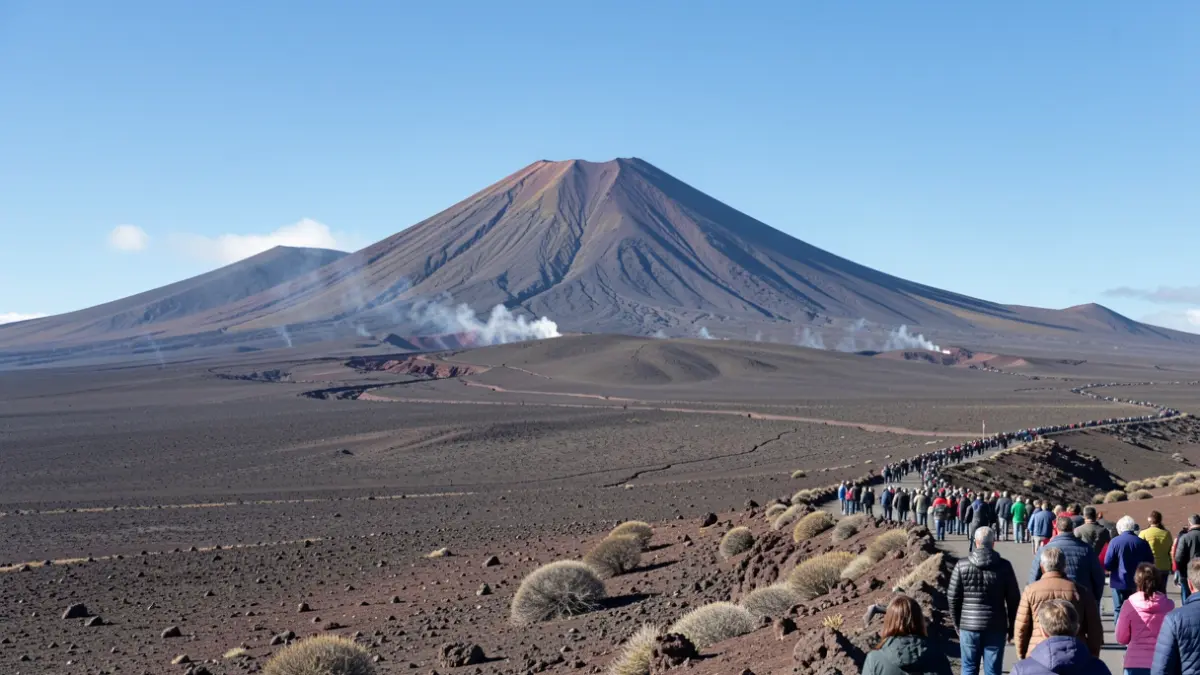
This phenomenon has been observed repeatedly since 2016, supported by independent geochemical and geophysical indicators. These include a sustained increase in diffuse CO₂ emissions in the crater area of Teide and slight ground deformation detected since 2024 in the northeastern sector of the Teide–Pico Viejo volcanic complex.
The National Geographic Institute (IGN) also reported detecting several pulses of low-frequency seismic activity between Thursday and Friday, registering around 79 earthquakes, mainly in the western area of Las Cañadas del Teide. The IGN, responsible for volcanic surveillance in Spain, maintains a network of over 100 stations on the island.