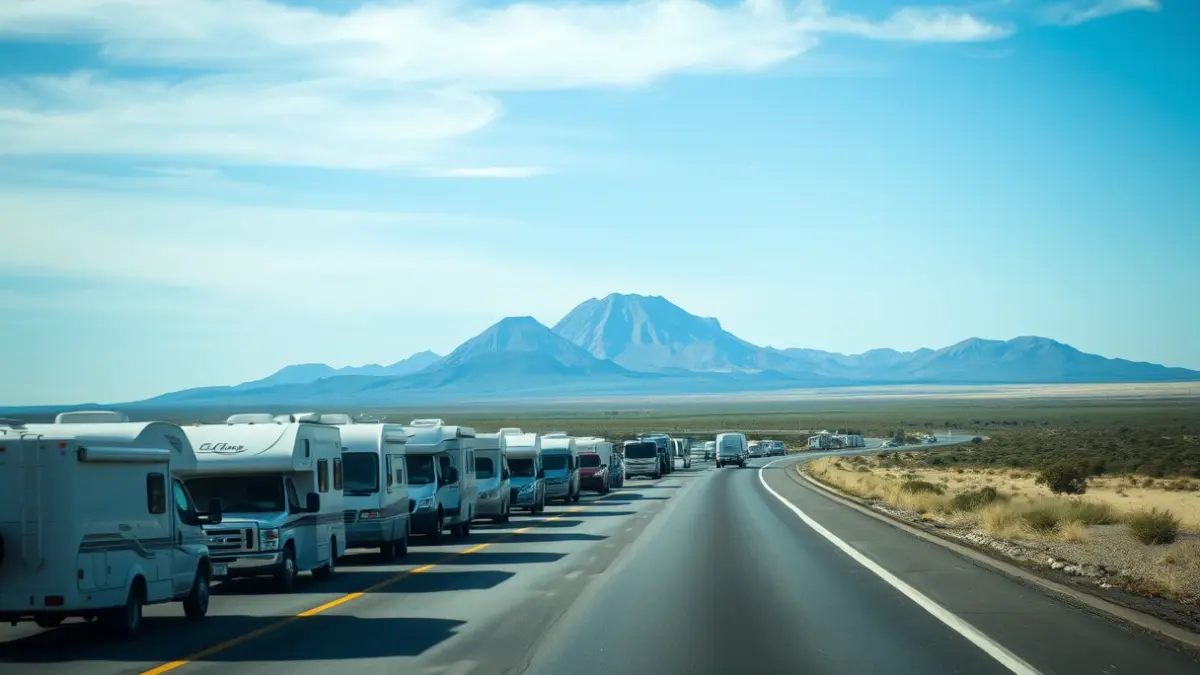
The mobilization, organized by the G3A Federation and the Tenerife Motorhome and Caravan Association (ACAT), began at 11:00 AM. Images from the day showed an endless line of vehicles occupying part of the southern Tenerife highway.
“"Canarian town councils are installing signs that limit access only to passenger cars or placing height restrictions to expel campers from the coasts."
The group demands an end to parking restrictions in municipalities such as Arico and the creation of ecological points for black water disposal. The case of La Jaca, in Arico, where parking was prohibited during Easter Week, was the final trigger for this protest.
Currently, more than 5,000 such vehicles circulate on Tenerife's roads, a figure that rises to 21,000 across the entire Canarian Archipelago. The absence of uniform regulations creates legal uncertainty, as each municipality applies different criteria for overnight stays and maximum duration, which in many places has been reduced to just 24 hours.
The demonstration also highlights the lack of basic infrastructure. Organizers call for the urgent creation of grey and black water emptying points to ensure responsible use of the environment. Without these spaces, the group feels “pushed into illegality” despite their willingness to comply with environmental regulations.
In addition to the coasts, restrictions extend to the Teide National Park. Caravaners argue that their activity represents an economic opportunity for the island's towns and not a public order problem, provided a clear distinction is made between proper parking and wild camping, a practice the sector rejects.