This initiative, promoted by the Ministry of Territorial Policy, Territorial Cohesion and Water through the General Directorate of Emergencies, aims to familiarize citizens with this tool of the National Civil Protection System. Similar tests have been conducted in previous years across the archipelago, and the system has already been used in real situations such as forest fires and heavy rainfall floods.
The Emergency and Security Coordinating Center (CECOES) 112 will issue a message between 08:00 and 14:00 hours, simulating a confinement in La Guancha due to a fire in an urban-forest interface zone. Although the alert will focus on this locality, telephone repeaters may extend the warning to mobile devices in nearby northern Tenerife municipalities, such as San Juan de la Rambla or the upper areas of Icod de los Vinos and La Orotava, and even with occasional impact in the south or southeast of La Palma.
“"It is important that people driving at that moment do not get alarmed and stop their vehicle in a safe place to read the emergency notice and press “accept”."
Users will receive the alert both at the time of sending and upon entering coverage area if they were outside it. However, the message will not reach phones that are turned off or in airplane mode. It is recommended to explain the system to elderly people to avoid unnecessary alarms. Additionally, the alert message can be received in English if the phone is configured in that language.
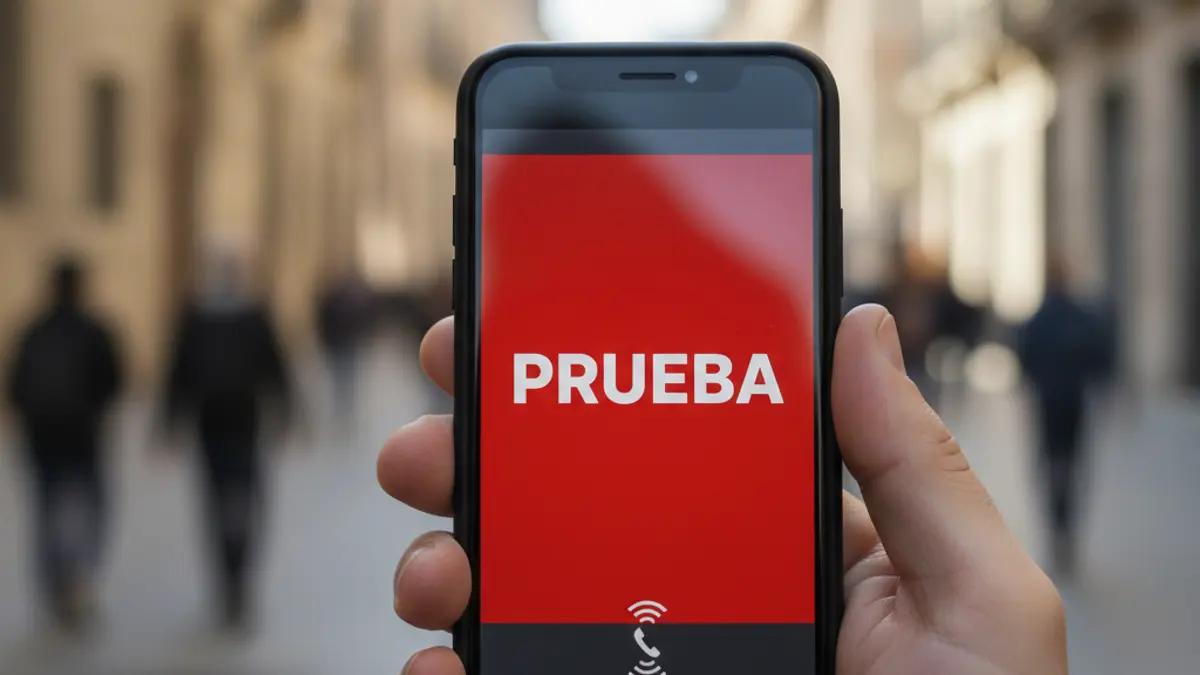
Most mobile phones with data connection are compatible with ES-Alert, provided they have the alert reception option activated. Devices with Android 11 or higher, or iOS 15.6 or higher, have this option activated by default. During the test, 4G and 5G mobile phones within the coverage area will receive a text message with the word “PRUEBA” (TEST), accompanied by a beep and vibration. Once read and accepted, the message will disappear without the need to reply or call 112.
This system is already operational in the Canary Islands and has been used in recent forest fires in La Palma and Tenerife, as well as during storm Therese in La Gomera and Tenerife. ES-Alert allows alerts to be issued for disasters or emergencies without the need to install applications, providing self-protection instructions to citizens. It complements other warning channels such as evacuation bulletins, media, and social networks.