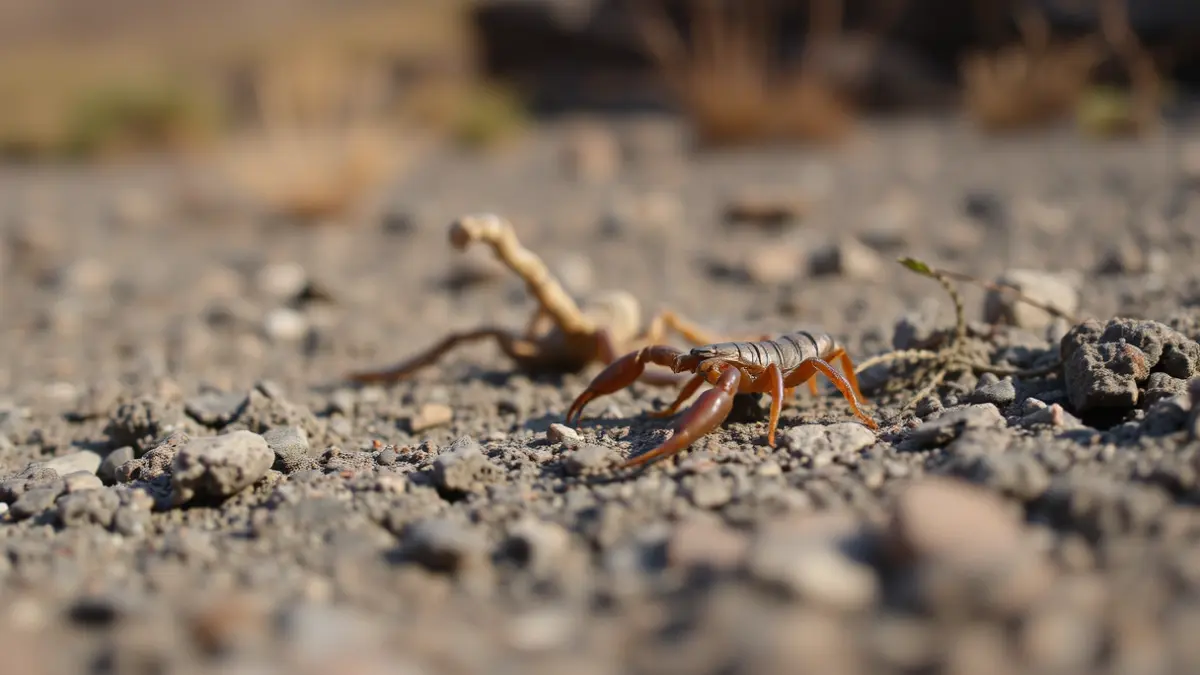
As temperatures rise, scorpions, also known as alacranes, become more visible across the Iberian Peninsula and its archipelagos. In Spain, seven main species have been cataloged, in addition to two exotic ones that have arrived from different ecosystems.
The Ministry for Ecological Transition has identified the species Buthus occitanus, Buthus ibericus, Buthus montanus, Buthus elongates, Euscorpius flavicaudis, Euscorpius balearicus, and Belisarius xambeui. Among these, Buthus occitanus, or the yellow scorpion, is the most common in the country's warmer regions.
Each species adapts to specific habitats; for instance, Euscorpius flavicaudis, or the black scorpion, prefers humid areas with dense vegetation. In the Balearic Islands, specifically in Mallorca and Menorca, Euscorpius balearicus is found in rocky and arid zones. In the Canary Islands, the presence of Centruroides gracilis has been detected in Tenerife, an invasive species originating from Africa.
These arachnids, intolerant to cold, remain inactive during winter and emerge with the heat, being most active at dusk and during the night. Despite their reputation, Spanish species are not as dangerous as those found in other parts of the world.
“"Given the small amount of venom injected, their stings are rarely severe."
Scorpion stings in Spain typically cause localized pain, inflammation, and edema, and occasionally muscle aches or tremors, symptoms that usually subside within 48 hours. The venom, injected through the stinger, contains neurotoxins and other components that affect sodium channels.
In case of a sting, specialists recommend immobilizing the affected area and disinfecting it with soap and water or an antiseptic. Although the yellow and black scorpions are responsible for most stings on the Peninsula, the Sanitary Research Journal assures there is no cause for alarm, though it is important to monitor symptoms in case specialized medical attention is needed.