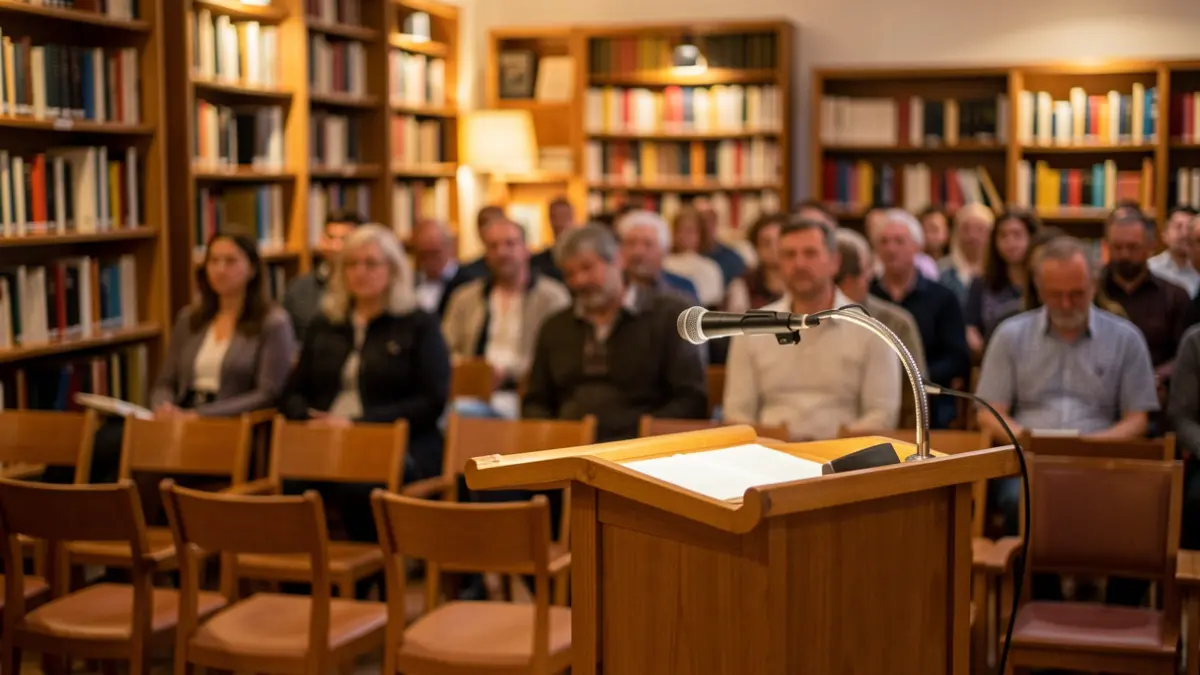
The workshop ‘Seeds for the ecosocial transition in the Canary Islands’, recently held in La Palma, served as a meeting point to define challenges, opportunities, and lines of action to promote a more sustainable development model in the Canary archipelago. This initiative, part of the commitment to the Agenda Canaria 2030, is being developed through the LIDESCAN project, in collaboration with the University of Las Palmas de Gran Canaria.
The event gathered representatives from academia, public administration, social entities, and the productive sector. The main objective was to foster collaboration among agents linked to strategic sectors for the Canary Islands. During the working sessions, participants shared knowledge, experiences, and proposals, analyzing the territory's challenges from an interdisciplinary perspective to achieve a common vision on the archipelago's transformation opportunities.
Around thirty agents participated, including IRLab, Energía Bonita, the La Palma World Biosphere Reserve, the ANAGOS Network, SODEPAL, ADER La Palma, the Isonorte Foundation, staff from the Canary Institute of Agrarian Research (ICIA) and the FARO Farms network, Canary associations for rural development and rural tourism, environmental education organizations, LPA Studio, Instituto20Grados Foundation, and researchers from the universities of La Laguna, Las Palmas de Gran Canaria, Rovira i Virgili, and Deusto, among other entities and professionals involved in ecosocial actions.
Over two days, the work focused on three thematic axes: ecological transition, agroecology and productive systems, and economic diversification through tourism. The main challenges of the archipelago were addressed from a multidisciplinary perspective, integrating diverse visions and knowledge from different professional profiles. These contents will be analyzed from the perspectives of territory, landscape, and identity; governance and participation; and values, ethics, and social capital, key elements for reflecting on the relationship between communities, natural resources, and future development strategies.
The inauguration was attended by José Manuel García Fraga, Vice-Rector for Teaching at the University of La Laguna; Carlos Fernández, principal investigator of the initiative; Mónica Gómez, counselor for Natural Environment, Ecological Transition, and Climate Change at the Cabildo de La Palma; and Carmelo León, director of the Unesco Chair in Tourism and Sustainable Economic Development at the University of Las Palmas de Gran Canaria.
García Fraga highlighted the university's mission to create and transfer knowledge, calling the meeting “a space for learning and transformation”. Fernández explained that the objective is to connect the agents leading the ecosocial transition, recalling that “it is a process that needs time to grow and consolidate”. Gómez stated that the ecosocial transition is “an urgent matter”, comparing it to seeds that require “patience, conditions, care, and skilled hands”. León emphasized the importance of “reflecting to move forward, to make a difference”, noting that the initiative is integrated into other programs of the Government of the Canary Islands.
Among the main conclusions, the importance of consolidating collaboration spaces between strategic sectors for a shared and just transition was highlighted. The exchange of knowledge and perspectives allowed for identifying synergies and strengthening alliances, valuing the archipelago's potential to drive transformative initiatives adapted to its specificities. The need to place the ecosocial transition on the public and political agenda, from tourism, agricultural, and energy perspectives, as a path for sustainable development in the Canary Islands, was also evident.
The work was based on an analysis of the Canarian reality, considering that the islands face an ecological, economic, and social turning point, marked by energy and food dependencies, pressure on water, land, and housing, and the need to review production, consumption, and habitation models in a limited island territory. The roadmap for this transition requires overcoming sectoral approaches and recognizing the interdependence between tourism, agroecology, energy, landscape, well-being, and governance, with the challenge of connecting existing capacities, strengthening social capital, and orienting innovation towards just, autonomous, and resilient territories.
The contributions gathered will be used to prepare a synthesis document for the LIDESCAN project, which will include the shared diagnosis, strategic priorities, and proposals. These actions will continue in a future meeting scheduled for September to finalize the next steps and potential lines of action for advancing the Canarian agenda for ecosocial convergence.